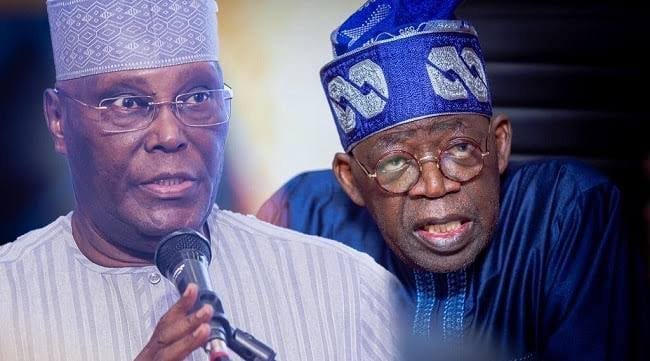
Former Vice President and African Democratic Congress (ADC) presidential candidate, Atiku Abubakar, has criticised President Bola Tinubu’s Independence Day speech, arguing that the address was dominated by future promises while Nigerians continue to face challenges involving food, fuel, transportation and security.
Atiku made the remarks in a state-of-the-nation broadcast in Abuja on Thursday, October 1, 2026, in response to Tinubu’s 66th Independence Day address in which the President declared that the emergency phase of his economic reforms was over and that Nigeria had entered an “age of prosperity.”

Key Highlights
- Atiku criticised Tinubu’s Independence Day speech as being dominated by future promises.
- He repeatedly referenced the phrase “we will” in the President’s address.
- Atiku questioned the impact of economic growth on household purchasing power.
- He cited fuel, egg and bread prices to illustrate the pressure on households.
- He questioned the implementation of promised reductions in transportation costs.
- Tinubu defended his reforms and said Nigeria had moved from an “age of reform” to an “age of prosperity.”
- The President said inflation had fallen from its peak and foreign reserves had been rebuilt.
Atiku Questions Tinubu’s ‘We Will’ Promises
Atiku focused on the repeated use of future-tense commitments in Tinubu’s Independence Day address.
“Bola, your speech is full of ‘we will,’” Atiku said, referring to promises to make farming cheaper, power factories, create jobs and reduce prices.
He argued that after more than three years in office, Nigerians were entitled to assess what had already been delivered rather than being asked to wait for future results.
Atiku Cites Rising Cost of Living
Atiku used changes in the prices of basic goods and fuel to question the effect of the government’s economic reforms on ordinary Nigerians.
He said a ₦30,000 minimum wage in April 2023 could purchase about 118 litres of petrol, while the ₦70,000 minimum wage currently buys about 50 litres.
He also cited an increase in the average price of an egg from about ₦88 in April 2023 to approximately ₦261 by May 2026.
Atiku further compared the price of bread, saying a sliced loaf that cost about ₦500 in April 2023 had risen to about ₦2,000 for a smaller loaf by May 2026.
He questioned whether the economic reforms had delivered the relief Nigerians expected.
‘Did Your Promise Miss the Bus?’
Atiku also challenged the government’s promise of reduced transportation costs beginning October 1.
The Tinubu administration had previously said that its National Affordable CNG Transit Programme was designed to produce measurable reductions in transportation costs from October 1, with states and transport operators working on priority routes and interventions.
Atiku questioned the absence, in his assessment, of publicly available details on routes, previous fares, new fares and the number of Nigerians benefiting from the promised reductions.
He asked whether the transportation promise had “missed the bus”.
Tinubu Defends Economic Reforms
In his Independence Day address, Tinubu defended the removal of petrol subsidies and foreign exchange reforms, describing them as necessary measures to correct longstanding economic distortions.
The President said Nigeria’s economy had grown by more than four per cent in 2026, while oil theft had declined, inflation had fallen substantially from its peak, foreign reserves had been rebuilt and the foreign exchange market had stabilised.
Tinubu also said Nigeria recorded more than $6 billion in non-oil export revenue in 2025, describing the figure as the highest in the country’s history.
The President said the emergency treatment phase was over and that the government’s focus had shifted towards shared and widespread prosperity.
Read also:
- Tinubu Independence Day Speech 2026: President Declares End Of Tough Reforms, Promises Prosperity
- Dalung Faults Tinubu Independence Day Speech, Calls It ‘Disappointing, Empty’
- Opposition Figures Fault Tinubu Independence Day Address Over Economic Hardship
Atiku Challenges ‘Morphine’ Analogy
Tinubu compared Nigeria’s economic problems to a cancer diagnosis requiring painful treatment and argued that previous governments had relied on temporary relief, which he described as “morphine”, instead of addressing structural problems.
Atiku rejected the framing that calls for economic relief amounted to an addiction to subsidy.
He argued that Nigerians struggling to feed their families or pay transportation costs were seeking practical relief rather than a return to what the President described as unsustainable subsidy arrangements.
Atiku Proposes Domestic Fuel Subsidy
As an alternative, Atiku outlined what he said would be his approach if elected president.
He proposed a capped and budgeted production subsidy limited to verified petrol refined in Nigeria, including fuel produced by modular refineries, while excluding imported petrol.
Atiku said the costs would be publicly disclosed and payments independently audited, with government waste reduced to help finance the proposed arrangement.
He said the objective would be to lower petrol prices for consumers while supporting domestic refining.
2027 Election Debate Intensifies
The exchange comes amid growing political positioning ahead of Nigeria’s 2027 general election.
Atiku is seeking the presidency on the African Democratic Congress platform, while Tinubu’s October 1 address marked his 66th Independence Day speech as President.
The contrasting positions reflect an emerging debate over the economic impact of Tinubu’s reforms, with the President defending the policies as necessary for long-term stability and Atiku questioning their effect on the daily lives of Nigerians.