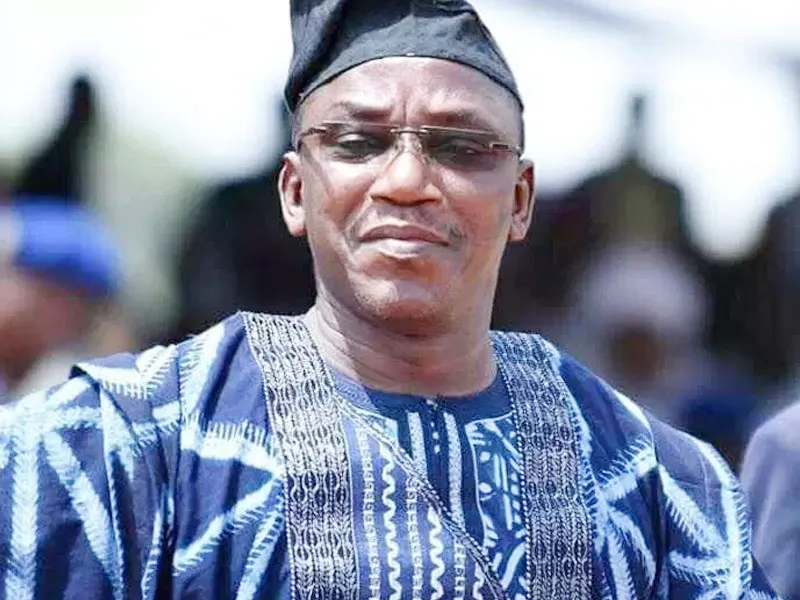
Former Minister of Youth and Sports, Solomon Dalung, has criticised President Bola Tinubu’s Independence Day speech, describing it as “rhetorical, ambitious, disappointing and empty” and arguing that it failed to give Nigerians a clear account of concrete results from the administration’s reforms.
Dalung, a chieftain of the African Democratic Congress (ADC), made the remarks on Channels Television’s The Morning Brief on Thursday, shortly after Tinubu addressed Nigerians as part of activities marking Nigeria’s 66th Independence anniversary.

Key Highlights
- Solomon Dalung criticised Tinubu’s Independence Day speech as “rhetorical” and “empty”.
- He said the address should have focused more on accountability and measurable results.
- Dalung questioned how reported economic growth has affected transportation costs and purchasing power.
- He said insecurity, unemployment, hunger, poverty and agriculture deserved greater attention.
- Tinubu defended his economic reforms and said Nigeria had moved from an “age of reform” to an “age of prosperity”.
- The President cited economic growth, lower inflation, rebuilt reserves and increased non-oil export earnings as signs of progress.
Dalung Demands Accountability From Tinubu
Dalung said an Independence Day address after more than three years of the Tinubu administration should have provided Nigerians with a clearer assessment of the government’s performance since 2023.
He argued that the speech should have focused on concrete outcomes from the reforms and addressed major challenges affecting Nigerians, including insecurity, agriculture, the economy, unemployment, hunger, poverty and foreign policy.
According to Dalung, the President largely repeated assurances that the reforms would eventually produce positive results rather than demonstrating how the policies had already improved living conditions.
‘When Will the Cancer Victim Recover?’
Dalung also responded to Tinubu’s description of Nigeria’s economic condition in 2023 as similar to a cancer patient requiring painful treatment.
Tinubu had said previous governments had relied on temporary measures, which he likened to “morphine”, rather than addressing the underlying economic problems. He said his administration chose difficult reforms to correct those structural weaknesses.
Reacting to the analogy, Dalung questioned when Nigerians would begin to experience the promised recovery.
He said the reforms appeared, in his assessment, to have left the “patient” in a coma, while urging the government to demonstrate how its policies were improving the lives of ordinary citizens.
Dalung Questions Impact of 4% Economic Growth
Dalung also questioned the practical impact of the economic growth figures cited by the President.
He asked how reported growth of about four per cent would translate into lower transportation costs and improved purchasing power for Nigerians.
He argued that economic statistics should be connected to measurable improvements in household welfare rather than presented without explaining their effect on everyday life.
Read also:
t
t
Tinubu Defends Economic Reforms
In his Independence Day address, Tinubu defended his administration’s economic reforms and said the difficult phase of the adjustment was coming to an end.
The President said Nigeria’s economy had grown by more than four per cent in 2026, while oil theft had declined, inflation had fallen from its peak, foreign reserves had been rebuilt and the foreign exchange market had stabilised.
He also said Nigeria recorded more than $6 billion in non-oil export revenue in 2025, describing the developments as evidence of improved economic stability.
Tinubu said the administration’s focus had now shifted from correcting economic distortions to achieving shared and widespread prosperity.
Cost of Living Remains Central to Debate
Dalung’s criticism comes amid continuing public debate over the impact of the government’s economic reforms and the cost of living.
While Tinubu acknowledged that the reforms had brought hardship, he argued that the measures were necessary to address longstanding structural problems and said the government would focus on reducing production and transportation costs, expanding jobs and supporting vulnerable households.
Dalung, however, maintained that the Independence Day address should have provided Nigerians with a more detailed account of how the reforms have translated into improvements in their daily lives.
For more political news and updates, follow us on X.