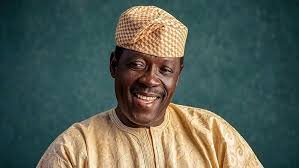
Taiwo Hassan, popularly known as Ogogo, lived a remarkable life that mirrored many of the stories he portrayed on screen — a journey of struggle, ambition, success, pain, resilience and an enduring commitment to Yoruba cinema.
Key Highlights
- Taiwo Hassan, popularly known as Ogogo, was born on October 31, 1959, in Ilaro, Ogun State.
- He began his career as a mechanic before working with the Lagos State Water Corporation for about 13 years.
- Ogogo started acting around 1981 and eventually left his government job in 1994 to pursue acting full-time.
- His breakthrough came with the 1995 film Owo Blow, earning him Best Actor of the Year at the 1997 THEMA Awards.
- He became one of the most recognisable figures in Yoruba-language cinema, appearing in more than 100 productions.
Born on October 31, 1959, in Ilaro, Ogun State, Taiwo Babatunde Hassan rose from humble beginnings to become one of the most respected actors, producers and directors in the Nigerian film industry.

For more than four decades, Ogogo remained a prominent figure in Yoruba entertainment, surviving the transition from traditional theatre to home videos and eventually the digital era of Nollywood.
Before fame, wealth and celebrity, Ogogo trained as a mechanic.
He attended Christ Church School in Ilaro before continuing his education in Lagos and later training at Yaba Technical College. He eventually joined the Lagos State Water Corporation, where he worked for about 13 years.
However, acting had already captured his interest.
Coming from a family deeply connected to Yoruba culture and traditional performance, Ogogo was exposed to the art of oriki, praise chanting and traditional theatre from an early age.
His first major encounter with stage performance came in the early 1980s at the National Museum in Lagos, where he played the role of an Akiigbe, a praise chanter.
The experience strengthened his desire to pursue acting professionally.
He subsequently worked with theatre practitioners, including Awo Ademola Fabunmi, and became involved in the growing Yoruba theatre movement.
Although he had started acting around 1981, he continued combining the profession with his job at the Lagos State Water Corporation. By 1994, however, the demands of acting had become too great.
He resigned from his government job and devoted himself fully to acting.
That decision marked the beginning of a new chapter in his life.
The name “Ogogo” also became an important part of his identity.
According to him, the name came from his family’s oriki. He explained that his father’s family praise name was associated with “Ogogo Omo Akulodo Aringini,” and the name eventually became synonymous with his career.
Ogogo was also associated with the Odunfa Caucus, a group of Yoruba theatre practitioners that included veteran actor Yinka Quadri and other prominent figures.
The group played an important role in developing Yoruba theatre and nurturing younger talents who would later become major names in Nollywood.
Ogogo belonged to a generation that built careers without social media, streaming platforms or the digital distribution systems available today.
Their audiences were developed through stage performances, travelling theatre, home videos and word of mouth.
His breakthrough came with his appearance in Tade Ogidan’s 1995 film, Owo Blow, where he played Wole Owolabi.
The film became one of the defining productions of the 1990s and helped establish Ogogo as a household name.
His performance earned him the Best Actor of the Year award at the 1997 edition of The Movie Awards, THEMA.
From then on, Ogogo became known for his commanding presence, distinctive voice and versatility.
He played different roles, including criminals, policemen, fathers, traditional rulers, warriors and other authority figures.
Although he became famous for portraying tough and sometimes criminal characters.
Away from the screen, Ogogo faced a major health crisis that almost ended his life.
Around the late 2000s and early 2010s, he became seriously ill and lost considerable weight.
He later revealed that he had suffered from chronic ulcer and spent about seven years at home, surviving largely on pap.
His condition became so severe that some people believed he would not survive.
Ogogo eventually recovered and returned to acting.
He later spoke about the experience and how many people had thought his death was imminent.
His recovery became one of the most significant chapters of his life, and he credited God for helping him overcome the illness.
He also launched an “Appreciation” project to thank people who supported him during the difficult period.
His acting career continued to flourish after his recovery.
Over the years, Ogogo featured in numerous productions, including Wicked Boy, Atitebi, Agbelebu, Elewon, Merciful God, Owo Blow, Ekun-Ayo, Legal Wife, Ore Ijiji, Omin, Omo Ghetto, Aye O, Tenant of the House, Amerah, Bank Alert, IGE – The Unlikely Oil Merchant, Aníkúlápó and Aníkúlápó: Rise of the Spectre.
His filmography spans more than 100 productions, although there is no single authoritative public database containing a complete list of every movie in which he appeared.
His role as Alaafin Ademuyiwa in Aníkúlápó introduced him to another generation of viewers and exposed his talent to a wider international audience.
He was also nominated for Best Supporting Actor at the 2023 Africa Magic Viewers’ Choice Awards for his performance in Aníkúlápó.
Beyond acting, Ogogo ventured into business.
Despite his success, he often spoke about the financial realities of the Nigerian film industry and rejected the assumption that every popular actor was automatically wealthy.
He complained about piracy and the financial difficulties facing actors and filmmakers, noting that entertainers were not always paid according to their level of popularity.
He later diversified into real estate and established Ogogo Royal Estate in partnership with Sweet Estate along the Ilaro–Oja-Odan road in Ogun State.
He also received the traditional title of Otun-Mayegun of Ilaro-Yewa.
While various websites have published different estimates of his net worth, those figures have not been independently verified.
What is clear is that Ogogo built a successful career that extended beyond acting into filmmaking, real estate and other business interests.
Family remained another important part of Ogogo’s life.
He was a married father and was publicly associated with wives including Ajoke and Taibat. He also had several children.
His children became particularly visible during his final health crisis, especially his daughters Lima and Kira Taiwo, who communicated updates about his condition to the public.
One of the deepest sources of pain in Ogogo’s life was the loss of several members of his family.
In July 2026, he spoke publicly about his family history and revealed that he was the only surviving child of his mother.
According to him, his mother had given birth to four sets of twins, but he was the only surviving child.
The loss of his siblings was a painful part of his life, while his mother remained one of the people he cherished most.
Ogogo dedicated Ojo Ogbo to his mother as a tribute to her sacrifices and the role she played in raising him.
His relationships within the entertainment industry also lasted for decades.
Yinka Quadri was among his closest colleagues and friends. Both men were associated with the Odunfa theatre tradition and remained close throughout their careers.
Ogogo’s daughter also identified Yinka Quadri, Abbey Lanre and Akanni Olohunwa among people who were particularly close to the family.
Outside the industry, Ogogo maintained friendships with childhood friends including Idowu Adetunji, popularly known as Akara, Kamordeen Ambali, known as Sir Kay, and Abiodun Jamiu, known as Kakawa.
He recalled that Sir Kay once gave him a room to stay in during a difficult period in 1994, where he lived for more than a year.
Ogogo also publicly acknowledged his friendship with politician and businessman Senator Solomon Olamilekan Adeola, popularly known as Yayi.
Throughout his career, Ogogo made several statements that reflected his approach to life and acting.
Speaking about his determination to continue working, he once said “As far as I am not dead, I am still working to be better at everything I do.”
Read also:
- BREAKING: Nollywood Mourns As Taiwo Hassan ‘Ogogo’ Dies At 66
- Rita Edochie Fires Back At Critics, Says May Yul-Edochie Marital Crisis Helped Gain Social Media Relevance
- Taiwo Hassan ‘Ogogo’ To Be Buried Monday In Ilaro
He also spoke about using his God-given talent to make society better and assist people in need.
On his commitment to Yoruba-language cinema, he said “I am a Yoruba man and this is where I started.”
The statement reflected his strong connection to Yoruba culture and his decision to remain committed to the language and tradition that shaped his career.
Following an incident involving an alleged tout in Ilaro in 2022, Ogogo also said “Once a boxer, always a boxer.”
The veteran actor remained active in the entertainment and business worlds until his health began to deteriorate in 2026.
In August 2026, news emerged that Ogogo was battling stage-four cancer.
His daughters appealed publicly for assistance as his condition became increasingly serious.
Friends, colleagues and fans rallied around him, while veteran actor Yinka Quadri expressed concern over his condition.
Reports later indicated that medical specialists were attending to him and that he underwent surgery as efforts were made to save his life.
The development was particularly painful because Ogogo had previously survived a serious illness and successfully returned to the industry.
On August 18, reports of his death circulated on social media, but his daughter publicly denied the reports and confirmed that he was still alive and receiving treatment.
Five days later, on Sunday, August 23, fresh reports emerged that the veteran actor had died.
His daughter Kaira/Kira Taiwo reportedly confirmed his death during an Instagram Live session.
The news brought an end to a career that had lasted more than four decades.
Taiwo Hassan did not merely participate in the growth of Nollywood; he was part of the generation that helped shape Yoruba cinema.
From his early days as an automobile technician and civil servant to his emergence as a respected actor, producer and filmmaker, Ogogo’s story was one of persistence.
He survived serious illness, endured the loss of several siblings and his mother, built lasting friendships, expanded into business and remained connected to the Yoruba theatre tradition that gave him his start.
He played kings, fathers, policemen, criminals, warriors and traditional rulers, leaving audiences with memorable performances across generations.
For many Nigerians, however, he will simply remain Ogogo — the distinctive voice, commanding presence and veteran actor whose contribution to Yoruba cinema stretched across generations.
Taiwo Hassan reportedly died on August 23, 2026, at the age of 66, after battling stage-four cancer and would be laid to rest according to Islamic rites on Monday 24, 2026 in his hometown in Ilaro, Ogun State.
Related Stories: