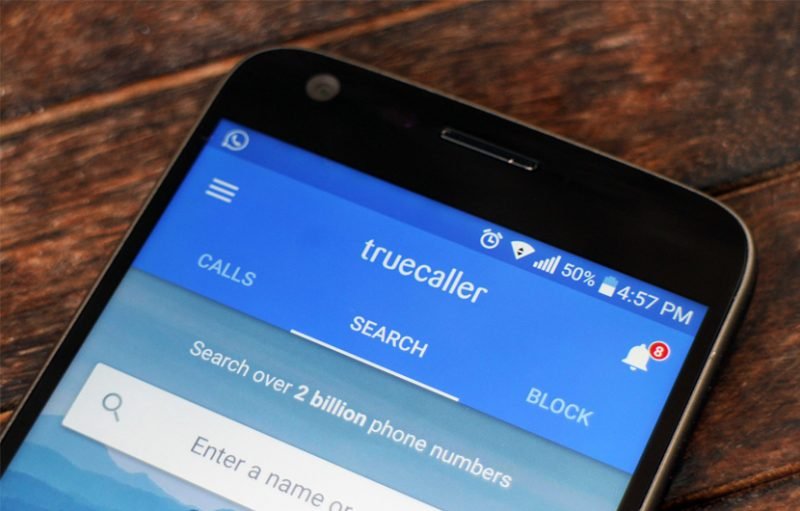
The Lagos State High Court, Eti-Osa Judicial Division, has dismissed a suit challenging Truecaller’s reliance on users’ consent to process the telephone numbers of people who do not use the application.
Key Highlights
- Lagos State High Court dismissed a suit challenging Truecaller’s processing of non-users’ phone numbers.
- The applicants argued that the practice violated their constitutional right to privacy and the Nigeria Data Protection Act 2023.
- The court held that consent given by a Truecaller user does not automatically amount to consent from a non-user.
- Justice N. O. Ojuromi said Truecaller has responsibilities as a data controller and processor under Nigeria’s data protection law.
- The court nevertheless found that the applicants failed to establish an actual infringement of their fundamental rights.
- The judge noted that Truecaller had deleted the applicants’ telephone numbers and associated data after receiving their complaints.
- The court consequently dismissed the application and declined the applicants’ requests for declarations, data-processing restrictions and financial damages.
Justice N. O. Ojuromi dismissed the case on Monday, September 14, 2026, at Court 6, J.I.C. Court House, Igbosere, Lagos, after ruling that the applicants failed to establish that their fundamental rights had been breached.

The suit, marked LD/2021MFHR/2025, was filed by the Incorporated Trustees of the Data Privacy Lawyers Association on behalf of non-users of the Truecaller application.
The applicants had complained that Truecaller was able to identify and process the telephone numbers of individuals who had never registered with the platform.
One of the applicants, Esther Odunze, told the court that she discovered that her name and telephone number were available on Truecaller even though she had never registered for the service or submitted her number to the company.
According to Odunze, she contacted Truecaller and requested that her information be removed from its system. She said the company responded that it relied on consent provided by its users to process telephone numbers contained in their contact lists.
Applicants Cited Constitutional Right To Privacy
The applicants argued that the practice breached their constitutional right to privacy under Section 37 of the 1999 Constitution and provisions of the Nigeria Data Protection Act 2023.
They maintained that consent given by a Truecaller user could not automatically extend to individuals whose telephone numbers appeared in the user’s phonebook.
Truecaller rejected the allegations and argued that its application primarily functions as a dialler requiring access to a user’s on-device phonebook.
The company also told the court that its technical infrastructure and data processing operations were located in India and challenged the jurisdiction of the Lagos State High Court to entertain the matter.
Truecaller further argued that some of the applicants’ telephone numbers were already publicly available and therefore could not be regarded as private information in the manner claimed.
Read also:
- Truecaller Report: Nigeria tops Africa in spam calls, ranks eighth globally
- Truecaller Call-to-Cart Redefines Mobile Commerce: Can One Tap Now Replace the Full Shopping Journey?
- Tinubu Allocates EFCC-Recovered Property to Data Protection Commission as New Headquarters
Court Says Consent By A User Does Not Bind Non-Users
In his ruling, Justice Ojuromi held that the constitutional right to privacy encompasses the protection of personal information, personal communication and personal data.
The judge also rejected the argument that consent by a Truecaller user automatically amounted to consent from non-users whose numbers were stored in the user’s contacts.
According to the court, people who had never used Truecaller and were not subject to its privacy policies or terms of service could not simply be presumed to have consented to the processing of their telephone numbers.
The judge stated: “Consent to one does not equate to consent to the other.”
Justice Ojuromi further held that Truecaller has responsibilities as a data controller and processor under the Nigeria Data Protection Act in relation to the personal data handled through its platform.
Despite those findings, the court held that the applicants failed to provide sufficient evidence establishing an actual infringement of their fundamental rights.
The judge noted that Truecaller had deleted the applicants’ telephone numbers and associated data from its servers after receiving their complaints.
The court also considered Truecaller’s number-for-name search function, noting that a person searching the platform must already possess the telephone number before the service can provide the corresponding identity.
Justice Ojuromi consequently dismissed the application after finding that the applicants had not established sufficient damage or injury arising from the processing of their information.
The applicants’ requests for declarations against Truecaller, orders stopping further processing of non-users’ numbers, compulsory deletion of data and financial damages were therefore not granted.
The ruling has highlighted questions surrounding the limits of consent in digital data processing, particularly where personal information belonging to people who have never subscribed to a service is obtained through the devices or accounts of existing users.
Follow us on X for more updates on this developing story.