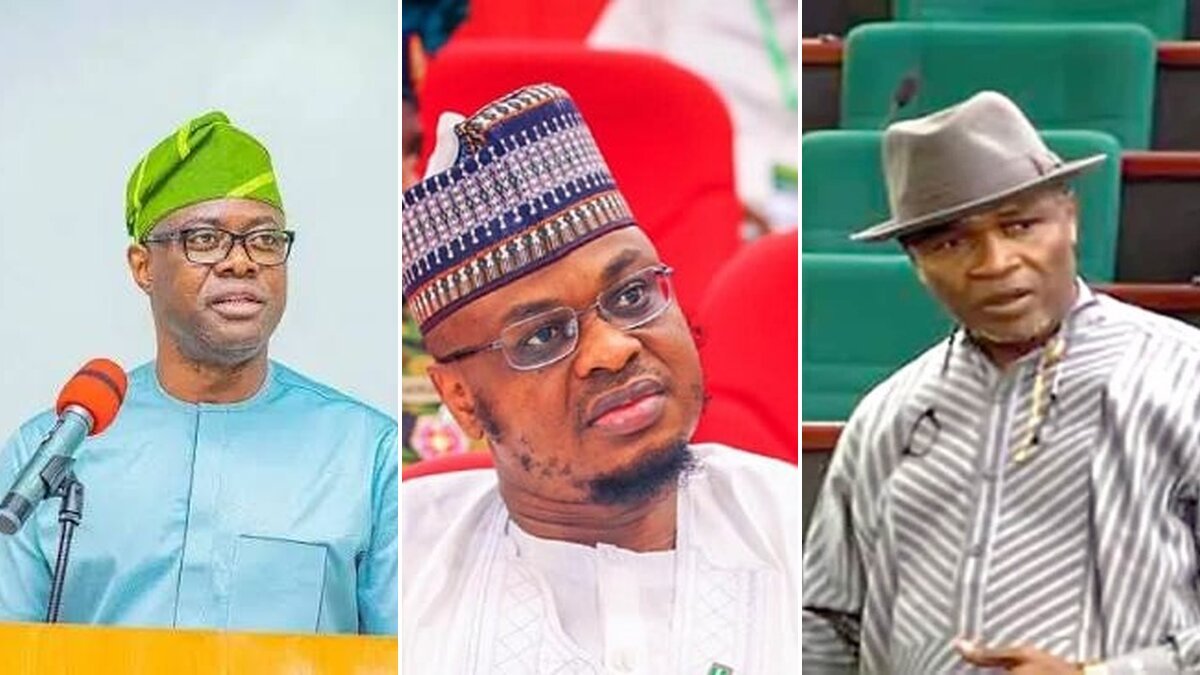
Oyo State Governor Seyi Makinde has pledged to serve only one four-year term if elected president in 2027, while the Independent National Electoral Commission (INEC) has released its final lists of governorship candidates, excluding former Communications Minister Isa Ali Pantami in Gombe State and clearing Kingsley Chinda, an ally of FCT Minister Nyesom Wike, in Rivers State. The developments highlight growing political realignments, candidate eligibility disputes and early manoeuvring ahead of Nigeria’s 2027 general elections.
Key Highlights
- Seyi Makinde pledged to serve a maximum of four years if elected president in 2027.
- Makinde presented his proposed administration as a transitional government of national unity.
- INEC excluded former Communications Minister Isa Ali Pantami from its final list of Gombe governorship candidates.
- Kingsley Chinda, an ally of Nyesom Wike, was included on the final list of Rivers governorship candidates.
- Legal disputes over party primaries and membership-register requirements have affected candidate eligibility.
- The Supreme Court’s interpretation of provisions in the Electoral Act 2026 has intensified scrutiny of party nomination procedures.
- The candidate-list decisions come amid defections, opposition realignments and preparations for the 2027 elections.
Makinde Promises One-Term Presidency Under APM
Speaking at an Allied Peoples Movement (APM) North-East town hall meeting in Yola, Adamawa State, on Saturday, October 10, 2026, Makinde said any administration he leads from May 29, 2027, would last no longer than four years.

The Oyo governor, who is seeking the presidency on the APM platform, described his proposed administration as a transitional government of national unity that would bring together Nigerians across political and regional divides.
“Our government will not last beyond four years. And it will be an all-inclusive government,” Makinde said.
His pledge comes amid ongoing debate over Nigeria’s informal North-South power-rotation arrangement and President Bola Tinubu’s bid for re-election under the All Progressives Congress (APC).
Makinde’s proposal suggests that a single-term presidency could provide an opportunity for another regional transition after four years, although Nigeria’s political rotation arrangements are not constitutionally guaranteed.
Makinde Outlines Security, Education and Economic Reforms
Makinde has repeatedly presented his proposed presidential agenda as a national reset focused on security, education, economic management and institutional reform.
His priorities include developing a new security architecture, reforming education and promoting an economy driven by data, science and evidence-based decision-making.
He has also criticised aspects of the Tinubu administration’s economic policies, including the effects of petrol subsidy removal on households and businesses.
Makinde has called for greater transparency in petroleum pricing and challenged the Federal Government to publish its fuel-pricing template.
His one-term pledge places emphasis on delivering his proposed reforms within a single presidential tenure rather than seeking re-election.
Makinde’s APM Platform Reflects Opposition Realignment
Makinde’s presidential ambition on the APM platform reflects the continuing movement of political figures and groups ahead of the 2027 elections.
The opposition landscape has been marked by party defections, disputes over presidential tickets and efforts to build alternative platforms to challenge the ruling APC.
Other opposition figures, including Peter Obi of the Nigeria Democratic Congress (NDC), have also made single-term commitments or proposals linked to national unity.
However, opposition parties continue to face the challenge of coordinating their structures and presenting competing policy proposals to voters.
INEC Excludes Pantami From Final Gombe Governorship List
In a separate development, INEC released its final list of governorship candidates for the February 6, 2027 elections, with former Minister of Communications and Digital Economy Isa Ali Pantami absent from the list in Gombe State.
Pantami, who joined the Peoples Democratic Party (PDP) after leaving the APC in May 2026, had previously appeared on INEC’s provisional list released on August 29.
His exclusion followed disputes and legal challenges surrounding the party’s nomination process and compliance with membership-register requirements.
Other candidates included on the Gombe list reportedly represent parties such as the APC, African Democratic Congress (ADC), NDC, Labour Party, APM, PRP and SDP.
Pantami’s camp has described the exclusion as temporary and indicated that efforts were under way to address the matter through the party and INEC.
The final list does not, by itself, resolve the underlying legal disputes, and the outcome will depend on the relevant legal and electoral procedures.
Supreme Court Ruling Raises Questions Over Candidate Eligibility
Pantami’s exclusion comes amid heightened scrutiny of political party membership registers and nomination procedures following a September 24, 2026 Supreme Court judgment on provisions of the Electoral Act 2026.
The ruling restored key provisions requiring political parties to submit membership registers to INEC within specified timelines before primaries and limiting eligibility for nomination to properly registered party members.
The requirements have become significant in disputes involving the validity of party primaries and whether candidates met the necessary membership conditions.
Pantami reportedly won an initial primary and a subsequent fresh primary ordered by a court. However, questions about compliance with electoral and party rules have continued to affect his candidacy.
The legal position will depend on how the relevant provisions apply to the facts of each case and any further decisions by the courts.
INEC Clears Wike Ally Kingsley Chinda in Rivers
While Pantami was omitted from the Gombe list, INEC included Kingsley Chinda, a former House of Representatives Minority Leader and political ally of FCT Minister Nyesom Wike, among the candidates for the Rivers State governorship election.
Chinda emerged as the APC’s governorship candidate after a party primary, having previously belonged to the PDP.
His inclusion on the final list came amid questions about party membership, the timing of his political defection and compliance with the requirements governing nominations.
Legal challenges to his eligibility have also been reported. His appearance on INEC’s current list indicates that the commission has included him at this stage of the electoral process, but it does not necessarily determine the outcome of any outstanding court proceedings.
The Rivers and Gombe cases illustrate how party nomination procedures and membership records can affect the final selection of candidates.
Adebutu Also Reportedly Excluded From Ogun List
Pantami was not the only prominent politician reportedly affected by INEC’s final candidate lists.
The PDP’s Ladi Adebutu was also reported to have been excluded from the Ogun State governorship list.
The cases have intensified attention on compliance with electoral laws, internal party procedures and the legal requirements governing candidate nominations.
For political parties, the disputes underscore the importance of maintaining accurate membership registers, conducting primaries in accordance with the law and resolving eligibility issues before the final lists are published.
Read also:
- 2027 Elections: APC Urges INEC to Enforce Supreme Court Ruling on Party Membership Registers
- INEC Reviews Supreme Court Judgment on Electoral Act 2026, Candidate Eligibility
- 2027 Election: Makinde-Daura Campaign Alleges Plot to Release Unclaimed PVCs to APC Agents
- Peter Obi’s Camp Challenges APC: ‘Where Is the Relief Nigerians Were Promised?’
2027 Election Preparations Gather Pace
The developments involving Makinde, Pantami and Chinda reflect the wider political activity taking place ahead of Nigeria’s 2027 general elections.
Makinde’s one-term pledge introduces another proposal into the debate over presidential power rotation, national unity and economic reform.
Meanwhile, INEC’s final candidate lists show how legal disputes and party procedures are already influencing the contest for governorship positions.
As the election approaches, further litigation, political defections, alliances and campaign announcements are likely to shape the field of candidates and the issues presented to voters.
For more updates on the 2027 elections, follow us on X.