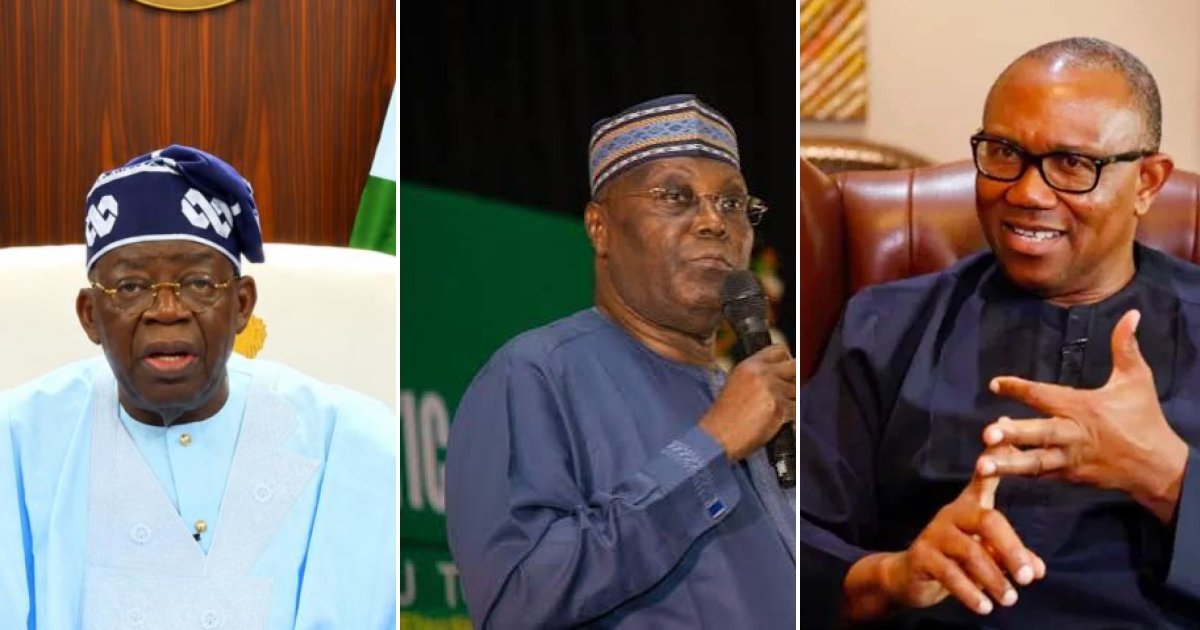
The Independent National Electoral Commission (INEC) has released the final list of 18 presidential candidates and their running mates for Nigeria’s 2027 general elections, featuring incumbent President Bola Ahmed Tinubu, former Vice President Atiku Abubakar, former Anambra State Governor Peter Obi and Oyo State Governor Seyi Makinde.
The development comes as political parties intensify preparations for the elections, with Obi and Makinde reiterating their pledges to serve only one four-year term if elected president. Makinde described his proposed administration as a transitional government of national unity.

Key Highlights
- INEC has published a final list featuring 18 presidential candidates and their running mates for the 2027 elections.
- President Bola Tinubu is seeking re-election on the All Progressives Congress (APC) ticket with Kashim Shettima.
- Atiku Abubakar is the African Democratic Congress (ADC) candidate, with Rotimi Amaechi as his running mate.
- Peter Obi is contesting under the Nigeria Democratic Congress (NDC) with Rabiu Kwankwaso.
- Seyi Makinde is the presidential candidate of the Allied Peoples Movement (APM) and has renewed his pledge to serve only one four-year term if elected.
- The presidential and National Assembly elections are scheduled for January 16, 2027.
INEC Publishes Final List of 18 Presidential Candidates
The publication of the final list marks an important stage in preparations for the 2027 presidential election, providing voters with a clearer picture of the candidates and political parties seeking the country’s highest office.
The list was signed by INEC Secretary, Rose Oriaran-Anthony, following earlier provisional listings and updates to the commission’s election timetable.
It features candidates from established political parties as well as other parties seeking to challenge for the presidency.
Tinubu, Atiku and Obi Among Major Presidential Contenders
President Bola Tinubu is listed as the APC presidential candidate, with Vice President Kashim Shettima as his running mate.
Former Vice President Atiku Abubakar is contesting under the ADC platform alongside former Rivers State Governor and ex-Minister of Transportation Rotimi Amaechi.
Former Anambra State Governor Peter Obi is listed as the NDC candidate, with former Kano State Governor Rabiu Kwankwaso as his running mate.
The line-up reflects the political realignments taking place ahead of the 2027 election, as opposition figures organise their campaigns under different party platforms.
The presidential contest is expected to focus on economic management, security, employment, education, infrastructure and the performance of the outgoing administration.
Seyi Makinde Runs on APM Ticket
Oyo State Governor Seyi Makinde is the presidential candidate of the Allied Peoples Movement, with Musa Lawal Daura as his running mate.
Makinde’s candidacy places him among the prominent figures entering the presidential contest while he remains governor of Oyo State.
Other candidates on the list include Sandy Ojang Onor of the Peoples Democratic Party (PDP), Omoyele Sowore of the African Action Congress (AAC), Donald Duke of the Peoples Redemption Party (PRP) and Adewole Adebayo of the Social Democratic Party (SDP).
The list contains two female presidential candidates and four female vice-presidential candidates, according to ThisDay’s report on the INEC publication.
The final composition of the presidential field will be significant in determining the range of political platforms and policy proposals presented to voters.
Makinde Renews Promise to Serve Only One Term
Makinde has reiterated his commitment to serve only one four-year term if elected president in 2027.
Speaking at an APM town hall meeting in Yola, Adamawa State, around October 10, 2026, he described his proposed administration as a transitional government focused on national unity and institutional reform.
“Our government will not last beyond four years. And it will be an all-inclusive government,” Makinde said, according to reports of the event.
The pledge is intended to distinguish his proposed administration and address concerns about power rotation and regional inclusion in Nigeria’s political system.
Makinde has also outlined what he describes as a reset agenda focusing on security, economic recovery, education and poverty reduction.
His comments come amid renewed debate over how the next administration would address the country’s economic and security challenges.
Read also:
- 2027 Elections: Makinde Pledges One-Term Presidency as INEC Excludes Pantami, Clears Wike Ally
- NDC to Inaugurate Presidential Campaign Council October 20 Ahead of 2027 Elections
- 2027 Elections: APC Urges INEC to Enforce Supreme Court Ruling on Party Membership Registers
Makinde Criticises Tinubu Administration
During his recent political engagements, Makinde criticised aspects of the current administration’s performance, including electricity supply, fuel prices and the cost of living.
He has presented his reset agenda as a response to concerns about economic hardship and the need for more inclusive governance.
The governor’s one-term pledge also echoes a similar commitment by Peter Obi, who has previously said he would serve only one term if elected president.
Such pledges have become part of the broader political debate ahead of 2027, with candidates presenting different approaches to leadership, regional balance and the duration of their proposed administrations.
The commitments remain campaign promises and would depend on the circumstances of any future administration.
What INEC’s Final Candidate List Means for 2027
The publication of the final candidate list by INEC provides a formal basis for voters to identify the presidential tickets participating in the election.
With Tinubu, Atiku, Obi and Makinde contesting under different platforms, the election will feature multiple political parties and competing policy proposals.
The next phase of preparations is expected to focus on campaign activities, manifesto releases, voter mobilisation and scrutiny of candidates’ records and policy commitments.
As the January 16, 2027 election approaches, INEC’s official timetable and candidate records will remain key references for monitoring the electoral process.
For more updates on the 2027 elections, follow us on X.