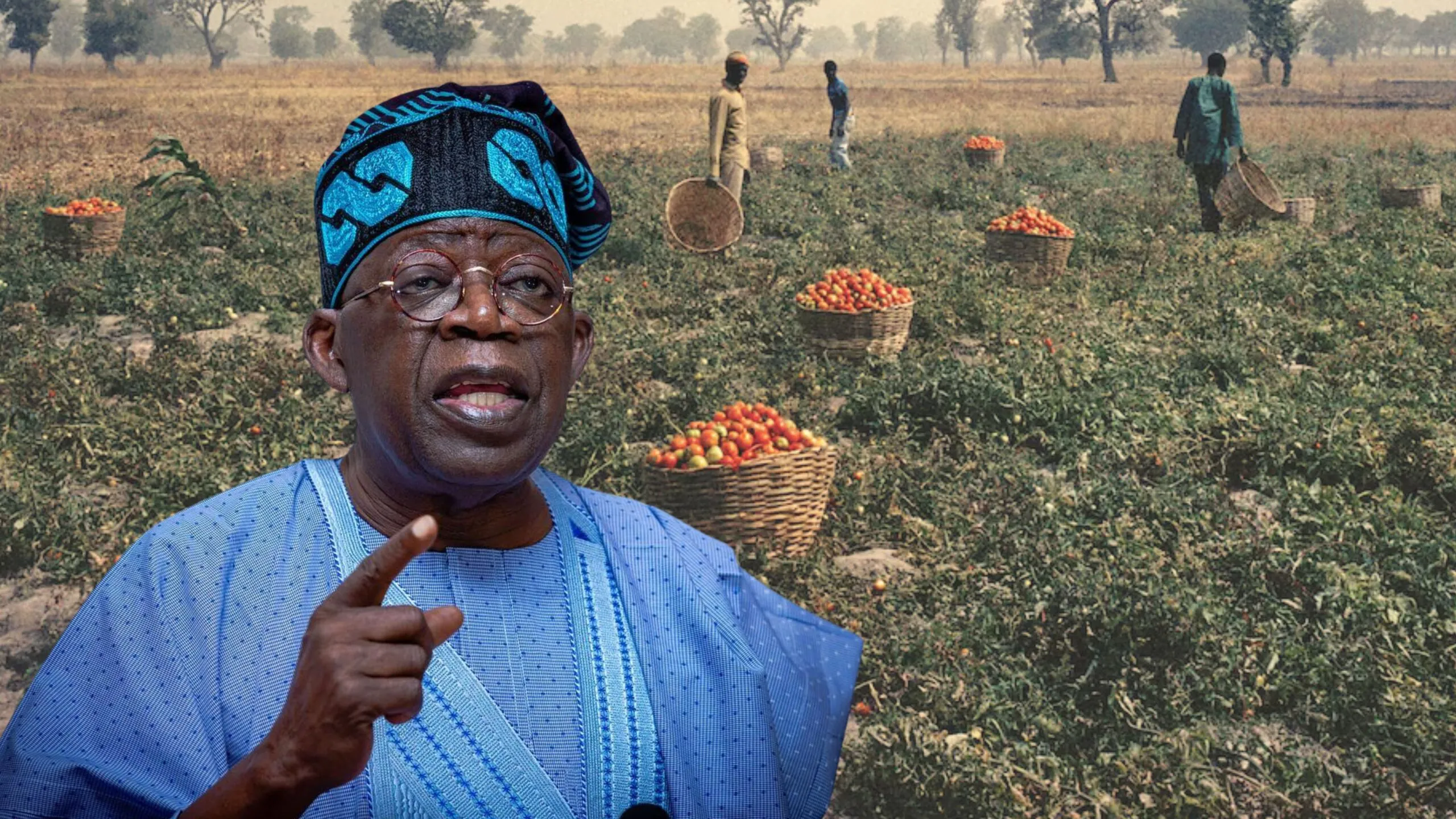
President Bola Ahmed Tinubu’s declaration on Tuesday, July 28, 2026, that “Anybody who wants to take the job from me would have to try” was beyond a display of political confidence.
It was more of a signal that the 2027 presidential contest is already taking shape.

Tinubu’s words: “All is fair in politics and war. I’m not going to roll out a red carpet or give anyone a leash to tie around my neck”, highlighted the President’s determination to defend his mandate and deploy the political advantages available to an incumbent.
On the other hand, beyond the rhetoric lies the bigger question: Who can actually challenge Bola Tinubu in 2027?
For now, two names dominate the conversation, former Vice President Atiku Abubakar and former Anambra State Governor Peter Obi.
Read also:
- Osun Election: Davido Mocks APC Over Heavyweight Mobilisation
- Osun Election: Davido Takes Fresh Swipe at Critics, Reacts to Fadahunsi Controversy
- Osun Election: Adeleke Campaign Calls for Police Investigation Over Fadahunsi’s Alleged ‘Kill’ Remark
- Osun Poll: Adeleke Alleges BVAS Malfunction, Voter Intimidation
- Osun Poll: Police Arrest Officer Over Tear Gas Incident At Modakeke
- Osun Election: INEC Uploads 3,292 Polling Unit Results as Collation Nears Final Stage
- 2027: Group Backs Victor Ochei for Delta North Senate Seat
- NDC Accuses INEC of Replacing Its 2027 Candidates With Unauthorised Names
Both have national profiles, established political structures and significant followings.
Still, neither has demonstrated a sufficiently clear path to defeating an incumbent President who has spent decades building political alliances and networks across the country.
What is Tinubu’s Political Advantage ?
Tinubu is not the ordinary incumbent.
Long before his emergence as President, he had established himself as one of Nigeria’s most formidable political strategists.
It is evident in his years as Governor of Lagos State, his survival through the political battles of the Obasanjo era and his role in rebuilding the progressive political movement in the South-West demonstrated his ability to withstand pressure and maintain political influence.
He was also central to the coalition that produced the All Progressives Congress and ended the Peoples Democratic Party’s 16-year hold on the presidency in 2015.
That history matters assessment on the 2027 contest is considered.
Tinubu understands how political structures are built, how alliances are negotiated and how electoral coalitions are sustained.
More importantly, he enters 2027 as the sitting President with access to the advantages that come with incumbency.
That does not make him unbeatable though.
It simply means that anyone hoping to defeat him must build something stronger than a popular campaign.
The Gains under Tinubu
The President’s most significant policy move remains the removal of the petrol subsidy, a decision that ended a costly subsidy regime and fundamentally altered Nigeria’s fiscal landscape.
Although the reform triggered a sharp rise in living costs, the administration has maintained that it was a necessary step to redirect government resources toward development and reduce the financial burden on the government.
The government has also focused on the rehabilitation and construction of major roads, bridges and other critical infrastructure across the country.
On social intervention, measures such as the expanded National Social Investment Programme, student loan initiatives and various support programmes have been presented as efforts to cushion the impact of economic reforms and widen access to opportunities.
In the power sector, the Tinubu administration has pursued reforms designed to improve electricity supply and attract investment into the sector, while the signing of the Electricity Act reforms has provided a broader framework for states and private investors to participate in electricity generation and distribution.
Tinubu can also point to his administration’s efforts to attract foreign investment and reposition Nigeria as a more competitive destination for capital.
However, these achievements do not erase the economic difficulties.
Nigerians have feelings, therefore, voters remain inquisitive.
Peter Obi: Popularity Meets the Challenge of Structure
Peter Obi remains one of the most significant opposition figures to emerge from the 2023 election.
His campaign transformed the political conversation, particularly among young Nigerians, professionals and voters who felt disconnected from the established political order.
The support he attracted demonstrated that a presidential candidate outside the traditional political establishment could generate enormous enthusiasm.
Nonetheless, the 2027 question is different.
Can that enthusiasm be converted into a nationwide electoral machine capable of defeating Tinubu?
That will be Obi’s biggest challenge.
Presidential elections in Nigeria require more than social-media popularity or passionate supporters.
They require grassroots structures, polling-unit operations, credible alliances, nationwide mobilisation and the ability to secure support across Nigeria’s complex regional and political landscape.
Obi therefore needs to demonstrate that the movement behind him can evolve into a formidable national political organisation.
Atiku: Experience and Network, But Can He Inspire a New Coalition?
Atiku Abubakar presents a different kind of challenge to Tinubu.
The former Vice President has spent decades in national politics and possesses extensive relationships across the country.
He has contested the presidency multiple times and understands Nigeria’s electoral terrain perhaps better than most opposition politicians.
His strength lies in experience, networks and political reach.
His challenge is quite obvious: Can he persuade Nigerians that he represents a new political future rather than a continuation of the old political order?
Atiku must also overcome the difficulty of repeatedly uniting opposition forces around his candidacy.
If he enters another presidential contest without a broader coalition capable of bringing together competing opposition interests, his extensive political network may still fall short of what is required to defeat an incumbent.
The Real Threat May Not Yet Have Emerged
Perhaps the biggest mistake political observers can make is assuming that the 2027 contest will simply be Tinubu versus Obi or Tinubu versus Atiku.
Nigerian politics rarely follows a straight line.
Political alliances can change rapidly. Parties can merge. Governors can switch allegiances. New coalitions can emerge. And politicians who appear marginal today can become central figures tomorrow.
It is therefore possible that the person who ultimately poses the strongest challenge to Tinubu has not yet emerged as the opposition’s consensus candidate.
The opposition could also produce a new coalition around a candidate capable of combining the strengths of different political blocs.
What Would It Take to Defeat Tinubu?
The answer may not simply be another popular candidate.
Whoever wants to defeat Tinubu will need organisation, money, structure, strategy, regional balance, grassroots mobilisation and a compelling national message.
Most importantly, the opposition must offer Nigerians something beyond an anti-Tinubu campaign.
Criticising the government will not, by itself, win the presidency.
The opposition must convince voters that it has a credible plan to address inflation, food prices, unemployment, insecurity, exchange-rate instability and the broader pressures affecting household incomes.
It must also demonstrate that it can govern differently — and better.
That is where the real battle lies.
So, Who Can Challenge Tinubu?
Atiku has the experience and political network.
Obi has demonstrated remarkable popular mobilisation and possesses a strong connection with a new generation of voters.
Conversely, neither can afford to rely solely on those advantages.
To challenge Tinubu successfully, either candidate, or even any new contender who emerges would need to build a coalition capable of transcending ethnic, religious, regional and partisan boundaries.
And frankly, that is the difficult part.
Tinubu has already thrown down the gauntlet.
The question is no longer whether someone will try to take the presidency from him.
The real question is whether anyone can build the political coalition, national structure and electoral strategy strong enough to actually do it.
In the long run, the answer will not come from political rallies, social media or presidential declarations.
It will come from Nigerian voters at the ballot box in 2027.
For the opposition to defeat Tinubu, it cannot simply argue that his government has failed. It must convince Nigerians that it can do better.
Chinedum Anayo is a political commentator and can be reached via neduum@aol.com