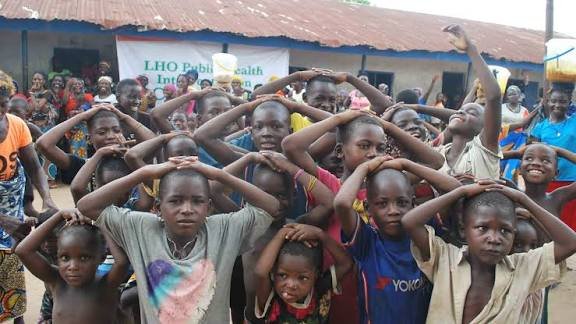
The Universal Basic Education Commission (UBEC) has raised the alarm that about 10 million Nigerian children are excluded from early childhood care, development and education, warning that the gap is worsening the country’s learning crisis.
UBEC Executive Secretary, Aisha Garba, disclosed this in Abuja on Monday, at the opening of a three-day capacity-building workshop for state officials on the use of the Early Childhood Care, Development and Education (ECCDE) Minimum Standards, Implementation Guidelines and UNICEF parental and community engagement documents.

Garba, who was represented by UBEC Deputy Executive Secretary, Technical, Rasaq Akinyemi, said only 35.6 percent of Nigerian children aged between 36 and 59 months are enrolled in any form of early childhood education.
She said the figure translates to an estimated 10 million children who are currently outside the ECCDE system.
According to her, the problem begins even before children reach school age, with the 2021 multiple indicator cluster survey showing that 46 per cent of children aged 24 to 59 months are developmentally off track.
Read Also:
- Delta SUBEB, UBEC To Train 100 Education Managers On Climate Change, Greening Curriculum
- UBEC Strengthens Basic Education In Kano With 4,000 Classrooms, Massive Teacher Recruitment
- UBEC Deploys Over ₦100bn To Improve School Infrastructure, Teacher Training, Digital Learning
Garba said the consequences of inadequate early childhood education become more pronounced as children progress through the education system.
She noted that about 70 percent of 10-year-old children in Nigeria cannot read and comprehend a simple passage, while only about 2.4 million of the 5.9 million pupils who enrol in primary one annually remain in school by the end of junior secondary education.
“Early childhood development is not an isolated education programme; it is an integrated national priority,” she said.
Garba said investment in the early years provides the highest return across the education chain, citing Nobel laureate James Heckman’s finding of an estimated 13 percent annual return per child from quality birth-to-five programmes.
She urged state governments to mainstream ECCDE into their state matching grant action plans, warning that interventions not captured in the plans would not be funded, procured or monitored.
The UBEC boss also announced an extension of the deadline for submission of ECCDE Action Plans for the next intervention year from September 30 to October 5, 2026.
She, however, warned states against using the extension as an excuse for further delay, stressing that plans submitted after the new deadline would not be considered.
Garba said each state was expected to leave the workshop with a costed, integrated and inclusive ECCDE draft, present it to its State Universal Basic Education Board chairman and subsequently upload the final version through UBEC’s digital planning template within the stipulated period.
She further directed states to adopt a whole-child approach to early childhood development by working with sectors responsible for health, nutrition, water and sanitation, women affairs, social welfare and Local Government Education Authorities.
Garba cited the 2023-2024 Nigeria Demographic and Health Survey, which puts the national rate of stunting among children under five at 40 percent.
She said the figures varied sharply across states, from 12 percent in Rivers State to 65 percent in Katsina State.
She also stressed the need for ECCDE centres to meet basic safety and safeguarding requirements, including adequate supervision, food and water safety, structural integrity and emergency exits.
Garba called for deliberate inclusion of children with disabilities and those living in hard-to-reach, nomadic, riverine and conflict-affected communities.
She also urged stronger collaboration with parents, caregivers, school-based management committees, traditional rulers and faith-based organisations to reach children who remain outside conventional classrooms.