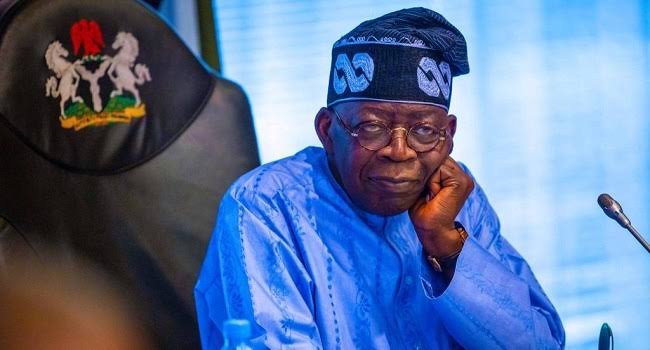
The Tinubu Must Go (TMG) movement has intensified political debate across Nigerian social media as opposition groups and supporters of President Bola Tinubu’s administration exchange competing claims ahead of the 2027 general election.
The movement, promoted by human rights lawyer Abba Hikima, has called for opposition presidential candidates to work towards a united front against Tinubu. Its activities have included an online poll and appeals for dialogue among opposition figures.

Key Highlights
- The Tinubu Must Go movement is campaigning for greater opposition cooperation ahead of the 2027 election.
- An online TMG poll recorded 109,799 responses between September 24 and 25, according to the organisers.
- The Atiku Abubakar-Rotimi Amaechi ticket received 73.6 per cent of votes in the TMG poll.
- The Peter Obi-Rabiu Kwankwaso ticket received 22.3 per cent.
- Atiku Abubakar has endorsed the TMG campaign following a meeting with Abba Hikima.
- Fact-checkers have established that some videos recently circulated as September 2026 TMG protests were actually recorded during earlier demonstrations.
- The movement has attracted both support and criticism on social media as the 2027 election approaches.
Tinubu Must Go Movement Pushes Opposition Unity
The TMG movement has positioned itself as a citizen-led campaign opposed to President Tinubu’s administration and has called on opposition presidential contenders to explore the possibility of presenting a common candidate for the 2027 election.
On September 22, the group wrote to opposition figures including Atiku Abubakar, Peter Obi, Omoyele Sowore and Seyi Makinde, seeking discussions on a united opposition platform.
The campaign has focused its criticism on issues including insecurity, inflation, poverty, unemployment and economic hardship.
Its activities have generated significant discussion on X and other social-media platforms, where supporters and critics have presented sharply different views about the movement’s objectives and reach.
TMG Online Poll Records Nearly 110,000 Responses
The movement’s 24-hour online poll, conducted from September 24 to 25, recorded 109,799 responses, according to figures released by the organisers.
The Atiku-Amaechi ticket recorded 80,809 votes, representing 73.6 per cent, while the Peter Obi-Kwankwaso ticket recorded 24,519 votes, or 22.3 per cent. Another 4,471 respondents, representing 4.1 per cent, selected other candidates.
The figures should be understood as the result of a poll organised by the TMG movement rather than as a representative national opinion survey. The Guardian and other reports noted that the exercise’s participant selection and methodology mean its results cannot automatically be applied to Nigeria’s wider voting population.
Atiku Endorses Tinubu Must Go Campaign
The TMG poll was followed by an endorsement from Atiku Abubakar.
After meeting with Hikima, Atiku said he was encouraged by the level of participation recorded in the exercise and endorsed the movement. He also invited Nigerians who identify with its stated objective to join the campaign.
The endorsement gives the movement a more visible connection with one of the major opposition figures preparing for the 2027 election, although the TMG campaign’s broader support cannot be determined from the online poll alone.
Supporters Link TMG To Economic Hardship And Insecurity
Supporters of the movement have used social media to connect the Tinubu Must Go slogan with concerns about the cost of living, petrol prices, unemployment and insecurity.
Posts supporting the campaign have also called for opposition politicians and their supporters to put aside political differences and work towards a common candidate.
Some supporters have described the TMG poll and Atiku’s subsequent endorsement as signs of increasing public engagement with opposition politics.
These interpretations remain political claims by supporters and do not by themselves establish the level of nationwide support for the movement.
Critics Question The Movement’s Reach
Critics of the campaign have questioned whether the online activity surrounding TMG reflects broader public opinion.
Some opponents have described the movement as a vehicle for opposition politics and questioned its grassroots strength. Others have argued that social-media campaigns and online polls should not be treated as substitutes for properly conducted opinion surveys or evidence of electoral support.
The debate has also been fuelled by the circulation of videos presented as evidence of fresh protests against Tinubu.
Read also:
- 2027: Deji Adeyanju Accuses Obi, Kwankwaso of Working for Tinubu
- 2027: Atiku Names El-Rufai Deputy Chairman Of ADC Campaign Council
- Tinubu must go protest rocks Port Harcourt
- Tinubu Convoy Lagos Viral Video Sparks Debate Over ‘Ole’ Chants
- Police Deploy Over 10 Armoured Vehicles To Stop ‘Tinubu Must Go’ Meeting In Kano
t
n
Fact-Checkers Flag Recycled Tinubu Must Go Protest Videos
Fact-checking organisations have identified several videos circulated in September as purported evidence of current Tinubu Must Go protests that were actually recorded during earlier demonstrations.
Africa Check reported on September 24 that one widely circulated video showing protesters chanting against Tinubu was recorded in June 2026. The demonstration followed the abduction of teachers and pupils in Oyo State, and protesters reportedly called for the rescue of the abducted victims.
Another fact-check by FactWatch also found that a video presented as a recent TMG protest had been circulating from an earlier demonstration.
The findings do not establish that all TMG-related protests or online activity are fabricated. They show, however, that some viral material being used in the political debate has been taken out of its original time context.
Social Media Becomes Political Battleground
The growing debate around TMG reflects the increasingly important role of social media in Nigeria’s 2027 political environment.
Supporters use X and other platforms to amplify concerns about government policies and promote opposition cooperation, while critics challenge the movement’s organisation, political affiliations and claims about public support.
The contrasting narratives have also created challenges for voters trying to distinguish current events from recycled videos, campaign messaging and personal opinions.
As the 2027 election approaches, the Tinubu Must Go movement is likely to remain part of the wider political conversation. Its eventual influence will depend on developments beyond social media, including its organisational activities, relationships with opposition politicians and the response of voters to the competing political campaigns.
For more updates on this and other political stories, follow us on X.