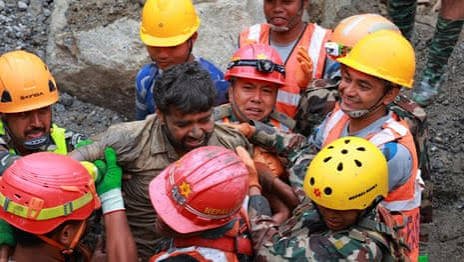
Rescuers have pulled two workers alive from a hydropower tunnel in Nepal, nine days after devastating flash flooding swept through the Nepal-Tibet border region, killing more than 1,280 people and leaving thousands missing.
Key Highlights
- Kabir Maharjan, 45, and Sanjay Sah, 30, were rescued from the Trishuli 3A Hydropower Project tunnel on Friday, nine days after the flood struck.
- Both men were injured and airlifted to Kathmandu; Maharjan was in critical condition.
- About 115 people are believed to still be trapped in the Trishuli 3A tunnel, out of 557 workers missing from that project alone.
- More than 1,280 people have died and over 5,600 remain missing across Nepal and Tibet combined.
- The flooding is believed to have been triggered by a glacial collapse near the Nepal-Tibet border on August 26.
The survivors, identified as Kabir Maharjan and Sanjay Sah, were rescued from the Trishuli 3A Hydropower Project after rescue teams made contact with voices from deep inside the mud-filled tunnel.

Maharjan, 45, was working as a mechanical supervisor on the project, while Sah, 30, was a foreman, according to the Public Relations Directorate of the Nepal Army. Dramatic footage showed the workers being pulled to safety after spending more than a week trapped underground following the disaster.
Both men sustained injuries to their hands and legs and were airlifted to Kathmandu for urgent medical treatment. Nepalese authorities said Maharjan was in critical condition.
Dozens more feared trapped
The rescue has raised fresh hopes for dozens of other workers believed to be trapped inside the same tunnel. According to the Independent Power Producers Association of Nepal, about 115 workers are believed to be trapped in the Trishuli 3A main tunnel, out of 557 workers reported missing from that project alone.
Across several hydropower facilities along the Trishuli River, hundreds more workers remain unaccounted for. Nepal’s disaster agency has previously put the figure at close to 900 missing hydropower workers tied to 11 projects along the Bhotekoshi and Trishuli rivers, including Upper Trishuli-1 and Trishuli 3B.
Rescue teams have been battling difficult conditions, using excavators, drilling equipment and, in some areas, explosives to clear massive boulders and debris. Engineers have also been pumping air into sections of the tunnels in an effort to support possible survivors.
Death toll passes 1,280
According to the latest official figures, at least 1,280 people have been confirmed dead in Nepal and Tibet following the catastrophic flooding, while more than 5,600 others remain missing.
Nepal alone has recorded 1,259 deaths and 5,083 missing persons, according to the National Disaster Risk Reduction and Management Authority, while authorities in Tibet reported 21 deaths and 541 people still unaccounted for.
The flash flooding, which struck nine days earlier, is believed to have been triggered by a glacial collapse near the Nepal-Tibet border, sending a massive surge of water, mud and debris through mountain communities and infrastructure.
Buildings, roads, bridges and hydropower facilities were destroyed as floodwaters surged downstream.
The successful rescue of the two workers has provided a rare moment of hope amid a disaster that has devastated communities across the Himalayan region. Rescue teams are continuing operations at several tunnel sites, hoping that the discovery of the two survivors could lead them to more people still trapped underground.
Related Stories:
- Kylian Mbappé Escapes Alleged Kidnap Plot, Suspect Arrested
- FAAN Training School Opens Registration for Aviation Courses in 2026
- NHRC X Account Hacked, Public Warned Against Crypto Posts
- Zulum Woos AfDB Support for Borno’s Economic Recovery, Development
Related Stories: