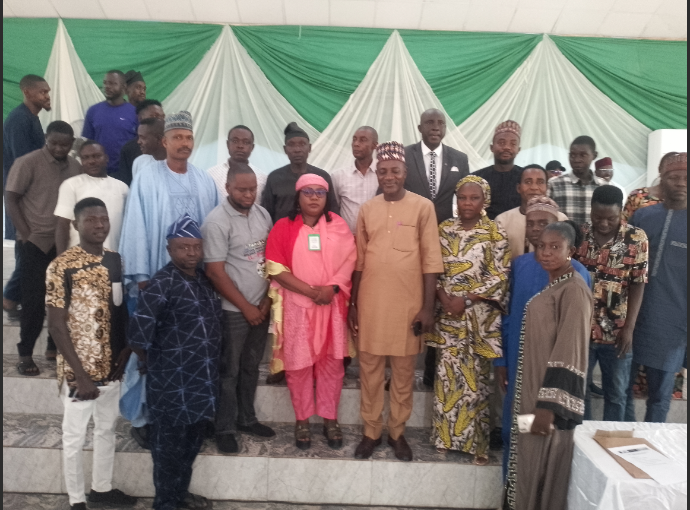
The Livestock Productivity and Resilience Support (L-PRES) Project has identified dialogue, trust and stakeholder collaboration as critical pillars for achieving Sustainable Agriculture in Taraba, urging farmers, herders, government institutions and community leaders to embrace peaceful coexistence as the foundation for agricultural growth and economic development.

Key Highlights:
- L-PRES promotes dialogue as a lasting solution to farmers-herders conflicts in Taraba.
- Stakeholders call for stronger trust and collaboration to boost agricultural productivity.
- Government, traditional rulers, religious leaders, farmers and pastoralists participate in peacebuilding discussions.
- MACBAN commends efforts to improve security and reduce conflicts.
- Participants pledge to promote peaceful coexistence across communities.
For decades, recurring conflicts between farmers and herders have remained one of the biggest obstacles to agricultural development and peaceful coexistence in Taraba State. Despite its vast agricultural land and enormous livestock potential, disputes over land use, grazing routes and water resources have continued to undermine productivity and social harmony.
Recognising that sustainable development cannot flourish in an atmosphere of conflict, the Taraba State L-PRES Project has intensified efforts to strengthen conflict mitigation mechanisms through inclusive stakeholder engagement.
Speaking during a two-day Conflict Mitigation Stakeholders’ Meeting in Jalingo, the project’s ICT and Information Officer, Mr. Artimas Ezra, who represented the Taraba State L-PRES Coordinator, Mr. Hananiah G. Albert, said lasting peace remains essential for sustainable livestock development and improved agricultural productivity.
Read Also:
- L-PRES Investment Drive Attracts Private Sector Interest In Taraba Livestock Service Centre
- Sunkani residents hail siting of L-PRES office in community
- Taraba Begins Recruitment Of Firefighters, Successful Candidates To Train In Lagos
According to him, the Federal Government-supported L-PRES Project is committed to strengthening livestock value chains, enhancing productivity, improving resilience and promoting sustainable livelihoods through continuous dialogue among stakeholders.
Ezra explained that the meeting provided a platform to identify the root causes of conflicts, encourage knowledge sharing and develop practical strategies for preventing disputes while reinforcing existing conflict resolution mechanisms.
He urged government agencies, traditional institutions, security agencies, farmers, pastoralists, women, youth groups, civil society organisations and development partners to work together in sustaining peace across Taraba communities.
Expressing optimism about the outcome of the engagement, Ezra said the resolutions reached would strengthen peacebuilding efforts and create a more enabling environment for agricultural and livestock development throughout the state.
Chairman of the Miyetti Allah Cattle Breeders Association of Nigeria (MACBAN) in Taraba State, Alhaji Yau Ibrahim, also reaffirmed the association’s commitment to resolving farmers-herders disputes through dialogue and cooperation.
He commended the Taraba State Government for its efforts to combat kidnapping and armed banditry, describing improved security as a critical requirement for agricultural development.
Also speaking at the meeting, the Special Adviser to Governor Agbu Kefas on Farmers/Herders Affairs, Bello Mbea, alongside representatives of the Christian Association of Nigeria (CAN) and the Muslim Council of Nigeria, applauded the L-PRES Project for fostering mutual understanding, trust and sustained engagement between farming and pastoral communities.
Participants described the workshop as timely and impactful, pledging to share the conflict resolution strategies learned with members of their respective communities to deepen the culture of peaceful coexistence and strengthen Sustainable Agriculture in Taraba.