
Current status
Status (14 November 2026): not yet law. The Senate passed the B.Tech amendment to the Federal Polytechnics Act on 15 October 2026. As of 14 November, The Trumpet has found no record of House of Representatives concurrence or presidential assent, so no federal polytechnic can yet admit students into a B.Tech programme under the new provision.
What to watch next: House concurrence, presidential assent, then NUC accreditation of each B.Tech programme. This page is updated as each step happens.
Can federal polytechnics now award degrees? Not yet. On Thursday, October 15, 2026, the Nigerian Senate passed an amendment to the Federal Polytechnics Act giving federal polytechnics the power to award Bachelor of Technology (B.Tech. Hons.) degrees in science, engineering and technology programmes. The bill still needs concurrence by the House of Representatives and the President’s assent before it becomes law, and each programme would then need accreditation by the National Universities Commission (NUC).
The amendment would end the rule limiting federal polytechnics to the National Diploma (ND) and Higher National Diploma (HND), and could open a degree route for ND, HND and postgraduate diploma holders. Here is what the Senate approved, who could benefit and what happens next.

Key Highlights
- The Senate has approved amendments to the Federal Polytechnic Act to allow federal polytechnics to award B.Tech degrees.
- The proposed degree-awarding powers cover science, engineering and technology programmes.
- Eligible candidates holding ND, HND or postgraduate diplomas may benefit, subject to admission rules and accreditation.
- The National Universities Commission (NUC) and other relevant regulatory bodies will play a role in accreditation.
- The amendment also revises the appointment and tenure of federal polytechnic rectors.
- Rectors would serve an initial five-year term, with the possibility of a second and final four-year term.
- The reform could expand academic progression opportunities but does not automatically eliminate employment disparities between HND and university degree holders.
Federal polytechnics degree powers: where the bill stands
- March 2025: The Federal Polytechnics Act (Amendment) Bill, sponsored by Speaker Tajudeen Abbas and Hon. Fuad Laguda, chairman of the House Committee on Federal Polytechnics, passes second reading in the House of Representatives.
- January 21, 2026: Education Minister Tunji Alausa announces the Federal Government’s plan to give polytechnics degree-awarding powers and end the HND/B.Sc. dichotomy.
- July 2026: President Tinubu approves the conversion of Federal Polytechnic, Nasarawa, into a specialised university of mining and engineering. Read
- September 2026: NBTE ends direct HND admissions by polytechnics; JAMB takes over HND admissions. Read
- October 15, 2026: The Senate passes the amendment, adding a new Section 2(1)(c) that empowers federal polytechnics to award B.Tech. (Hons.) degrees.
- Next: House of Representatives concurrence, then presidential assent. After that, the NUC and other regulators must accredit each B.Tech programme before admissions can begin.
Until those steps are completed, no federal polytechnic can lawfully admit students into a B.Tech programme under the new provision. The Trumpet will update this page as the bill moves.
Senate Approves B.Tech Degrees for Federal Polytechnics
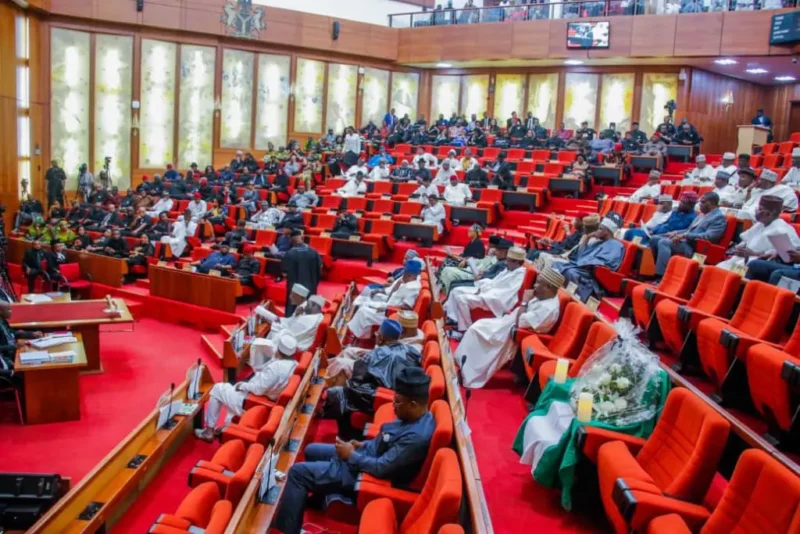
The Senate approved the amendment at plenary on Thursday, October 15, 2026, following a motion moved by Senate Leader Opeyemi Bamidele, who represents Ekiti Central Senatorial District.
Bamidele argued that certain provisions of the Federal Polytechnic Act required further review to clarify administrative arrangements and establish a more comprehensive legal framework for the institutions.
The Senate subsequently recommitted the Act to the Committee of the Whole for consideration before Senate President Godswill Akpabio put the amended provisions to a voice vote, which received majority support.
The amendment introduces a new subsection, Section 2(1)(c), which would enable federal polytechnics to award Bachelor of Technology degrees in eligible science, engineering and technology programmes to holders of the ND, HND or postgraduate diploma, subject to NUC accreditation.
The implementation of the new framework will depend on the applicable accreditation requirements and the final regulatory arrangements.
Who Can Benefit From the New B.Tech Programme?
Under the amended provision described during the proceedings, eligible candidates holding National Diploma, Higher National Diploma or postgraduate diploma qualifications may have opportunities to pursue B.Tech degrees.
However, eligibility will depend on the specific programme, admission requirements and accreditation status of the institution and course concerned.
The reform could provide additional academic progression routes for polytechnic graduates who want to obtain a bachelor’s-level qualification without necessarily following the conventional university pathway.
It could also strengthen the position of polytechnics in science, engineering and technology education by allowing them to offer degree programmes within their approved areas of specialisation.
Further details will be needed to establish how existing HND holders can apply, whether bridging programmes will be required and which institutions and courses will receive approval.
Could B.Tech Degrees Address HND Discrimination?
The Senate’s decision comes amid longstanding concerns about differences in how HND and university degree holders are treated in employment, remuneration, promotion and eligibility for certain positions.
Although both qualifications are awarded by recognised tertiary institutions, HND holders have faced restrictions in some public and private sector organisations, particularly in career progression and access to positions traditionally reserved for university graduates.
In March 2018, a circular from the Office of the Head of the Civil Service of the Federation addressed the entry-level placement of HND holders in the federal civil service, permitting them to enter at Salary Grade Level 08.
However, additional requirements have applied to progression beyond Grade Level 14 and conversion to the officer cadre.
The issue also attracted legislative attention in 2023, when the House of Representatives raised concerns over alleged disparities in the promotion of HND and degree holders in the Nigeria Security and Civil Defence Corps.
The introduction of B.Tech degrees could give eligible polytechnic graduates another academic qualification to present to employers. Nevertheless, it remains unclear whether employers and government agencies will automatically treat the new degrees in the same way as existing university qualifications.
Read also:
- Oghara Poly Rector advocates for Polytechnic Lecturers’ promotion to Associate Professors, calls for Bachelor’s Degree awarding status
- Adamawa Poly Appoints Suleiman Samaila Acting Rector After Six Months
- FG Releases CONTA To Non-Academic Staff Of Federal Tertiary Institutions
- Tinubu Grants Federal Universities Recruitment Autonomy
- Senate Passes Bill to Establish Federal University of Agriculture in Orogun, Delta State
Senate Revises Appointment and Tenure of Rectors
Beyond the introduction of degree-awarding powers, the amendment also changes provisions governing the appointment and tenure of rectors in federal polytechnics.
Under the revised provision, governing councils would appoint rectors for an initial five-year term, with the possibility of a second and final four-year term.
The amendment also revises Section 31 of the Act to define a minister as the officer responsible for education.
These changes form part of the broader review of the legal framework governing federal polytechnics and their administration.
What the Amendment Means for Polytechnic Graduates
The amendment could expand the academic options available to graduates of federal polytechnics, particularly those seeking further qualifications in science, engineering and technology.
For HND holders, the possibility of progressing to a B.Tech degree could create new opportunities for further study and professional development, depending on the admission requirements and programmes eventually approved.
The reform may also encourage federal polytechnics to strengthen their teaching, research and technical training capacity to meet degree-level accreditation standards.
However, the extent of these benefits will depend on implementation, funding, institutional readiness and the availability of accredited programmes.
Will B.Tech Degrees End Differences Between HND and B.Sc. Holders?
Although the amendment could improve academic progression opportunities, it does not automatically remove existing differences between HND and B.Sc. holders in recruitment, salary structures, promotion or eligibility for public service positions.
Those differences are also influenced by employment policies, professional regulations and the requirements of individual organisations.
Any broader change will therefore depend on how employers, professional bodies and government agencies respond to the new degree-awarding framework and whether they revise existing recruitment and promotion policies.
The Senate’s decision marks a potential change in the role of federal polytechnics, but the practical impact on graduates will become clearer as the amended law, accreditation requirements and implementation guidelines are finalised.
Polytechnics being converted to universities
Separately from the B.Tech amendment, some federal institutions are being turned into universities by their own laws:
- Federal Polytechnic, Kaduna: President Tinubu has assented to the bill converting it into the Federal University of Technology and Vocational Studies, Kaduna.
- Yaba College of Technology, Lagos: the President has also assented to the law establishing the Federal University of Technology and Vocational Studies, Yaba.
- Federal Polytechnic, Nasarawa: approved in July 2026 for conversion into the Federal University of Mining, Engineering and Technology, Nasarawa; the legal process is ongoing. Read
Institutions converted this way stop being polytechnics. The B.Tech amendment is different: it would let federal polytechnics remain polytechnics while also awarding degrees.
Federal polytechnics degree powers: frequently asked questions
Which polytechnics can award degrees now?
None under the new B.Tech provision, because it is not yet law. Some institutions, such as Federal Polytechnic, Kaduna, and Yaba College of Technology, are being converted into universities under separate laws.
Has President Tinubu signed the polytechnic B.Tech bill?
Not as of 14 November 2026. The amendment passed the Senate on 15 October 2026 and still needs House of Representatives concurrence before it goes to the President for assent.
Can federal polytechnics award degrees now?
Not yet. The Senate passed the amendment on October 15, 2026, but it still needs House of Representatives concurrence and presidential assent, followed by NUC accreditation of each programme.
What degree will federal polytechnics award?
A Bachelor of Technology, B.Tech. (Hons.), in science, engineering and technology programmes, under a new Section 2(1)(c) of the Federal Polytechnics Act.
Who can apply for the B.Tech degree?
The Senate amendment names holders of the National Diploma (ND), Higher National Diploma (HND) or postgraduate diploma, subject to each programme's admission rules and accreditation.
Will polytechnics stop awarding ND and HND?
The Senate amendment adds degree-awarding powers. Under the House version of the bill, polytechnics would continue to award ND and HND alongside the B.Tech.
Does the B.Tech end the HND/B.Sc. dichotomy?
Not automatically. Differences in recruitment, pay and promotion come from employer and civil service policies, which would also need to change.
Is this the same as upgrading polytechnics to universities?
No. Separate laws have converted some institutions, such as Federal Polytechnic Kaduna, into universities. This amendment lets federal polytechnics stay polytechnics while awarding B.Tech degrees.
For more education news, follow us on X.