
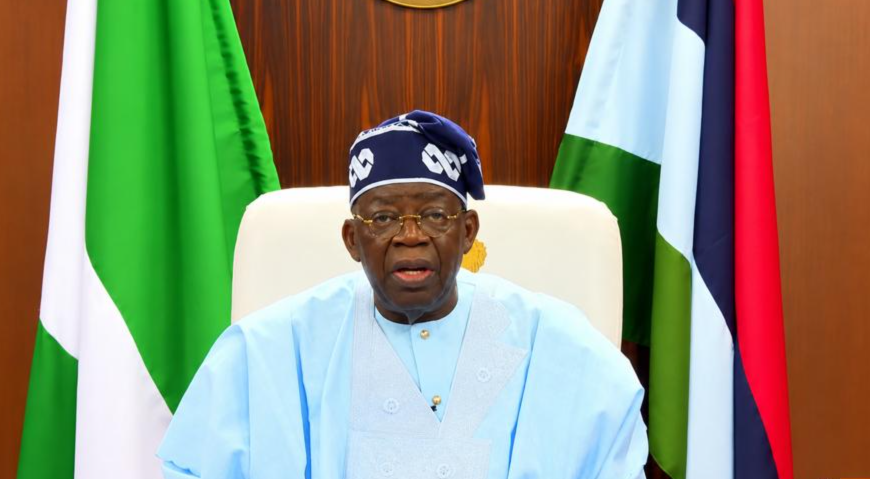
President Bola Tinubu has granted federal universities autonomy to recruit staff without obtaining recruitment waivers from the office of the head of the civil service of the federation, in a move aimed at strengthening institutional independence and improving manpower management.
Key Highlights
- Federal universities no longer need waivers from the Head of Service to recruit staff.
- The exemption is part of recent agreements with university staff unions.
- University staff to migrate from IPPIS to GIFMIS for payroll.
- FUHSA Azare received an initial ₦8 billion TETFund intervention.
- ₦10 billion allocated to the national research fund in the 2026 budget.
Tinubu announced the policy at the maiden convocation ceremony of the Federal University of Health Sciences, Azare (FUHSA), Bauchi State, on Saturday.

He was represented at the event by the Executive Secretary of the Tertiary Education Trust Fund (TETFund), Sonny Echono.
The president said the exemption is captured in recent agreements signed with university staff unions and would empower the Federal Ministry of Education and university governing councils to make recruitment decisions based on their institutions’ needs.
According to him, the reform would enable universities to fill vacant positions more efficiently and respond promptly to demands for academic and non-academic personnel.
“This measure empowers the Federal Ministry of Education and university governing councils to discharge their respective responsibilities in staff recruitment, enabling institutions to respond more effectively to their legitimate manpower needs,” Tinubu said.
IPPIS to GIFMIS Migration
The president also disclosed that the federal government was working to improve personnel and payroll administration in tertiary institutions through the migration of staff from the Integrated Personnel and Payroll Information System (IPPIS) to the Government Integrated Financial Management Information System (GIFMIS).
He said the transition is intended to improve payroll efficiency, transparency and accountability, ensure timely and accurate salary payments, and accommodate the operational peculiarities of tertiary institutions.
Read also:
- SSANU Strike Ultimatum Expires October 19 as FG Pays Eight Months of Salary Arrears
- Senate Approves B.Tech Degrees for Federal Polytechnics, HND Holders Could Benefit
- TETFund Unveils N6bn Plan To Equip Nigerian Students With AI, Tech Skills
Funding for FUHSA and Research
Tinubu reaffirmed his administration’s commitment to strengthening the education sector through infrastructure development, research funding and improved welfare for university personnel.
He disclosed that FUHSA, established in the wake of the COVID-19 pandemic which exposed critical gaps in Nigeria’s healthcare system, has received an initial intervention of ₦8 billion through TETFund to support its establishment.
The president added that the institution would benefit from further investments through TETFund’s regular and special intervention programmes, alongside provisions in the 2026 national budget for roads, lecture halls, laboratories and utility vehicles.
He also revealed that the federal government had allocated ₦10 billion to the national research fund in the 2026 budget.
Tinubu urged universities, particularly specialised institutions such as FUHSA, to undertake research that would help address Nigeria’s pressing health challenges.
Established in 2021 during the second term of former President Muhammadu Buhari, FUHSA held its maiden convocation ceremony on Saturday, graduating about 50 students.
What the Waiver Rule Meant
The recruitment waiver requirement previously meant that federal institutions could be required to secure approval from the office of the head of the civil service of the federation before employing new personnel.
The process could delay the replacement of retiring staff, the filling of vacant positions and the recruitment of additional workers.
The new policy is expected to give federal universities greater flexibility in addressing their staffing needs while strengthening their administrative autonomy.
For more education updates, follow us on X.