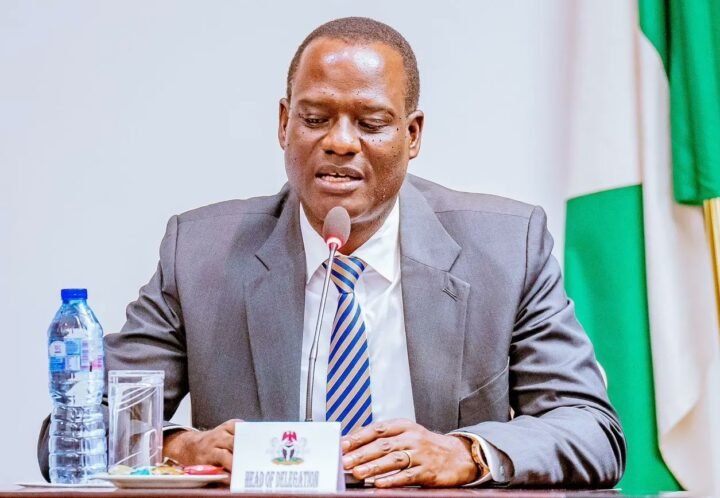
Minister of Finance and Coordinating Minister of the Economy, Taiwo Oyedele, has urged the international community to make affordable, long-term financing more accessible to African countries seeking to close their infrastructure and development gaps.
The call is contained in a statement issued by Mrs. Efe Ovuakporie, Head of Information and Public Relations, on September 23, 2026, following Oyedele’s address at the United Nations Dialogue on Solutions to Climate Finance on the sidelines of the 81st Session of the United Nations General Assembly in New York.

Key Highlights:
Affordable funding: Africa needs cheaper, long-term financing.
High costs: Borrowing is expensive due to currency risks and perceptions.
Climate finance: Oyedele wants a fairer global financing system.
Energy: He supports more investment in gas and clean energy.
Nigeria: Focus on reducing poverty and expanding opportunities.
Oyedele said Africa’s development efforts, particularly in the energy sector, continue to face significant financing challenges due to high borrowing costs, currency risks and limited access to long-term capital.
The minister argued that the continent faces additional financing burdens despite its relatively low contribution to global carbon emissions.
He described some of these challenges as a “prejudice premium” and “narrative cost” attached to Africa when it seeks funding for major infrastructure projects.
Oyedele also pointed to currency risks and what he called a “stereotype tax” as factors that further increase the cost of raising capital for African countries.
He therefore advocated changes to the global climate finance system to simplify access to affordable funding for developing countries and ensure financing arrangements better reflect their economic and development circumstances.
The minister also called for increased investment in gas and other transition energy sources, particularly across Africa, arguing that such investments could help expand access to reliable and affordable energy while addressing energy poverty.
Read also:
- Emir Sanusi Hails CBN Reforms as Nigeria’s Economy Outpaces Population Growth for First Time
- Delta Deputy Governor Onyeme Urges Nigerians to Support Tinubu’s Economic Reforms
- We’re not going to reverse economic reforms, Oyedele assures investors
- FG Cuts Interest on Late Tax Payments, New Rate Takes Effect October 1
- FG Describes Healthcare As Critical Economic Infrastructure
According to him, greater investment in Africa’s energy sector could also contribute to the diversification of global energy supplies and reduce concentration risks at a time of disruptions affecting the Gulf region.
Oyedele stressed that Africa’s energy transition must take into account the continent’s substantial energy access deficit.
He said the transition to cleaner energy should therefore be practical and aligned with the continent’s development needs, requiring significant investment to expand energy access while gradually moving towards cleaner sources.
For Nigeria, the minister said the immediate focus should be on implementing policies and programmes capable of reducing poverty, expanding economic opportunities and ensuring that the benefits of economic growth are more widely shared.
He said achieving those goals would require stronger international cooperation and a financing framework that enables developing countries to mobilise the capital needed for infrastructure development and improved living standards.
Related Stories: