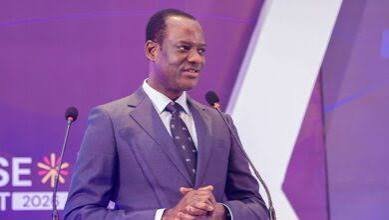
The Federal Government has reduced the interest charged on late payment of taxes, with a new market-linked system set to take effect from October 1, 2026.
The new regime is contained in the Nigeria Tax Administration (Interest on Late Payment of Tax) Order, 2026, issued by the Minister of Finance and Coordinating Minister of the Economy, Taiwo Oyedele, under Section 65 of the Nigeria Tax Administration Act, 2025.

Key Highlights
- FG reduces interest charged on late tax payments effective October 1, 2026.
- New order applies uniformly to the Nigeria Revenue Service, state IRS and the FCT tax authority.
- Naira-denominated tax interest will now be calculated at MPR plus 1 percentage point, down from a 5-point spread.
- Foreign currency tax obligations will attract SOFR plus 6 percentage points.
- The Nigeria Revenue Service will publish the applicable monthly rate by the third business day of each month.
- The separate 10 per cent late-payment penalty under Section 65 remains in place.
The order will apply uniformly to the Nigeria Revenue Service, state Internal Revenue Services and the Federal Capital Territory tax authority.
Under the revised arrangement, interest on tax liabilities payable in naira will be calculated at the Central Bank of Nigeriau2019s Monetary Policy Rate plus one percentage point.
This represents a reduction from the previous five percentage-point spread. However, the applicable rate cannot fall below the yield on 364-day Treasury Bills.
For tax obligations denominated in foreign currencies, the interest rate will be based on the Secured Overnight Financing Rate, known as SOFR, plus six percentage points. Where SOFR is discontinued, its officially designated successor rate will apply.
The order provides for a single applicable interest rate for each calendar month.
The rate will be determined on the last business day of the preceding month, while the Nigeria Revenue Service is required to publish the applicable figure on its website by the third business day of each month.
Interest will be calculated as simple interest on a daily basis, beginning from the date the tax becomes due and ending when the outstanding amount is paid.
The framework covers tax liabilities arising through self-assessment as well as assessments administered by the Nigeria Revenue Service and the state and FCT revenue authorities.
Read also:
- Oyedele Seeks Cheaper Foreign Capital To Fund Africa’s Infrastructure, Development Gaps
- Hotel Operators Lament Multiple Taxes, High Operating Costs, Poor Power Supply
- FG Saves ₦15.8 Trillion From Subsidies In 30 Months, Uses Money For Projects, Says Finance Minister
Explaining the rationale behind the new system, Oyedele said delayed payment of taxes could create a funding gap for government and result in additional borrowing costs.
u201cTax that is due belongs to the public. When it is paid late, Government may have to borrow to fill the gap, and the cost falls on everyone,u201d the minister said.
He added that linking the interest charge to market conditions would prevent taxpayers from effectively using unpaid taxes as a cheaper source of financing.
u201cThis Order ties the cost of late payment to real market rates, so that delaying tax does not become a cheaper form of credit than the market itself,u201d Oyedele said.
The Federal Government clarified that the new interest arrangement does not remove the separate 10 per cent penalty prescribed for late payment under Section 65 of the Nigeria Tax Administration Act.
Tax authorities will also retain the power granted under Section 66 of the Act to waive applicable interest or penalties where a taxpayer can establish good cause.
The order will replace the 2017 notice governing interest on unpaid taxes and other previous notices dealing with the issue.
The government said the new rates would apply to interest arising from October 1, 2026, including interest relating to tax liabilities that became due before that date. However, interest that arose before October 1 will remain subject to the rules applicable when it arose, where those rules specifically provide for such treatment.
Oyedele said the new framework would also provide greater certainty for taxpayers by making the applicable rate predictable and publicly available each month.
u201cEvery taxpayer, whether dealing with the Nigeria Revenue Service or a State revenue service, will know the rate in advance, see it published every month, and be charged in the same way,u201d he said.
The minister added that clear and uniform rules would make tax compliance easier and support a more predictable tax administration system.
The Federal Ministry of Finance advised taxpayers to file their returns and pay their obligations within the prescribed deadlines. Those with outstanding tax liabilities were encouraged to settle them promptly or engage the relevant tax authority over their obligations.
Taxpayers were also advised to monitor the Nigeria Revenue Service website for the applicable monthly interest rate once the new system takes effect. The reform is expected to make the financial cost of delayed tax payments move more closely with prevailing monetary and government borrowing conditions while providing taxpayers with a clearer basis for calculating their liabilities. Follow us on X for more updates.