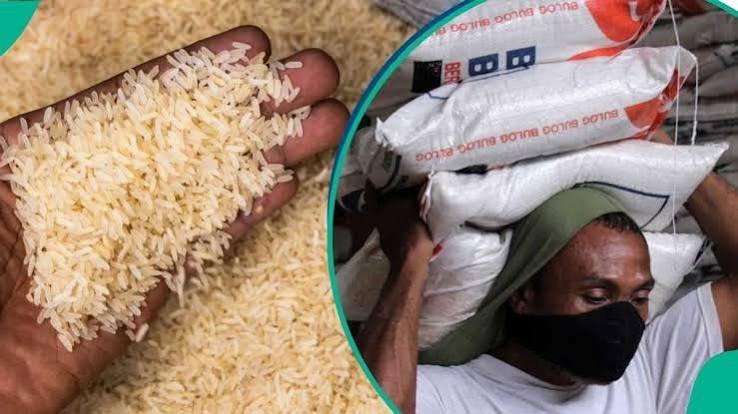
Nigeria spent $1.19 billion on foreign exchange for food imports in the first half of 2026, an 11.41 per cent increase from the $1.07 billion recorded in the corresponding period of 2025, according to an analysis of the Central Bank of Nigeria’s (CBN) Quarterly Statistical Bulletin for the second quarter of 2026.
The increase came despite Federal Government efforts to boost domestic agricultural production and reduce reliance on imported food. The additional $121.52 million was driven largely by higher foreign exchange spending in the second quarter, which more than offset the decline recorded in the first three months of the year.

Key Highlights
- Nigeria’s food import foreign exchange spending rose 11.41 per cent to $1.19 billion in H1 2026.
- Second-quarter spending increased 26.38 per cent year-on-year to $650 million.
- April recorded the sharpest monthly increase, with spending rising 54.28 per cent.
- Agricultural insecurity and limited access to modern farming equipment remain major concerns.
- The figures highlight the challenge of reducing food imports despite efforts to expand local production.
Nigeria’s Food Import Spending Rises in Five Months
A monthly breakdown of the CBN figures showed that food-related foreign exchange spending increased year-on-year in five of the six months under review, with February recording the only decline.
In January 2026, spending rose by 8.89 per cent to $232.05 million from $213.11 million in January 2025.
February recorded a 22.90 per cent decline, with spending falling to $150.87 million from $195.68 million in the corresponding month of the previous year.
Spending increased in March to $153.73 million from $141.30 million, while April recorded the sharpest rise, climbing 54.28 per cent to $217.74 million from $141.13 million.
In May, food import foreign exchange utilisation rose by 8.59 per cent to $220.26 million from $202.83 million. June spending increased by 23.92 per cent to approximately $212 million from $171.08 million.
The figures indicate that higher spending in the second quarter was the principal driver of the overall increase during the first half of 2026.
Second-Quarter Food Import Spending Jumps 26.38%
On a quarterly basis, Nigeria’s food import foreign exchange spending declined by 2.57 per cent in the first quarter of 2026, falling to $536.65 million from $550.79 million in the corresponding period of 2025.
The trend reversed in the second quarter, when spending surged by 26.38 per cent to $650 million from $514.34 million a year earlier.
The second-quarter increase more than offset the first-quarter reduction, resulting in higher overall food import spending during the six-month period.
For context, the figures show that Nigeria’s full-year food import foreign exchange utilisation stood at $2.34 billion in 2025, down 7.37 per cent from $2.53 billion in 2024.
Approximately $1.07 billion of the 2025 total was recorded in the first half, while about $1.27 billion to $1.28 billion was spent in the second half.
CBN and NBS Figures Measure Different Aspects of Imports
Separate data from the National Bureau of Statistics (NBS) showed a different trend in the value of food and beverage imports.
According to the figures, food and beverage imports declined by 3.1 per cent to ₦3.30 trillion in the first half of 2026 from ₦3.40 trillion in the corresponding period of 2025.
The CBN and NBS figures measure different aspects of trade and should not be treated as directly equivalent. The CBN data tracks foreign exchange utilisation for food imports, while the NBS figures refer to the recorded value of imports in naira.
Differences in measurement, valuation and coverage can produce contrasting trends. The figures therefore require separate interpretation when assessing Nigeria’s food import dependence.
Insecurity, Low Mechanisation Hamper Local Production
Agricultural stakeholders have identified insecurity and limited access to modern farming technology as major obstacles to increasing domestic food production.
Femi Egbesola, President of the Association of Small Business Owners of Nigeria, attributed persistent import demand partly to insecurity that has forced farmers to abandon their farmlands.
“Most of the farmers are no longer on the farms because of insecurity. Many farmlands have been deserted,” Egbesola said.
He also argued that agricultural productivity remained below global standards because many farmers continued to rely on outdated tools and equipment.
Egbesola called for greater mechanisation and the integration of modern technology into smallholder farming to improve yields and strengthen local food supply.
Insecurity in farming communities can disrupt planting and harvesting, reduce the area of land under cultivation and limit the movement of agricultural produce to markets. These challenges can place additional pressure on food supply and import demand.
Read also:
- World Food Day 2026: HOMEF Urges Support for Indigenous Seeds, Food Sovereignty
- Nigeria’s Inflation Falls to 14.63% in September 2026, but High Prices Still Squeeze Households
- CAN Urges Tinubu to Reduce Fuel, Food Prices as Nigerians Face Rising Cost of Living
Sanusi Warns Against Policies That Undermine Local Producers
The Emir of Kano, Muhammadu Sanusi II, has previously raised concerns about the effects of import policies on domestic agricultural businesses.
Sanusi warned that policies opening the market to imported products, including rice, had damaged local mills and contributed to bad loans within the agricultural value chain.
He also argued for protecting vulnerable households from high food prices without undermining domestic producers.
The debate highlights the challenge facing policymakers: imports can help meet immediate food demand and influence market prices, while poorly managed import policies may weaken incentives for local investment and production.
Public Reactions Focus on Insecurity and Government Policy
Reactions to the report on social media centred on insecurity, the cost of food and questions about the effectiveness of government agricultural policies.
Some users argued that farmers could not increase production while facing threats of violence and kidnapping. Others expressed frustration that spending on food imports remained high despite efforts to promote domestic agriculture.
Some reactions also raised concerns about governance and alleged corruption, although such claims were opinions expressed by users and were not independently substantiated by the figures cited in the report.
The discussion reflects wider public concerns about the relationship between agricultural production, food prices, security and government spending.
Food Import Bill Highlights Challenges Facing Agriculture
Nigeria’s $1.19 billion food import foreign exchange bill in the first half of 2026 highlights the difficulty of reducing dependence on imported food while domestic production continues to face structural constraints.
Although full-year food import foreign exchange utilisation declined in 2025 compared with 2024, the increase recorded in the first half of 2026, particularly during the second quarter, points to renewed pressure.
Improving security in farming communities, expanding access to mechanisation, strengthening rural infrastructure and supporting smallholder farmers could help increase domestic output and improve the resilience of local food systems.
The figures also underline the need to distinguish between foreign exchange utilisation and the naira value of recorded imports when evaluating the effectiveness of policies designed to reduce Nigeria’s food import bill.
For more updates on Nigeria’s economy and agriculture, follow us on X.