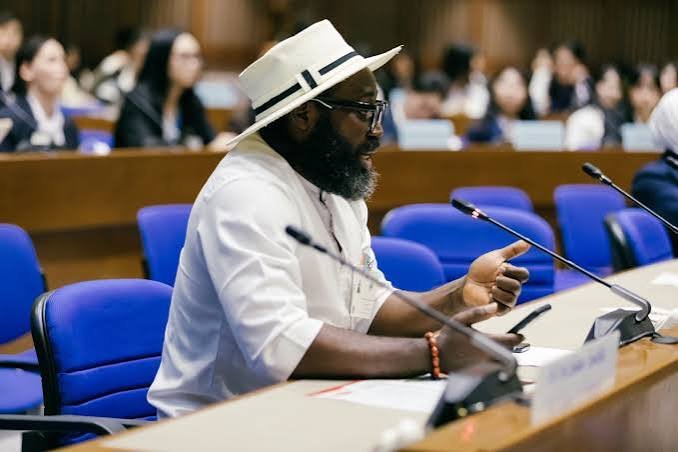
Nigeria and Delta State featured prominently at the Second World Summit on Sustainable Health and Well-Being in Thailand, where Delta State Webmaster, Louis Osiobe, led discussions on digital health, Artificial Intelligence (AI) and responsible innovation.
Key Highlights
- Delta Webmaster speaks at global summit: Louis Osiobe represented Nigeria at the Second World Summit on Sustainable Health and Well-Being in Thailand.
- Focus on digital health and AI: Osiobe addressed the role of Artificial Intelligence, telemedicine and responsible innovation in improving global healthcare.
- Warning over health misinformation: He cautioned against relying on unverified health information shared on social media.
- Call for better telemedicine: Osiobe advocated secure digital platforms connecting patients with verified healthcare professionals, including specialists outside their locations.
- AI to support healthcare workers: He said AI could assist with health education, translation, research, data analysis and early identification of health risks, while stressing the need for human oversight.
The summit, held at the United Nations Conference Centre, brought together delegates from more than 60 countries, including government officials, diplomats, healthcare professionals, traditional leaders, industry experts and private-sector representatives.

Representing Nigeria, Osiobe spoke on: “Digital Health, Artificial Intelligence and Responsible Innovation in Sustaining Global Health and Well-Being.”
He said technological advancement has transformed communication and access to information but had not translated into equitable access to quality healthcare.
Osiobe raised concerns over the growing spread of unverified health information on social media, stressing that information should not be mistaken for knowledge and that personal opinions could not replace scientific evidence.
He called for digital health policies that prioritise access to accurate, credible and professionally validated healthcare information.
On telemedicine, Osiobe advocated secure digital platforms that would connect patients with verified healthcare professionals, including specialists outside their immediate locations, where legally and clinically appropriate.
He said the approach could help reduce geographical barriers and extend professional healthcare services to underserved communities.
Read also:
- NDC Supporters Attacked During Political Rally in Warri, Delta State
- Delta State at 35: Untold Stories, Tourist Attractions and Fascinating Facts About ‘The Big Heart’
- Delta State Government Converts Model Technical College, Omadino, into Campus of Federal Polytechnic Orogun
- Delta Trains 232 PHC Workers to Expand Eye-Care Services Across 75 Centres
t
Osiobe also highlighted AI applications in health education, language translation, medical research, data analysis, early identification of health risks and access to reliable health information.
He, however, stressed that AI should complement rather than replace healthcare professionals, with its use guided by ethical standards, scientific evidence, regulation and human oversight.
Osiobe said his participation demonstrated the capacity of Nigerian professionals to contribute to global conversations on healthcare, technology and sustainable development.
He commended President Bola Tinubu and Delta State Governor, Sheriff Oborevwori, for policies which, he said, have created opportunities for Nigerians and Deltans to participate in international engagements.
He also acknowledged the efforts of the Delta State government in strengthening the health sector, particularly the Commissioner for Health, Dr Joseph Onojaeme.
According to Osiobe, Delta’s participation in global discussions on digital health and innovation aligns with its growing focus on investment, technology and digital transformation, as reflected in the recently concluded Delta State Investment Summit.
He urged Nigerians and Deltans to invest more in knowledge, innovation, digital infrastructure and professional excellence, saying the country had the human capacity to contribute meaningfully to global development.