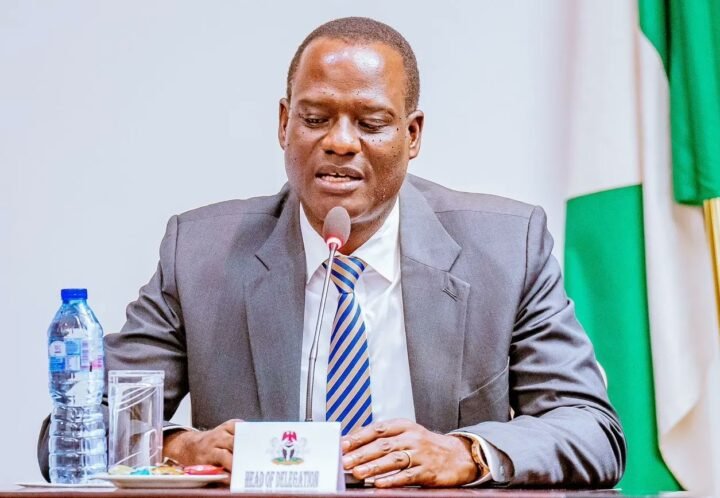
Nigeria has advocated for a fairer global financial system, while presenting a $78.5 billion investment pipeline and strategy for job-rich growth at the IMF/World Bank Annual Meetings in Bangkok.
Key Highlights
- Nigeria launches Projects Nigeria: 65 bankable projects worth about $78.5 billion.
- Delegation cites 4.4% Q2 growth, falling inflation and reserves above $55 billion.
- World Bank Group to back power and infrastructure through guarantee instruments.
- Oyedele urges Bretton Woods institutions to measure success by jobs created.
- Minister rules out a return to fuel subsidy or multiple exchange rates.
Nigeria’s delegation concluded its participation in the 2026 annual meetings of the IMF and World Bank Group in Bangkok with a call to turn hard-won stability into faster, job-creating growth.

Led by the Minister of Finance and Coordinating Minister of the Economy, Mr. Taiwo Oyedele, and the Governor of the Central Bank of Nigeria, Mr. Olayemi Cardoso, the delegation presented evidence of reform results that included growth of about 4.4 percent in Q2 2026, four consecutive months of falling inflation, reserves above $55 billion, a tax-to-Gross Domestic Product (GDP) ratio of 12.5 percent and debt at 36 percent of GDP.
Key Outcomes
Key outcomes of the country’s delegation include the launch of Projects Nigeria: 65 bankable projects worth about $78.5 billion, with expressions of interest from Asian and European investors, and World Bank Group support for power and infrastructure through guarantee instruments.
Others are continued IMF technical support on fiscal governance, fiscal transparency and statistics, and commitments from JICA, the US Treasury and the European Union to deepen cooperation.
Also, the conclusion of Nigeria’s G-24 chairmanship, advancing calls for a quota-based IMF, fairer credit ratings and cheaper finance for developing countries, was part of the outcomes achieved by the delegation.
Read also:
- Oyedele Leads G-24 Call For Fairer Global Financial System, Cheaper Loans
- Oyedele Says Nigeria’s Economic Reforms Offer Lessons for Africa
- IMF Warns AI Could Transform 40% of Jobs Worldwide, Raises Concerns Over Nigeria’s Youth Employment
- Nigeria Unveils $78.5bn Investment Pipeline for 65 Projects, Targets 7% Economic Growth by 2027/2028
- Oyedele Mourns Fasoranti, Hails Late Afenifere Leader’s Legacy Of Integrity
‘Growth That Employs Our People’
The finance minister warned that artificial intelligence can deliver growth without jobs as 1.2 billion young people enter the global labour market over the next 10 to 15 years, against some 400 million jobs, according to the World Bank.
He urged the Bretton Woods institutions to measure success by jobs created.
“Stability was the first test. Growth that employs our people is the second,” the minister said.
He confirmed that the country would not return to the fuel subsidy regime or multiple exchange rates.
For more business and economy updates, follow us on X.