
The sudden exit of Nigeria Football Federation (NFF) President Ibrahim Musa Gusau and members of his Executive Committee has reopened one of the biggest questions in Nigerian sports: who is truly qualified to lead Nigerian football?
Key Highlights
- Ibrahim Musa Gusau resigned as NFF president on August 27, 2026, along with General Secretary Mohammed Sanusi and reportedly most of the Executive Committee.
- The exit followed the Super Eagles’ failure to qualify for the 2026 World Cup and the Super Falcons missing the 2027 Women’s World Cup for the first time since 1991.
- NFF electoral guidelines require presidential candidates to secure nominations across Nigeria’s six geopolitical zones.
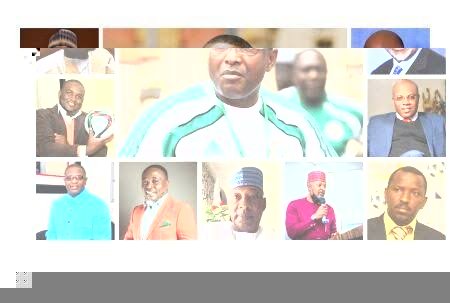
- Names being discussed include Kunle Soname, Mike Emenalo, Seyi Olofinjana, Segun Odegbami, Chikelue Iloenyosi, Amaju Pinnick and Idah Peterside.
- President Bola Tinubu has ordered a comprehensive reform of Nigerian football governance, administration and accountability.
- Popularity alone will not decide the race — statutory eligibility under NFF rules will determine who can actually contest.
For years, Nigerian football stakeholders have argued over whether the NFF should be led by a former Super Eagles player who understands the pressures of representing the country, a seasoned football administrator with experience navigating FIFA and CAF politics, or a successful private investor capable of bringing business discipline and financial sustainability into the game.

The debate has become even more intense following Gusau’s resignation on August 27, 2026, alongside the departure of NFF General Secretary Mohammed Sanusi and the reported mass resignation of Executive Committee members.
The leadership collapse followed widespread national dissatisfaction with the performance of Nigeria’s national teams, particularly the Super Eagles’ failure to qualify for the 2026 FIFA World Cup and the Super Falcons’ failure to reach the 2027 Women’s World Cup — the first time Nigeria’s women’s team will miss the global competition since its inception in 1991.
But beyond the emotions, public popularity and political lobbying surrounding the race lies a more important question: who can actually rebuild Nigerian football — and who can legally and structurally qualify to lead it?
The NFF presidency is not simply a position that can be awarded to Nigeria’s most celebrated former footballer or wealthiest club owner. The federation’s electoral framework requires candidates to emerge through the football governance structure and secure the required nominations and endorsements from recognised members.
Before the leadership crisis, the 2026 electoral guidelines required candidates for the offices of President and certain vice-presidential positions to secure written nominations across Nigeria’s six geopolitical zones. The rules were designed to ensure broad national support, although they also became controversial, with aspirants complaining that the endorsement process could be used to shut out potential challengers before voting even began.
The basic principle of football governance is therefore clear: playing for the Super Eagles alone does not automatically make someone eligible to become NFF president. Likewise, owning a successful football club does not automatically guarantee qualification. Experience, eligibility under the statutes, nominations from recognised football bodies and acceptance by the electoral system remain critical.
However, the entire question of eligibility may now be subject to a broader reform process. President Bola Tinubu has directed a comprehensive reform of Nigerian football, specifically calling for stronger governance, administration, stakeholder representation, development pathways, domestic competitions and accountability. The reform process is expected to involve football stakeholders while maintaining engagement with FIFA and CAF.
That means the eventual race may not necessarily be conducted under exactly the same circumstances that existed before Gusau’s resignation.
Kunle Soname — The Investor
Among the strongest names currently being mentioned is Kunle Soname, the businessman behind Remo Stars and Beyond Limits.
Soname’s greatest contribution to Nigerian football is not as a former player but as an investor who has built a football structure that has increasingly become a reference point for privately owned clubs.
Under his ownership, Remo Stars won their first Nigeria Premier Football League title in the 2024/25 season, while the club’s wider football structure has created opportunities for player development.
Soname also owns Portuguese club Clube Desportivo Feirense and has invested in the development-focused Beyond Limits Football Academy. His supporters believe Nigerian football needs precisely this kind of leadership — someone who understands infrastructure, long-term investment, player development and commercial sustainability.
Soname has demonstrated that a Nigerian football club can be managed with long-term planning rather than depending entirely on government funding. His investment in Remo Stars and youth development has helped create a more sustainable private football model.
His biggest weakness is equally obvious: he has never run the NFF or a national football federation. Running Remo Stars is fundamentally different from managing Nigeria’s entire football system, which includes national teams, state football associations, refereeing, grassroots football, women’s football, youth competitions and relationships with FIFA and CAF.
His critics may also question whether a powerful club owner should simultaneously control the federation responsible for regulating domestic football, because of possible conflicts of interest.
Verdict: Strong on business and infrastructure; untested at federation level.
Mike Emenalo — The Elite Administrator
If the argument is that Nigerian football should be led by someone who understands both the Super Eagles and modern football administration, Mike Emenalo presents one of the strongest profiles.
Emenalo represented Nigeria and earned 14 international caps before moving into elite football administration. His post-playing career took him to Chelsea, where he rose from scouting into senior technical leadership during one of the most successful periods in the club’s modern history.
He later worked as sporting director at AS Monaco and subsequently became the first director of football for the Saudi Pro League, a position he held until his departure in 2026.
Emenalo represents something Nigerian football has rarely had at the top of its administration: extensive experience inside highly professional football systems. His work has involved scouting, recruitment, technical planning, player pathways and football strategy at elite international level. His Super Eagles background also gives him an understanding of the pressures associated with representing Nigeria.
The major question is not his competence but his connection to Nigeria’s football politics and grassroots governance structure. Emenalo has not previously operated within the complex NFF system or served as a Nigerian state football association chairman. He would therefore face the challenge of moving from elite club and league management into an environment dominated by delegates, state FAs and domestic football politics. There is also uncertainty over whether he is personally interested in contesting.
Verdict: Probably the strongest elite football administrator among the names being discussed, but his eligibility, interest and ability to navigate Nigerian football politics remain major questions.
Seyi Olofinjana — The Technocrat
Former Super Eagles midfielder Seyi Olofinjana represents another school of thought. Supporters believe Nigerian football needs less politics and more technical intelligence.
Olofinjana played for Nigeria before building a significant post-playing career in football administration. He has worked with Wolverhampton Wanderers in player development and pathways, served as sporting director of Grasshoppers Zurich and has also been involved in talent management in African football. He runs Imperial FC in Lagos, which has been credited with helping develop young Nigerian players.
Olofinjana combines three important experiences: playing for Nigeria, working inside European football and investing in grassroots player development. That combination gives him a profile few potential candidates possess.
His major weakness is not a football failure but an administrative uncertainty. Olofinjana has previously stayed away from direct NFF leadership, including reportedly declining an opportunity to become technical director. That raises questions about whether he genuinely wants to enter the political and administrative battles associated with running Nigerian football. Like Emenalo, he may also face challenges navigating the statutory and political structures required to become NFF president.
Verdict: Strong technical and developmental credentials; uncertain political appetite.
Segun Odegbami — The Reformer
Few names command greater emotional and historical respect in Nigerian football than Segun Odegbami. A former Green Eagles captain, Odegbami was one of the symbols of Nigeria’s historic 1980 Africa Cup of Nations triumph. But his case for leadership goes beyond his playing career.
Odegbami has served in football administration and sports governance, including involvement with the Nigerian Football Association and the National Institute of Sports. He has also spent years promoting sports development, education and athlete opportunities.
Odegbami’s greatest contribution is his deep and sustained involvement in Nigerian sports. He has combined football, administration, advocacy and sports development for decades. He has also emerged as one of the loudest voices demanding fundamental reform of Nigerian football’s electoral and governance structures.
The biggest question surrounding Odegbami is whether his diagnosis of Nigerian football’s problems can translate into the day-to-day management of a modern federation. He is also not simply advocating for a change of president; he has argued that the structure producing NFF leaders must itself be reformed. That position could make him more of a reformer than a conventional candidate.
His critics may also argue that his previous attempts to influence or participate in football politics have not produced the structural transformation he has consistently demanded. Importantly, he has not formally declared himself a candidate in the current race.
Verdict: Unmatched football history and reform credibility; questions remain over electoral eligibility and practical federation management.
Chikelue Iloenyosi — The Grassroots Voice
Unlike some of the internationally celebrated names being discussed, Chikelue Iloenyosi has a direct connection to Nigeria’s existing football administration structure.
The former Super Eagles defender is chairman of the Anambra State Football Association and has also been involved with footballers’ welfare through the All Nigeria Football Players Union. He has been linked with the NFF leadership structure through his pursuit of representation for the South-East.
Iloenyosi’s strength lies in his grassroots and institutional experience. He understands Nigerian football from inside the domestic system, having worked with a state football association while also maintaining links with former players.
His challenge is national stature. While he has administrative experience, he does not possess the international executive experience of Emenalo or the large-scale private football investment record of Soname. Questions have also been raised about his relationship with previous NFF leadership politics, particularly reports concerning earlier support for Gusau, although he has publicly distanced himself from those suggestions.
Verdict: Stronger grassroots credentials than many high-profile contenders; must convince Nigerians he can scale from state football administration to national leadership.
Read also:
- Ibrahim Gusau Resigns: Who Takes Over as NFF President?
- Obafemi Martins Backs Seyi Tinubu for NFF Presidency, Calls for Younger Leadership
Amaju Pinnick — The Veteran
Former NFF President Amaju Pinnick remains one of the most experienced Nigerian football administrators of his generation. He led the federation for two terms between 2014 and 2022 and developed extensive relationships within African and world football.
His administration oversaw Nigeria’s runners-up finish at the 2019 Africa Cup of Nations and helped maintain Nigeria’s international presence within FIFA and CAF structures.
Pinnick’s strongest advantage is experience. He understands FIFA, CAF and the politics of international football better than almost any Nigerian administrator currently being mentioned. His global network could be useful to a federation seeking to rebuild credibility.
His biggest problem is his own record. Nigeria failed to qualify for the 2022 FIFA World Cup during the final period of his administration — a disappointment that remains one of the major criticisms of his tenure. His administration also faced repeated governance disputes and criticism over the management of Nigerian football.
Pinnick has publicly indicated that he is not interested in returning to the NFF presidency, although his name has continued to circulate in discussions about an interim or reform arrangement.
Verdict: Vast international experience, but a return would reopen old arguments about whether Nigerian football needs continuity or a complete break from the past.
Idah Peterside — The Reform Voice
Former Super Eagles goalkeeper Idah Peterside has also become an important voice in the debate over Nigerian football leadership. Peterside has previously expressed interest in contesting for NFF leadership and recently described the last four years of Nigerian football as a “disaster,” arguing that the system requires serious change.
Peterside brings the perspective of a former national team player who has remained involved in football debates and administration. His strongest contribution at this moment is his willingness to publicly challenge the leadership culture that he believes has contributed to Nigeria’s decline.
However, compared with some other names in the race, Peterside has not yet demonstrated a national-level administrative record comparable to Emenalo, Pinnick or Soname’s club-building experience. His previous ambition to lead the NFF has also not translated into electoral victory or control of the federation.
Verdict: Strong reform voice and former international; needs a clearer administrative blueprint and broader institutional support.
What the Next NFF President Actually Needs
The popular argument that only a former Super Eagles player should lead the NFF is understandable. Former internationals know what it means to wear the Nigerian jersey. They understand unpaid bonuses, poor logistics, pressure from fans, hostile away matches and the emotional burden of failure.
But playing alone is not enough. A great footballer can become a poor administrator. Similarly, a successful businessman can build a club but struggle to manage the competing interests of 37 football associations and multiple stakeholder groups.
The ideal NFF president should possess a combination of qualities:
- Football knowledge — the person must understand the game beyond politics.
- Administrative competence — running a federation requires financial management, governance and institutional discipline.
- Independence — Nigerian football cannot afford another leadership dependent on political godfathers or electoral alliances.
- International credibility — the NFF president must negotiate with FIFA, CAF, sponsors and foreign clubs.
- Grassroots understanding — the future of Nigerian football cannot depend entirely on foreign-based Super Eagles players.
- Integrity and accountability — the next administration must be transparent enough to restore public confidence.
Based purely on football pedigree, Segun Odegbami, Mike Emenalo, Seyi Olofinjana and Chikelue Iloenyosi have the strongest former-national-team credentials among the prominent names being discussed.
Based on international football administration, Mike Emenalo and Amaju Pinnick have the deepest experience. Based on private investment and club development, Kunle Soname has perhaps the strongest record. Based on grassroots football administration, Chikelue Iloenyosi has an advantage. Based on reform advocacy and football history, Segun Odegbami stands out.
But popularity and qualifications are not the same as statutory eligibility. That distinction may ultimately determine who can enter the ballot when the NFF’s transition and reform process is concluded.
For now, Nigeria’s football leadership crisis has produced an unusual opportunity. The country can either replace Gusau with another individual while retaining the same system, or it can use the crisis to address the deeper governance problems that have repeatedly undermined Nigerian football.
President Tinubu’s directive for comprehensive reform specifically identifies governance, administration, stakeholder representation, development, domestic competitions and accountability as areas requiring attention. That may be the most important part of the entire presidential race.
Nigeria does not merely need a new NFF president. It needs a football leader who can survive the politics, understand the game, manage institutions, develop local football and still put Nigeria’s sporting interest above personal ambition.
The next NFF president will therefore face a test far bigger than winning an election. He or she will be expected to rebuild trust in Nigerian football. And after the failures of recent years, Nigerians may no longer be willing to accept anything less.
Editorial note: The candidate field remains fluid because several of the names above are being publicly discussed as potential contenders, but not all have formally declared for the NFF presidency. The NFF election and transition arrangements are also subject to the ongoing reform process.
Related Stories: