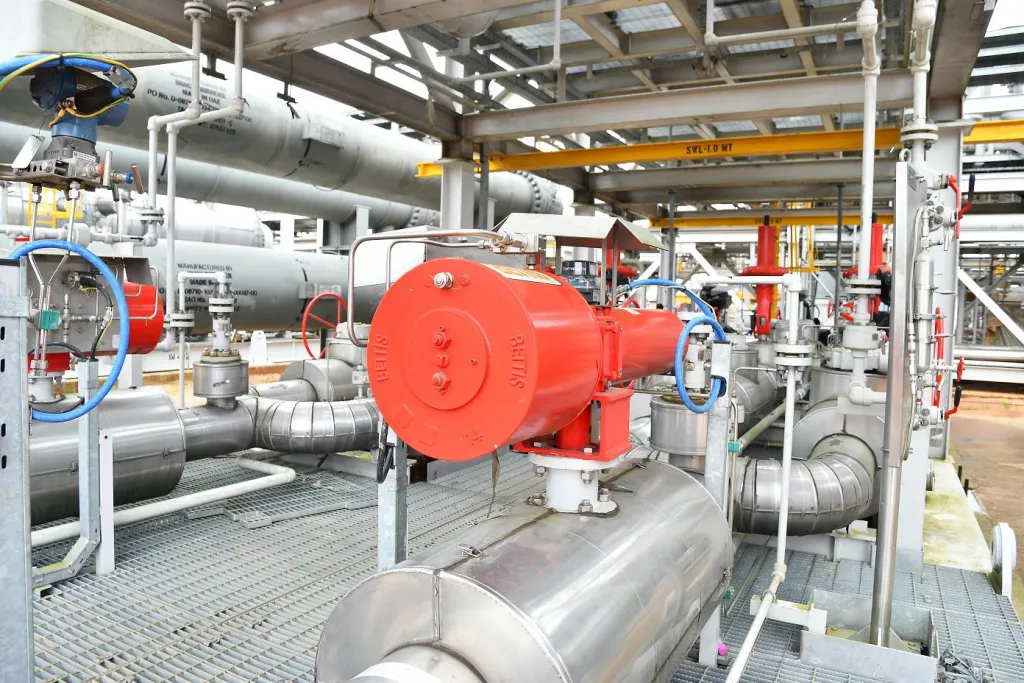
As Nigeria continues its push to harness vast natural gas resources under the “Decade of Gas” initiative, the ANOH Gas Processing Plant is generating renewed optimism for a more stable and cleaner electricity supply across the country. Phase 1 of the facility has achieved first gas and is ramping up operations, with Phase 2 expansion on the horizon, promising significant boosts to domestic gas availability for power generation and industry.

The Assa North-Ohaji South (ANOH) Gas Processing Plant, developed by ANOH Gas Processing Company Limited (AGPC) — a 50:50 joint venture between Seplat Energy Plc and the Nigerian Gas Infrastructure Company (a subsidiary of NNPC Ltd) — reached a major milestone in January 2026 when it began supplying gas to the Indorama Petrochemicals plant following completion of the connecting pipeline and regulatory approvals.
Located in the Ohaji/Egbema Local Government Area of Imo State, the plant taps into an estimated 4.6 trillion cubic feet of condensate-rich gas from the unitized OML 53 and OML 21 fields. Phase 1 has a design capacity of 300 million standard cubic feet per day (MMscfd), consisting of two 150 MMscfd processing trains, LPG recovery units, condensate stabilization facilities, and a 16 MW captive power plant. It is engineered for zero routine flaring, aligning with environmental sustainability goals.
Read Also:
- Dangote rejects NNPCL bid to increase stake in $20bn Refinery ahead of planned public listing
- Dangote Cement plans London listing as UK IPO rules open door for African firms
- Dangote refinery reverses petrol price hike hours after increase
Industry stakeholders and energy analysts say the project’s progress offers tangible hope for alleviating Nigeria’s chronic power shortages. Natural gas remains the backbone of the country’s electricity generation, and increased reliable supply from facilities like ANOH is expected to reduce dependence on diesel generators, lower costs for industries, and support the national grid.
“ANOH is one of Nigeria’s most strategic gas projects,” Seplat Energy has noted. It will help accelerate the transition from small-scale diesel generators to cleaner, more affordable natural gas for power generation.
As of mid-2026, the plant was reported to be processing around 150 MMscfd during its stabilization phase and actively ramping toward full Phase 1 capacity. Long-term service agreements, including with Baker Hughes for turbomachinery maintenance and digital monitoring, are in place to ensure reliability.
Phase 2 on the Horizon
Plans for Phase 2, which would double capacity to 600 MMscfd, are advancing subject to feedstock availability from the ANOH field and surrounding assets. This expansion is anticipated to further strengthen gas supply to the domestic market via pipelines like OB3, feeding power plants, industries, and potentially export opportunities.
The project has already delivered substantial local benefits, including employment during construction and operations, skills development, and economic activity in the host communities. It was completed with an impressive safety record, achieving mechanical completion without lost time incidents across millions of man-hours.
Energy experts believe that as ANOH reaches full operational capacity and Phase 2 progresses, it will contribute meaningfully to Nigeria’s energy security. Increased gas-to-power supply could help close the gap between installed generation capacity and actual output, providing a lifeline for households and businesses plagued by frequent outages.
President Bola Tinubu’s administration has highlighted such midstream gas infrastructure as critical to economic recovery and industrialization. With ANOH now in commercial operations and further expansion in view, there is growing hope that improved power supply will soon move from aspiration to reality for millions of Nigerians.
This development underscores Nigeria’s potential as a gas-powered economy, provided challenges such as infrastructure bottlenecks and investment security are effectively addressed.