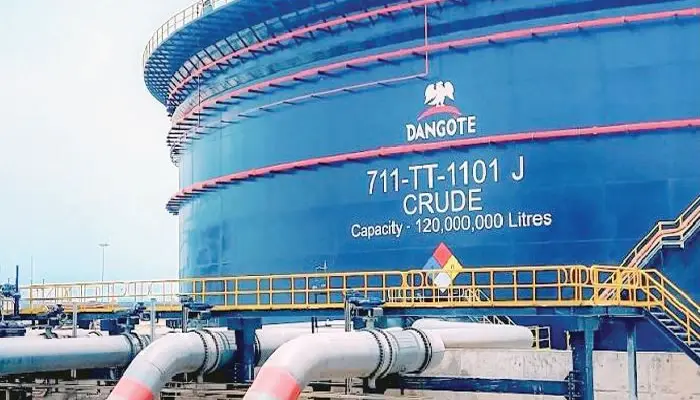
The latest increase in fuel prices by Dangote Refinery has triggered widespread reactions across Nigeria, with citizens warning of rising transport costs, food prices, and mounting pressure on household incomes.
Key Highlights:
- Petrol price increased by ₦75 to ₦1,275 per litre at the gantry.
- Diesel price surged by ₦200 to ₦1,950 per litre.
- Ninth fuel price adjustment recorded in 2026.
- Rising global crude oil prices linked to US-Iran tensions cited as major factor.
- Nigerians express concern over inflation and cost of living.

The refinery attributed the price adjustment to rising global crude oil prices, driven in part by geopolitical tensions involving the United States and Iran, which have pushed oil benchmarks above $110 per barrel.
Despite its 650,000 barrels-per-day capacity and its dominant role in supplying a significant share of Nigeria’s petrol demand, many Nigerians say expectations of cheaper fuel through local refining have not been met.
Read Also:
- Dangote Refinery expands fuel exports to stabilise African supply
- Afreximbank underwrites $2.5bn of Dangote Refinery’s landmark $4bn loan deal
- Dangote Refinery cuts Petrol price to N1,200/Litre, signals relief amid global Oil market uncertainty
Reactions on the social media platform X reflected growing frustration. Several users warned that the diesel price hike would have a direct impact on logistics, manufacturing, and food distribution, leading to further increases in the cost of goods and services.
Others questioned the underlying causes of the price surge, citing concerns over foreign exchange pressures and the sustainability of the deregulated petroleum market. Some called for greater transparency and policy clarity on how local refining would translate into relief for consumers.
Economic concerns also featured prominently in the debate, with suggestions ranging from transport subsidies to flexible work arrangements as possible coping measures for citizens facing rising costs.
While criticism has been widespread, some observers noted that local refining has helped reduce fuel scarcity and dependence on imports, even as prices remain influenced by global market dynamics.
With fuel prices continuing to climb, attention is shifting to the response of government and regulators, as Nigerians await measures that could cushion the impact on the economy.