The Federal Government has announced plans to carry out a nationwide household mapping exercise aimed at generating accurate data on out-of-school children, adopting a model first implemented by the Kaduna State Government.
Key Highlights
- Federal Government will conduct a nationwide household mapping exercise to identify out-of-school children.
- The initiative adopts Kaduna State’s household mapping model, which replaced estimates with verified household data.
- The Federal Ministry of Education will partner with the National Bureau of Statistics (NBS) to carry out the survey across all 36 states and the FCT.
- The exercise will identify where out-of-school children live and the households they belong to, enabling targeted interventions.
- Education Minister Dr. Tunji Alausa said accurate data will improve education planning, resource allocation and policy implementation.
Minister of Education, Dr. Tunji Alausa, disclosed the initiative after a meeting with Kaduna State Governor Uba Sani, according to a statement issued on Thursday by the minister’s Special Adviser on Media and Communications, Ikharo Attah.

Under the proposed initiative, the Federal Ministry of Education will work with the National Bureau of Statistics (NBS) to conduct a comprehensive household survey across the 36 states and the Federal Capital Territory.
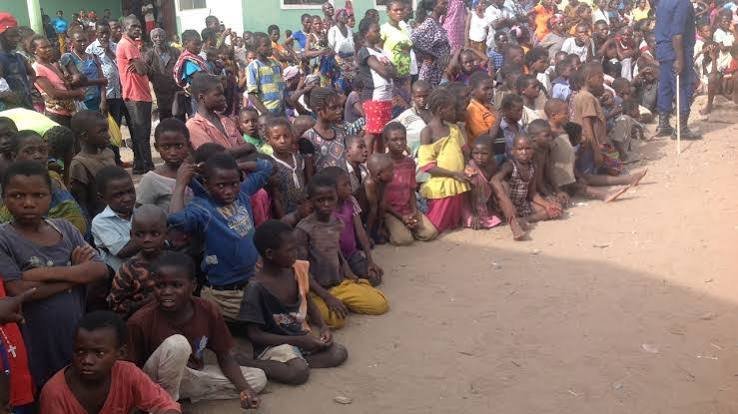
The exercise is expected to identify the actual number of children who are not enrolled in school, determine where they live and establish the households they belong to, replacing previous reliance on broad statistical estimates.
Alausa explained that obtaining verified household-level data would enable governments at all levels to design targeted interventions, allocate resources more efficiently and improve education planning.
He noted that past estimates often provided only general figures without revealing the exact locations of affected children, making it difficult to develop effective solutions.
Citing Kaduna State as an example, the minister said previous projections estimated that about 585,000 children in the state were out of school. However, a detailed household mapping exercise conducted by the state government showed that the actual figure was below 200,000.
He commended Governor Uba Sani for introducing the initiative, describing it as a practical demonstration of how reliable data can improve policy formulation and service delivery in the education sector.
“The Federal Ministry of Education is already collaborating with the National Bureau of Statistics to replicate this methodology nationwide. Once we know exactly where these children are and the households they belong to, we can work closely with state governments to return them to school,” Alausa said.
According to the minister, the nationwide survey will provide a stronger evidence base for interventions, encourage greater collaboration with state governments and development partners, and improve efforts to enrol and retain children in schools.
He added that dependable data would also help policymakers understand the unique factors preventing school attendance in different communities, allowing solutions to be tailored to local realities.
For years, education planning in Nigeria has relied heavily on projections, which the minister said often failed to reflect the true scale and geographical distribution of the out-of-school population.
Alausa maintained that the new data-driven approach would strengthen decision-making and improve the effectiveness of government programmes aimed at reducing the number of children outside the classroom.
Governor Uba Sani welcomed the Federal Government’s decision to adopt Kaduna’s household mapping model, describing it as a significant step towards improving education planning nationwide.
Read also:
- FGC Ilorin Alumni Oppose Planned Privatisation of Unity Schools, Donate Learning Facilities
- Disu Defends Delay In Oyo School Children Rescue, Says Secrecy Saved Victims
- Lagos Publishes 2026 Merit Admission List for Model Colleges, Upgraded Secondary Schools
- Ondo Begins Digital Learning Initiative in 50 Public Secondary Schools, Trains Teachers
He praised the ongoing reforms introduced by the Federal Ministry of Education and reaffirmed Kaduna State’s commitment to working closely with the Federal Government to expand access to quality education.
Sani said the adoption of the state’s model at the national level demonstrates the importance of accurate data in developing effective education policies and interventions.
Nigeria continues to have one of the largest populations of out-of-school children globally, with factors such as poverty, insecurity, inadequate school infrastructure and socio-cultural barriers contributing to the challenge.
The Federal Government has identified improving access to education as a key component of its Renewed Hope Agenda and has introduced several reforms, including the Nigerian Education Data Initiative, school infrastructure development, the student loan scheme, curriculum reforms and other data-driven education policies.
Alausa reiterated that reliable education statistics remain essential to reducing learning poverty and ensuring that government interventions reach the children and communities most in need.