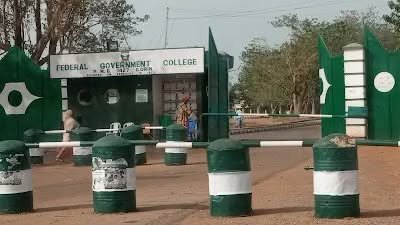
The 1996 Alumni Set of the Old Students Association of Federal Government College (FGC), Ilorin, has urged the Federal Government to abandon any plans to privatise Federal Unity Colleges, warning that such a move would make quality education inaccessible to many Nigerian children, particularly those from low-income families.
The appeal was made on Thursday in Ilorin during the commissioning of projects donated by the alumni as part of activities marking their reunion.

The projects include two solar-powered borehole systems, three 3D printing machines and sports equipment aimed at improving learning and students’ welfare.
President of the association, Chukwuyere Izuogu, said Federal Unity Colleges have remained accessible because they are publicly owned, stressing that privatisation could undermine the institutions’ core objective of providing affordable, quality education to Nigerians regardless of their socio-economic background.
He said the association’s position followed concerns raised by the college’s Director-Principal over reports suggesting that the Federal Government may be considering transferring the management of some Unity Schools to alumni associations or private interests.
Read Also:
- FG shuts FGC Kwali over rising insecurity threat
- Unilorin flags off golden jubilee celebration with health walk
- 5 internet fraudsters bag jail terms in Ilorin
- Notre Dame College Ozoro Class of 1976 Celebrates Golden Jubilee With Reunion, Give-Back Initiative
Earlier, the Director-Principal of FGC Ilorin, Dr Agbo Paul, appealed to the Federal Government to retain the current ownership structure of Unity Schools, warning that privatisation could place quality education beyond the reach of many families.
According to him, recent reports that the Minister of Education had approved a request by King’s College alumni to take over the management of the institution had generated widespread public debate because Federal Unity Colleges remain among Nigeria’s few public schools offering high-quality education at relatively affordable costs.
He argued that handing the schools to private operators would likely result in increased tuition fees, as private organisations are generally driven by commercial considerations.
“If these schools are privatised, education may become unaffordable for many parents because private operators are primarily driven by profit. School fees would inevitably rise beyond the reach of many families. We therefore appeal to the Federal Government not to privatise the Unity Schools,” Paul said.
As part of the reunion activities, the Class of 1996 formally handed over several projects to the college, including two solar-powered boreholes to improve water supply in both the boys’ and girls’ hostels, three 3D printing machines to enhance technology education, and sports kits for students.
Speaking on the intervention, Izuogu described the gesture as a way of giving back to the institution that played a significant role in shaping the lives of members of the class.
He noted that many alumni travelled from different parts of the world to participate in the reunion, describing the occasion as an emotional homecoming.
According to him, the borehole projects were designed to provide a reliable and sustainable water supply, while the 3D printing machines—donated through the support of a United States-based alumnus, Shola Adekanyin—would expose students to emerging technologies and innovation.
He said the equipment would encourage creativity by enabling students to convert ideas into practical products, thereby strengthening problem-solving and technical skills.
Receiving the projects, Dr Paul commended the alumni for remembering their alma mater decades after graduation, describing their contribution as a model worthy of emulation.
He observed that government alone could not adequately meet the needs of educational institutions, urging alumni bodies, parents, non-governmental organisations and other stakeholders to continue supporting school development.
Chairman of the reunion planning committee, Oherein Enahoro, disclosed that the projects were initially conceived about six years ago but were delayed by the COVID-19 pandemic and other logistical challenges.
He explained that although the association originally intended to install solar-powered streetlights, members later prioritised improving water supply after identifying it as one of the school’s most pressing needs.
According to him, the intervention involved rehabilitating existing boreholes, converting them to solar-powered systems and installing overhead tanks with multiple water outlets.
Financial Secretary of the association, Bashir Ahmad, said the alumni deliberately selected projects capable of delivering long-term benefits to students.
He encouraged the students to remain focused on their academic pursuits and avoid activities that could jeopardise their future.
Also speaking, Abdulqodir Suleiman, a physically challenged member of the association, appealed to the Federal Government to sustain policies that guarantee affordable education for persons living with disabilities.
He said access to quality education had transformed his life and urged authorities to ensure similar opportunities remain available to other Nigerians with disabilities.
Related Stories: