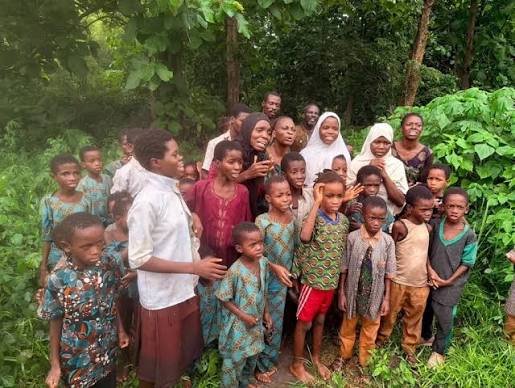
Inspector-General of Police, Olatunji Disu, has defended the decision of security agencies to delay the rescue of abducted schoolchildren and teachers in Oyo State, saying the operation required secrecy to prevent exposing the victims to greater danger.
Key Highlights
- Inspector-General of Police Olatunji Disu defended the 56-day rescue operation for abducted pupils and teachers in Oyo State, saying secrecy was necessary to protect the hostages.
- The victims were kidnapped in May 2026 after suspected terrorists attacked two schools in Oriire Local Government Area.
- Disu said the abductors used a head teacher’s official vehicle before setting it ablaze at the entrance to a forest.
- He explained that the difficult terrain, lack of telecommunications coverage, and limited security presence complicated rescue efforts.
- Police, military personnel, the Nigerian Air Force, and local vigilantes launched a coordinated search, during which one security operative was shot.
Disu spoke on Thursday during a press briefing, where he addressed criticisms over the pace of the rescue operation following the abduction of dozens of pupils and teachers in Oriire Local Government Area of Oyo State in May 2026.

The victims were kidnapped after suspected terrorists attacked two schools in the area. They were held captive for 56 days before they were eventually rescued in a coordinated operation involving multiple security agencies.
According to the police chief, the attackers fled with the victims in the official vehicle of one of the head teachers before setting the vehicle ablaze at the entrance to the forest.
“I will share with you the incident of the Ogbomosho kidnap. That day, they came. Two schools they went to and kidnapped those children and their teachers,” Disu said.
“They used the vehicle of one of the teachers, the head teacher. When they got to the entrance of the bush that they were going to, they set fire to the vehicle. We didn’t know why they did it.”
Disu said the terrain where the attack occurred posed significant operational challenges, describing the area as lacking telecommunications coverage and having limited security presence.
“In that area, there is no network at all. And I think even police station far, far, far from them. But they had only one street, one road that goes to the two villages where this kidnap happened,” he said.
The IGP disclosed that police officers, soldiers and local vigilantes immediately launched a search operation, adding that one security operative was shot during the pursuit of the kidnappers.
“Policemen came, soldiers came, vigilante came. They followed them, the path. Somebody was shot as we were following them.
“Nobody mentioned that. Nobody saw it. Nobody saw the effort we put in,” he said.
Disu said the Nigerian Police Force and the Nigerian Air Force deployed helicopters that searched the area continuously while security personnel worked around the clock to locate the abductors.
He explained that authorities deliberately refrained from giving regular public updates because revealing operational details could have jeopardised the lives of the hostages.
“Everybody were attacking us, left and right… We cannot come out and talk. We cannot expose those children,” he said.
“There’s something they call collateral damage. People are forcing us. People are comparing us to other countries in the world. They wanted us to take hasty decisions.”
Read also:
- IGP Explains Failure To Produce Alleged Fake PFIPC Director General Before Reps Committee
- Oyo Revises School Calendar, Orders July 6 Resumption After Teachers Suspend Strike
- Governor Makinde Reaffirms Commitment To School Safety Across Oyo
- University of Ibadan Appoints Olapegba As 14th Vice-Chancellor
The police boss said security chiefs held late-night strategy meetings throughout the operation to evaluate intelligence and determine the safest course of action.
“So now, every night… we were holding meetings late in the night about it, trying to take decisions,” he said.
According to Disu, details of the rescue operation were withheld even from some security personnel to preserve operational secrecy until the mission was completed successfully.
“Most of this, we did not come back and even tell a lot of our colleagues because we wanted to keep it secret. Parties we could not attend. A lot of things happened, we could not talk about it,” he added.
The Inspector-General maintained that the eventual rescue of the abducted pupils and teachers justified the cautious approach adopted by security agencies despite sustained public criticism over the length of the operation.