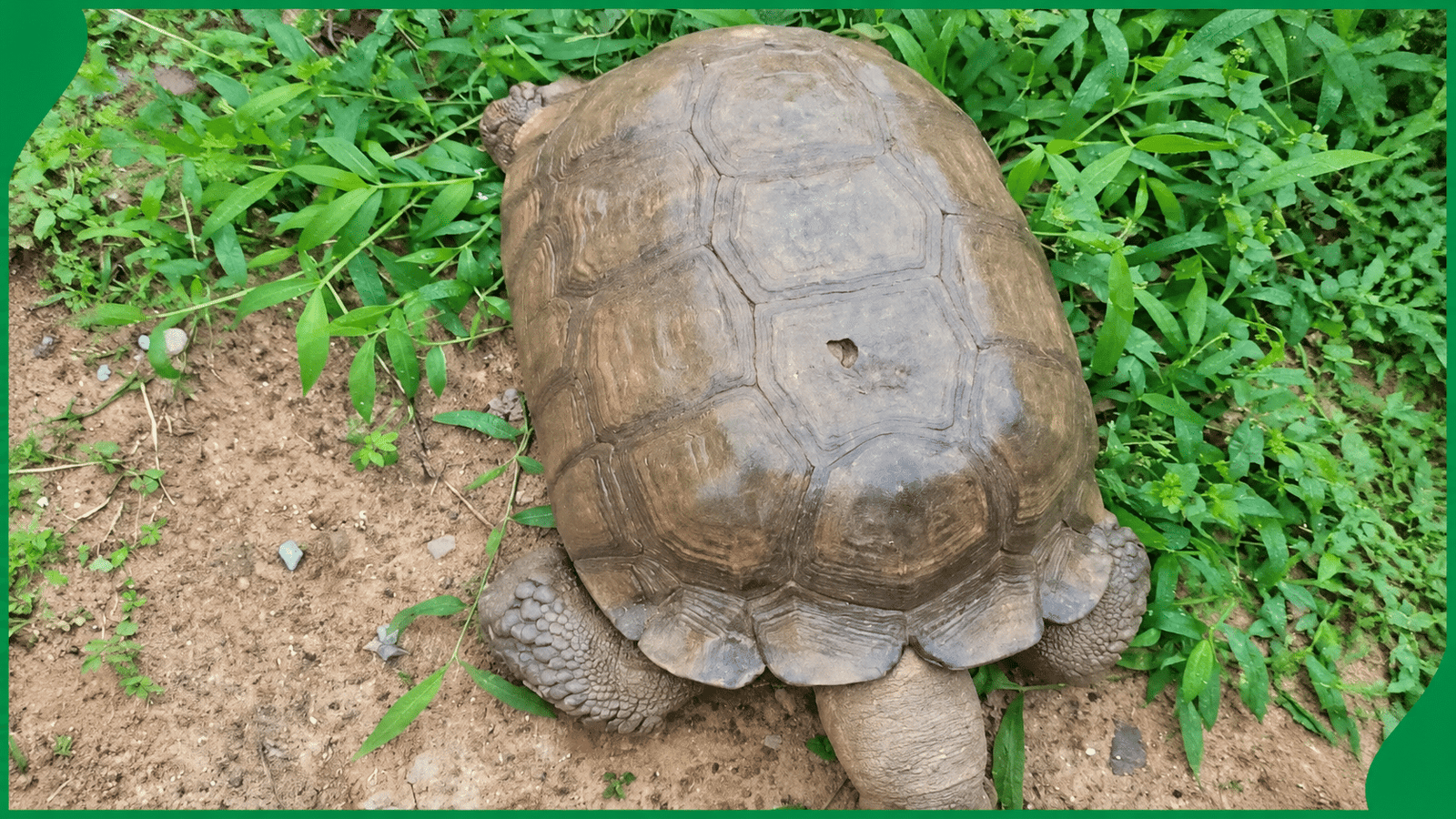
The ancient Oyo Kingdom has lost one of its enduring symbols of history and tradition following the death of a tortoise popularly known as Baba, reportedly aged 420 years.
Baba died at the palace of the Alaafin of Oyo, where the tortoise was reportedly cared for by successive Alaafins and became associated with generations of monarchs.

Key Highlights
- Palace tortoise known as Baba has died in Oyo.
- The tortoise was reportedly 420 years old.
- Baba lived at the Alaafin’s Palace and was cared for by successive monarchs.
- The animal was regarded as part of the oral history and cultural heritage of the Yoruba people.
- Oral history reportedly linked Baba to Oyo-Ile, the seat of the old Oyo Empire.
- Baba reportedly died after falling ill and stopping eating.
- The tortoise had been buried, according to the Alaafin’s media aide.
- The Alaafin plans to preserve Baba’s memory for future generations.
Baba Becomes Part Of Oyo Palace History
The Director of Media and Publicity to the Alaafin, Bode Durojaiye, described Baba as more than a tortoise, saying the animal had become part of the oral history of the Yoruba people and a notable attraction at the ancient palace.
According to Durojaiye, the incumbent Alaafin, Oba Abimbola Akeem Owoade I, met Baba at the palace after ascending the throne.
He said successive kings had cared for the tortoise, which was inherited as part of the historical relics associated with the palace.
“In Oyo, Baba was regarded as the oldest indigene. It was the Alaafin’s most besotted pet,” Durojaiye said.
He added that the tortoise represented part of the oral history of the Yoruba people.
“Baba was more than a turtle in status. He represented a part of the oral history of the Yoruba race. Now, the Alaafin has lost an ageless companion,” he said.
Tortoise Linked To Oyo-Ile
Durojaiye said oral history indicated that Baba was brought from Oyo-Ile, the seat of the old Oyo Empire, to the present palace in Oyo town.
He said two palace officials had been responsible for the tortoise’s welfare over the years, while its unusual size and reported longevity made it a notable attraction for visitors.
Many visitors reportedly went to the palace specifically to see Baba, making the tortoise part of the tourism experience associated with the historic city.
Read also:
- Ooni Welcomes Baby Girl With Olori Oluwatosin Months After Birth Of Twin Princes
- Gov. Makinde approves elevation of 14 chiefs to obas in Oyo
- The Life and Times of Taiwo Hassan ‘Ogogo’: From Mechanic to Yoruba Cinema Icon
- Ibeju-Lekki Sea Turtle Rescued After Baale Stops Fishermen From Killing It
How Baba Was Cared For
According to Durojaiye, Baba was fed with watermelon, corn pap wrapped in leaves and grass.
He said the tortoise fell ill on Monday and stopped eating before eventually dying.
Durojaiye added that Baba had since been buried.
Baba’s Death Revives Yoruba Cultural Memories
Baba’s death has revived memories of Yoruba cultural beliefs concerning the relationship between the living, the dead and the unborn.
The tortoise’s reported longevity meant it was believed to have witnessed the reigns of several Alaafins, becoming a symbolic link to the history of the Oyo Kingdom.
Durojaiye said the current Alaafin planned to preserve Baba’s memory for future generations.
He added that the monarch was determined to ensure that the tortoise’s place in the history of the Oyo Kingdom endured.
Get more culture and heritage stories — follow us on X.