The School Anti-Trafficking Education and Advocacy Project (STEAP) on Friday, September 18, 2026, sensitised stakeholders, security agencies and journalists in Isoko South Local Government Area of Delta State on the prevention, identification and reporting of human trafficking.
The sensitisation programme, held at Emore Grammar School, Oleh, brought participants together to deepen their understanding of Trafficking in Human Beings (THB) and promote stronger collaboration among schools, communities, security agencies, the media and other relevant stakeholders in tackling human trafficking.

Key Highlights
- STEAP sensitised Isoko stakeholders, security agencies and journalists on human trafficking.
- Participants were trained on identifying trafficking indicators and reporting suspected cases.
- The project focuses on schools, communities, children and other vulnerable groups.
- Community focal persons were nominated to strengthen grassroots reporting.
- Vanguard Clubs are being established in schools to promote anti-trafficking education.
- Participants discussed victim protection, confidentiality and ethical reporting.
- STEAP is being implemented in 50 selected schools in Delta State.
STEAP Targets Schools And Vulnerable Groups
In his welcome address, Mr Kelechi Uguru, ICMPD Assistant Project Officer for Delta State, explained that the STEAP project was designed to address human trafficking at the school and community levels.
He said the initiative particularly focuses on children and other vulnerable groups who may be exposed to trafficking.
According to him, STEAP is being implemented in 50 selected schools across Delta State, with the support and partnership of the World Health Organization (WHO) and other stakeholders.
Uguru said the primary objective of the project was to create awareness in schools and communities about human trafficking, its dangers and ways of preventing it.
He also highlighted the establishment of Vanguard Clubs in schools as part of efforts to sustain anti-trafficking education and advocacy among students.
Stakeholders Trained On Human Trafficking Indicators
The meeting objectives were presented by Mr Nwaefulu Matthew, CSO Project Officer, who said combating human trafficking required the collective efforts of individuals, communities, institutions and government agencies.
He explained that the programme was aimed at strengthening participants’ ability to identify indicators of Trafficking in Human Beings and establishing a community-based reporting system through the appointment of community focal persons.
Speaking on “Understanding Trafficking in Human Beings (THB),” Mrs Oluwakemi Omotoso, CSO Project Coordinator, took participants through the definition and various forms of human trafficking.
She also discussed trafficking trends and recruitment tactics, drawing attention to red flags, risk factors and the effects of trafficking on victims.
Read also:
- NAPTIP Rescues 6 Children Being Trafficked From Taraba To Oyo, Arrest Suspect
- Niger Records 192 Child Abuse Cases As Court Jails Man For Raping 8-Year-Old Girl
- Court Grants 67-Year-Old UK-Nigerian Grandma ₦150m Bail For Cocaine Trafficking
Security Agencies, Journalists Urged To Protect Victims
In her second presentation on prevention and community-based reporting mechanisms, Mrs Kemi examined the roles of security agencies and the media in preventing and responding to suspected human trafficking cases.
She stressed the importance of collaboration, confidentiality and ethical considerations when handling and reporting suspected trafficking cases.
She particularly emphasised the need to protect victims and prevent further exposure or harm.
Mrs Kemi also explained the appropriate reporting pathway for suspected Trafficking in Human Beings cases, encouraging participants to promptly report concerns through the appropriate channels and ensure that suspected victims receive necessary protection and support.
Community Focal Persons Nominated
The programme featured an interactive session during which participants asked questions and shared their experiences and concerns about human trafficking and community safety.
The session provided an opportunity for participants to discuss practical ways of identifying vulnerable persons, preventing trafficking and improving reporting mechanisms within their communities.
At the end of the meeting, community focal persons were nominated to strengthen grassroots reporting and serve as links between communities and relevant authorities in responding to suspected trafficking cases.
STEAP Partners And Funding
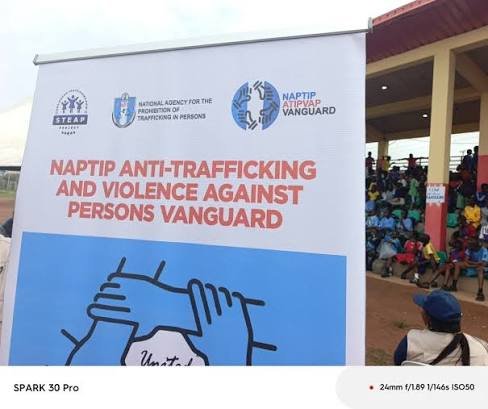
According to the programme banner, the STEAP project is funded by the Government of the Netherlands and implemented by the International Centre for Migration Policy Development (ICMPD), National Agency for the Prohibition of Trafficking in Persons (NAPTIP), World Health Organization (WHO) and the Ministry of Education.
Also present at the event was Mrs David-Ukoko Ijeoma, Delta State ICMPD Project Officer, who provided technical expertise toward the implementation of STEAP project activities.
Get more Delta State and human-trafficking coverage — follow us on X.
Related Stories: