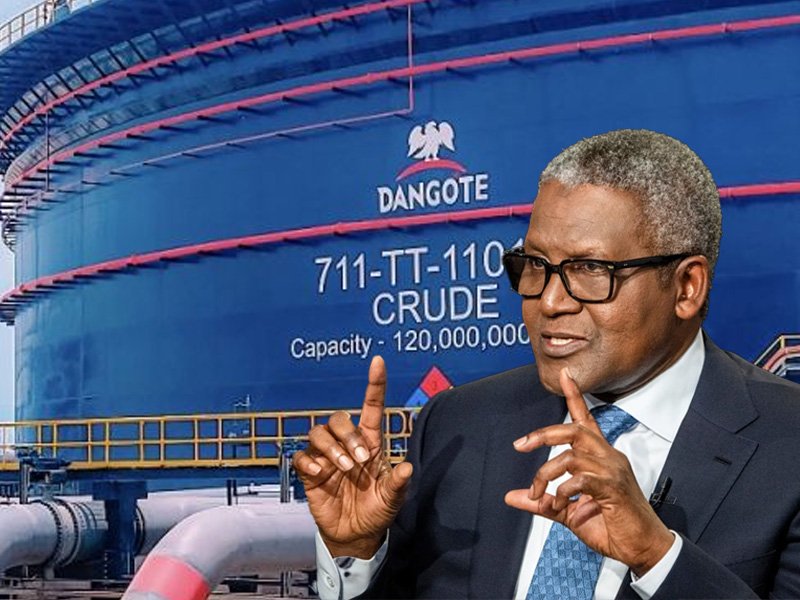
Dangote Petroleum Refinery has switched the sale of Premium Motor Spirit (PMS), Automotive Gas Oil (AGO), and Aviation Turbine Kerosene (ATK) from naira to U.S. dollars, citing growing foreign exchange exposure, challenges with crude oil procurement, and persistent volatility in Nigeria’s foreign exchange market.

Key Highlights
- Dangote Refinery switches PMS, AGO and ATK sales to U.S. dollars.
- New payment policy takes immediate effect for gantry and coastal sales.
- Refinery cites foreign exchange risks and crude procurement challenges.
- NNPCL reportedly supplying fewer crude cargoes under the naira-for-crude arrangement.
- Industry analysts warn of possible impact on fuel prices, dollar demand and the naira.
- Marketers have reportedly been notified of the new payment policy.
The new payment policy, which took effect immediately, applies to all petroleum products sold through both gantry and coastal channels.
Industry sources familiar with the refinery’s operations disclosed that the decision was driven by increasing foreign exchange exposure resulting from the refinery’s crude procurement structure and the continued instability in Nigeria’s foreign exchange market.
According to a senior industry source, the refinery is now receiving a larger share of its crude oil supplies from the Nigerian National Petroleum Company Limited (NNPCL) under dollar-denominated arrangements, while a significant portion of its refined petroleum products has continued to be sold in naira.
The source explained that the growing mismatch between dollar-denominated crude purchases and naira-based product sales had exposed the refinery to substantial exchange rate risks, making the transition to dollar-based sales unavoidable.
“The decision takes effect immediately. All PMS, AGO and ATK sales, both gantry and coastal, are now dollar-based,” the source said.
It was gathered that a formal notification has already been issued to petroleum marketers lifting products from the refinery.
Another official noted that rising international crude oil prices and continued uncertainty in Nigeria’s foreign exchange market also contributed to the decision.
According to the official, the refinery now receives significantly fewer crude cargoes priced in naira compared to those priced in dollars.
Read also:
- Dangote Refinery releases hotlines for reporting non-compliance on new Petrol prices
- Dangote refinery slashes petrol price to N875–N905 nationwide
- Zambia seeks to purchase refined products from Dangote Refinery
“While we require more than 15 cargoes of crude monthly for our operations, the NNPCL is struggling to supply three cargoes in naira under the naira-for-crude arrangement,” the official disclosed.
Industry analysts believe the policy could have significant implications for Nigeria’s downstream petroleum sector, particularly fuel pricing, distribution costs and foreign exchange demand.
Oil and gas analyst, Otunba Tunji Oyebanji, attributed the development to the challenges surrounding the naira-for-crude arrangement.
According to him, Nigeria’s crude production remains insufficient to meet domestic demand, while substantial crude volumes have already been committed under existing supply agreements with third parties.
He explained that the country’s crude repayment obligations under previous financing arrangements have further reduced the quantity available for local refining.
Oyebanji said the refinery may now be forced to source more crude oil from international suppliers, requiring payment in U.S. dollars.
“The implication is that more crude has to be bought from other sources outside Nigeria and, of course, payment will be made in dollars. That is likely why the refinery has decided to sell its products in dollars. The consequence could be increased demand for foreign exchange and additional pressure on the naira,” he said.
The development is expected to attract close attention from marketers, manufacturers, transport operators and consumers, given Dangote Refinery’s strategic role in Nigeria’s petroleum supply chain.