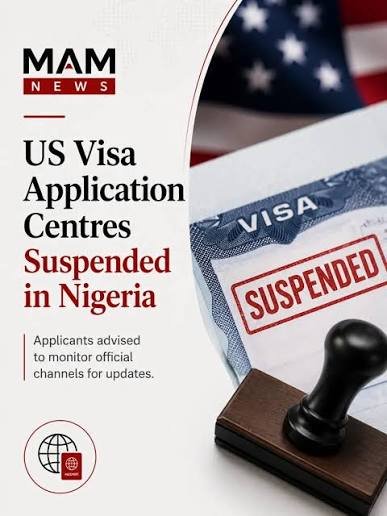
The United States government has announced that it will end routine visa processing at its embassy in Abuja and 24 other diplomatic missions across Africa from August 1, 2026, as part of a major overhaul of its overseas consular operations.
Key Highlights
- The US government will end routine visa processing at its embassy in Abuja and 24 other diplomatic missions across Africa from August 1, 2026.
- The move is part of a broader overhaul of US overseas consular operations.
- The US Department of State said routine visa services will be centralised in designated regional processing hubs.
- The restructuring is aimed at strengthening national security, visa screening and vetting, while reducing government spending.
- The policy affects only routine visa processing and does not mean the closure of any embassy or consulate.

The decision, announced by the US Department of State, is aimed at centralising routine visa services in designated regional hubs to strengthen national security, reduce government spending and ensure more consistent visa screening, vetting and adjudication.
In a statement published on the department’s website on Wednesday, the US government said the restructuring aligns with President Donald Trump’s administration’s policy of prioritising America’s security and national interests.
“The Department of State is constantly evaluating its overseas operations in order to advance America’s priorities as efficiently and effectively as possible.
“This includes a visa process that maintains rigorous standards of security screening and vetting and aligns resources and operational capacity with America’s national interests,” the statement said.
It added that the safety and security of Americans remain the administration’s highest priority, noting that diplomatic missions worldwide would continue to provide consular assistance to US citizens.
Besides Abuja, the affected diplomatic posts are located in Asmara, Bamako, Banjul, Brazzaville, Bujumbura, Conakry, Cotonou, Durban, Freetown, Gaborone, Harare, Juba, Libreville, Lilongwe, Lusaka, Maputo, Maseru, Mbabane, N’Djamena, Niamey, Nouakchott, Ouagadougou and Windhoek.
Read also:
- Oil Falls Below $84 as Renewed US-Iran Talks Ease Supply Concerns
- Egypt Confirms Visa-On-Arrival Countries For 2026, Nigerians Still Need Tourist Visa
- US Sanctions Nigeria, Blocks All Assistance Over Christian Genocide
- Alphabet Increases AI Spending To $205bn As Global Artificial Intelligence Race Intensifies
The State Department clarified that the policy affects only routine visa processing and does not signal the closure of any embassy or consulate.
According to the department, the affected diplomatic missions will continue to perform their regular diplomatic and consular responsibilities, while visas already issued remain valid.
Under the new arrangement, applicants in the affected countries will be required to process routine visa applications through designated regional processing hubs, while embassies and consulates continue to provide other consular and diplomatic services.
The United States said the move is part of its periodic review of global diplomatic operations aimed at reallocating resources and streamlining the delivery of consular services.