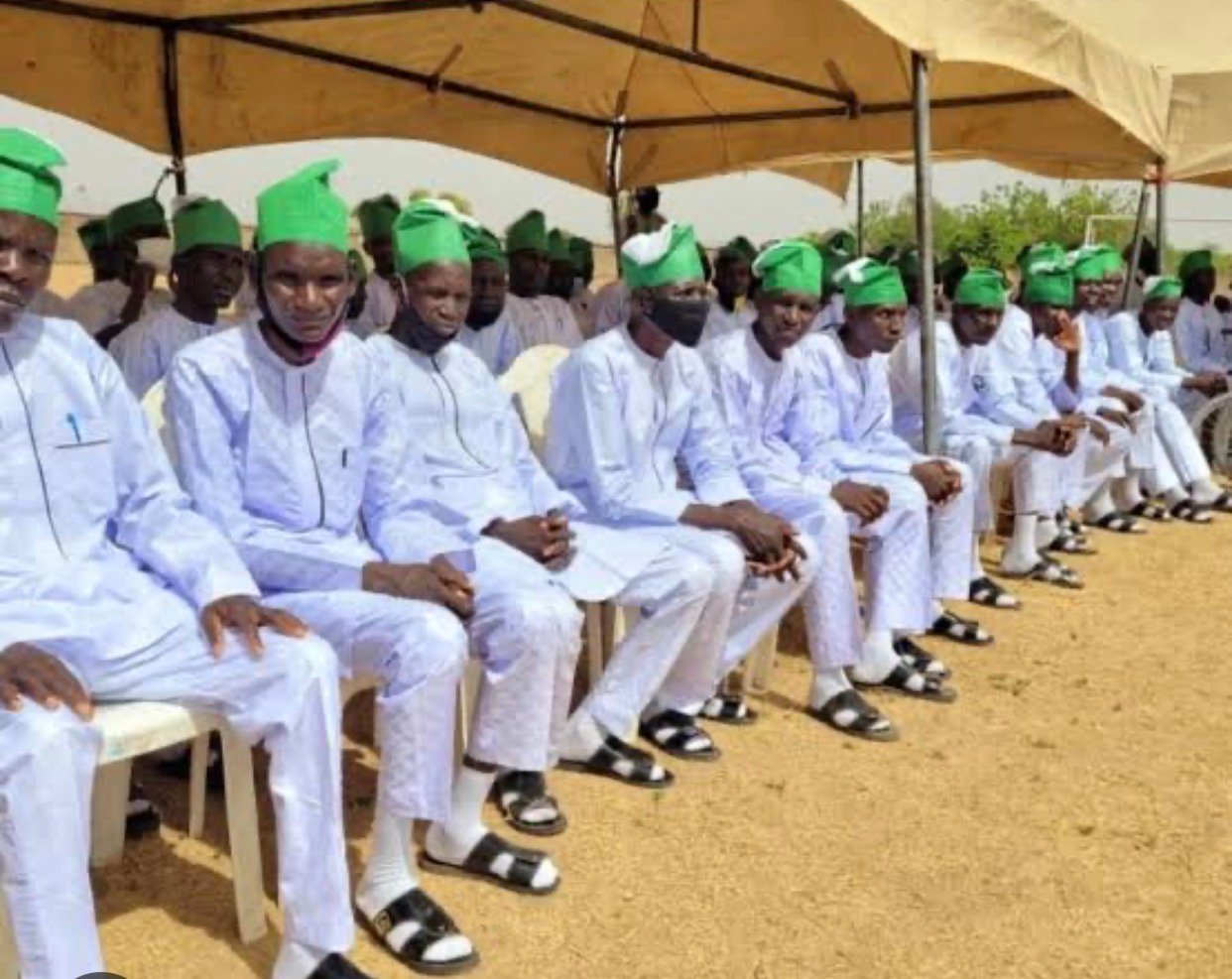
More than 700 former insurgents are set to return to civilian life after completing a deradicalisation and rehabilitation program me
under the federal government’s ‘Operation Safe Corridor’ initiative.

The development was confirmed by Brigadier-General Yusuf Ali, Coordinator of ‘Operation Safe Corridor’, during a media tour of the Deradicalisation, Rehabilitation, and Reintegration Centre in Gombe.
Brigadier-General Ali emphasized that the programme remains widely misunderstood despite its structured approach to counter-terrorism and peacebuilding.
He explained that ‘Operation Safe Corridor’ not only disengages individuals from extremist ideologies but also equips them with skills and support systems to rebuild their lives and positively contribute to society .
Read also:
Federal High Court sentences 11 Boko Haram members to up to 60 years in prison
Boko Haram/ISWAP attack kills Brigadier-General Braimah in Borno, scores dead
Vigilantes foil Boko Haram plot to destroy key Adamawa bridge
“The goal is to restore peace in communities affected by insurgency,” Brigadier-General Ali said, noting that rehabilitation includes psychological support, education, and vocational training alongside ideological reintegration.
During the tour, some participants shared personal accounts of their paths into insurgency, providing insights into the complex circumstances that led to their radicalisation.
Their testimonies form part of broader efforts to foster understanding and reconciliation as they prepare to rejoin society.
The graduation ceremony for the over 700 participants is scheduled ahead of their reintegration into their respective communities.
Meanwhile, the military has dismissed circulating claims that graduates of ‘Operation Safe Corridor’ are being recruited into the armed forces, describing such reports as unfounded.
For the participants, this transition marks a critical turning point—from lives shaped by conflict to opportunities for redemption, acceptance, and a fresh start.
Experts note that successful reintegration will depend on community readiness, trust, and sustained support to ensure long-term peace in regions affected by years of violence.