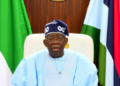
Reactions have trailed reported peace talks between President Bola Tinubu and Osun State Governor Ademola Adeleke aimed at resolving the state’s prolonged local government crisis, with some Nigerians questioning whether the proposed settlement prioritises political interests over accountability and the welfare of residents. The negotiations, reportedly facilitated by a presidential committee led by Chief of Staff Femi Gbajabiamila, are said to be at an advanced stage, although no final agreement has been publicly announced.
Key Highlights
- Nigerians have expressed mixed reactions to reported efforts by Tinubu and Adeleke to resolve the Osun local government crisis.
- Critics question whether the negotiations could amount to a political bargain linked to Adeleke’s support for Tinubu’s 2027 re-election bid.
- Osun State officials say negotiations are nearing completion.
- The crisis centres on disputed council leadership, competing claims of legitimacy and access to local government funds.
- Reports have put the amount of withheld local government allocations at more than ₦200 billion, although the figure has not been independently established here.
- A committee led by Femi Gbajabiamila is reportedly coordinating the peace process.
- No final settlement has been publicly announced, and questions remain over accountability and the legal status of the disputed councils.
Nigerians React to Tinubu-Adeleke Osun LG Peace Talks
The reported negotiations have generated mixed reactions on X, formerly Twitter, with some users welcoming efforts to end the deadlock while others question the timing and possible political implications of a settlement.

Tunde Alobe, writing under the handle @AlobeTunde, questioned why the crisis had remained unresolved for so long.
“They have been playing politics with people’s lives for more than 2 years. So, if Adeleke did not agree to support Tinubu’s re-election, there will be no solution to Osun LG crisis and the LG allocation will still be withheld. Tinubu will leave office one day, sha,” he wrote.
His comment reflected concerns that political alignment could be influencing the pace of efforts to resolve a dispute that has affected local administration and access to public funds.
Another X user, Gbenga Ajiboye (@gbengaajiboy), raised questions about accountability and whether a settlement would address the legal issues underlying the crisis.
“The local government matter is very complicated. Politically and legally, it has passed over layers and layers of complexity. Will illegalities be swept under the carpet… Do these leaders on both sides of divide really care about the people? Abi ole gbé, ole gba ni?” he wrote.
Other commenters focused on reports that more than ₦200 billion in local government allocations had been withheld, while some viewed negotiations as a practical way to restore council operations and access to funds.
The comments represent individual reactions on social media and should not be interpreted as a representative survey of public opinion.
Why the Osun Local Government Crisis Has Persisted
The dispute centres on the legitimacy of local government chairmen and councillors, control of Osun’s 30 local government areas and access to allocations from the Federation Account Allocation Committee (FAAC).
The crisis involves rival groups associated with the All Progressives Congress (APC) and the Peoples Democratic Party (PDP). The competing camps have advanced different claims over the validity of council appointments, elections, tenure and relevant court decisions.
Governor Adeleke’s administration has challenged the authority of APC-aligned council officials, while the opposing camp has maintained that its position is supported by earlier electoral processes and legal decisions.
The dispute has been accompanied by court cases, clashes and disruptions to local government administration. Reports have also cited substantial allocations withheld amid the impasse, with estimates exceeding ₦200 billion.
However, the precise amount, the legal status of the funds and the conditions for their release require confirmation from relevant official records.
Tinubu’s Intervention and the Gbajabiamila-Led Committee
According to reports citing senior Osun government officials, Tinubu initiated the peace process after Adeleke visited the Presidential Villa following the August 15, 2026, governorship election.
Tinubu reportedly directed the formation of a committee led by his Chief of Staff, Femi Gbajabiamila, to develop a framework for resolving the dispute.
The negotiations are said to be focused on a possible out-of-court settlement that would address the competing claims and enable local government administration to resume on a more stable footing.
Such an agreement would need to account for the relevant court proceedings and the legal status of the disputed council officials. The details of any proposed settlement have not been made public.
Adeleke’s Spokesperson Says Talks Are Nearing Completion
Osun State Governor’s spokesperson, Mallam Olawale Rasheed, reportedly confirmed that a negotiation team was being established and that discussions were approaching completion.
Rasheed described the dispute as politically and legally complicated, citing questions surrounding the tenure of APC-aligned officials, PDP officials who were unable to assume office, and transactions conducted under the disputed councils.
He expressed optimism that the impasse could be resolved before the 2027 general elections.
However, the absence of a publicly announced final agreement means that the proposed settlement’s terms, implementation process and implications for the disputed funds remain unclear.
Adeleke’s Support for Tinubu Raises Political Questions
The negotiations have attracted additional attention because Adeleke, who won re-election on the Accord Party platform, has publicly expressed support for Tinubu’s second-term bid.
Reports have also identified Adeleke as a coordinator of Tinubu’s 2027 campaign in Osun, despite the governor’s membership of a different political party.
Some critics have linked the timing of the peace talks to this political alignment, raising concerns that the resolution of a local government dispute could become entangled with electoral considerations.
Others may view cooperation between the governor and the Presidency as a pragmatic way to resolve an impasse affecting public administration.
Neither interpretation, on its own, establishes that the negotiations involve a political exchange. The terms of any agreement and the actions taken by the parties will be central to assessing the outcome.
Read also:
- Tinubu Support Group Hails Adeleke, Soludo, Wike For Backing President’s Re-Election Bid
- 2027 Elections: Ebonyi APC Criticises Tinubu’s Campaign Council Over Wike, Soludo, Adeleke Appointments
- From Osun REC to South-West National Commissioner: Babalola Nominated as Ajayi’s Tenure Ends
What the Crisis Means for Osun Residents
The prolonged dispute has implications for the delivery of services at the grassroots level, where local governments are expected to support primary healthcare, sanitation, local roads and other community needs.
Uncertainty over council leadership and access to funds can complicate budgeting, project implementation and accountability for public expenditure.
For residents, the key issue is not only which political group controls the councils, but whether a settlement restores lawful administration, clarifies responsibility for public funds and enables local services to function effectively.
A durable resolution would therefore need to address both the immediate governance deadlock and the legal questions that have sustained it.
No Final Agreement Publicly Announced
As of the reports published in mid-October 2026, no final agreement had been publicly announced by the Presidency or the Osun State Government.
The reported negotiations have generated cautious optimism among those seeking an end to the crisis, alongside concerns about accountability, the disputed allocations and the political circumstances surrounding the talks.
The eventual outcome will depend on the terms of any settlement, its legal validity and whether the parties implement it transparently.
For Osun residents, the central test will be whether the negotiations restore stable local government administration and ensure that public funds are handled in accordance with the law, rather than merely ending the immediate political confrontation.
For more updates on the Osun local government crisis and Nigerian politics, follow us on X.