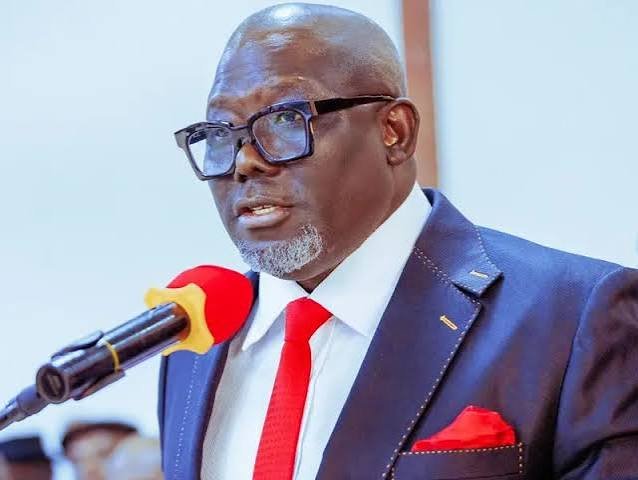
Delta State Governor Sheriff Oborevwori’s announcement of a ₦50 million education support fund for a secondary school student has sparked mixed reactions, with supporters praising the gesture as a reward for excellence while critics question the allocation of such a large sum to one student amid challenges facing public schools.
The announcement was made on Friday, October 9, 2026, during the commissioning of the newly completed Model Technical College in Oghareki, Ethiope West Local Government Area, after Junior Technical II student Miss Ogheneovo Davina delivered a speech commending the state government’s investment in technical education.

Key Highlights
- Delta Governor Sheriff Oborevwori announced a ₦50 million education support fund for secondary school student Ogheneovo Davina.
- The announcement followed her speech at the commissioning of the Model Technical College in Oghareki.
- Davina praised the government’s investment in technical education and promised to make use of the facilities.
- Critics questioned the size of the award amid concerns about dilapidated public schools across Delta State.
- Supporters cited the new technical college and the governor’s school rehabilitation directive as evidence of broader education investment.
- Oborevwori directed the relevant ministries to assess dilapidated public primary and secondary schools for rehabilitation.
Oborevwori Announces ₦50m Education Fund for Student
The announcement came during the commissioning of the Model Technical College in Oghareki, where Davina spoke on behalf of her fellow students.
In her address, she thanked Oborevwori for investing in technical education, saying the facilities would help students acquire practical skills, become self-reliant and prepare for the future.
She also remarked that she would have voted for the governor in the 2027 elections if she were old enough to participate.
Reports from the event said the student’s speech prompted the governor to announce the ₦50 million education support fund. The moment was subsequently amplified on social media, including by the governor’s media aide, Ossai Ovie Success.
The announcement was described as an education support fund rather than an unrestricted cash gift. However, details about its disbursement and administration were not provided in the information available.
₦50m Award Triggers Debate Over Public School Funding
The announcement quickly generated discussion online, with Nigerians expressing different views about the size and purpose of the education fund.
Critics questioned whether allocating ₦50 million to one student was the most appropriate way to support education in a state where some public schools reportedly require urgent repairs and improved facilities.
Some social media users argued that the money could have supported broader educational needs, including classroom rehabilitation, learning materials and improved access to quality education.
Others questioned whether the full amount would be disbursed as announced, highlighting the importance of transparency and accountability in the implementation of public commitments.
These reactions reflect a wider debate about how governments should balance individual rewards for exceptional performance with investments that benefit larger numbers of students.
Supporters Defend Governor’s Education Initiative
Supporters of Oborevwori’s decision argued that rewarding a student for an outstanding speech and commitment to education could encourage academic excellence and inspire other young people.
They also pointed to the commissioning of the Model Technical College and the governor’s directive to assess dilapidated schools as evidence that the administration was pursuing wider education reforms alongside individual recognition.
The governor has previously announced financial rewards for high-performing students, including members of Delta State’s world debate champions and a spelling bee winner, according to reports cited in the supplied account.
Supporters view such awards as part of an approach intended to recognise achievement and motivate students.
Nevertheless, questions remain about the criteria for selecting beneficiaries, the management of the funds and how the support will translate into measurable educational outcomes.
Governor Orders Assessment of Dilapidated Schools
At the same ceremony, Oborevwori directed the Ministries of Primary and Secondary Education to assess dilapidated public schools across Delta State for immediate rehabilitation.
The governor referred to the scale of the state’s education system, which includes more than 1,400 primary schools and 480 secondary schools.
The proposed assessment is expected to identify schools requiring urgent repairs and help the government determine the scope of rehabilitation needed across the state.
The directive places school infrastructure at the centre of the administration’s education agenda, alongside investments in technical and vocational learning.
How quickly the assessment is completed, which schools are prioritised and what funding is allocated for repairs will be important measures of implementation.
Oghareki Model Technical College Highlights Skills-Based Education
The newly commissioned Model Technical College in Oghareki is part of the state government’s drive to expand technical and skills-based education under its MORE Agenda.
The facility was described as having modern workshops, accommodation and sports facilities intended to support practical learning and student development.
Oborevwori also indicated that three additional model technical colleges in Irri, Kiagbodo and Akugbene were expected to be completed before the end of 2026.
The projects are intended to expand access to technical education and give students opportunities to acquire practical skills that can support employment, entrepreneurship and self-reliance.
However, the impact of the investment will depend not only on the construction of facilities but also on equipment maintenance, qualified instructors, learning materials and the quality of training provided.
Read also:
- Oborevwori Orders Immediate Overhaul Of All Dilapidated Public Schools In Delta
- Delta Government Offers Free Electric Vehicle Skills Training for Youths in Asaba, Warri
- FG To Commence Distribution Of Starter Packs, Supplementary Payments To TVET Trainees
Debate Highlights Tension Between Individual Rewards and Systemic Reform
The controversy surrounding the ₦50 million education fund illustrates a recurring debate over public spending priorities in Nigeria.
Individual awards can provide recognition, financial support and motivation for talented students. At the same time, education advocates and members of the public often call for sustained investment in classrooms, teachers, learning resources and equal access to quality education.
In Delta State, the governor’s announcement has brought both issues into focus: the recognition of one student’s performance and the wider need to improve public school infrastructure.
The two approaches are not necessarily mutually exclusive, but public scrutiny is likely to centre on whether individual support is delivered transparently and whether broader education commitments are implemented effectively.
What Happens Next?
The long-term public response to Oborevwori’s announcement will depend partly on the implementation of the education fund and the government’s follow-through on its school rehabilitation directive.
Clear information about the fund’s administration, eligibility conditions and disbursement would help establish how the student will benefit from the announcement.
Similarly, the results of the statewide school assessment and the progress of the additional model technical colleges will provide a clearer picture of the administration’s wider education plans.
For now, the ₦50 million announcement has placed Delta State’s education spending under renewed public scrutiny, highlighting competing expectations around rewarding individual excellence and improving facilities for students across the state.
For more updates on Delta State and Nigeria news, follow us on X.