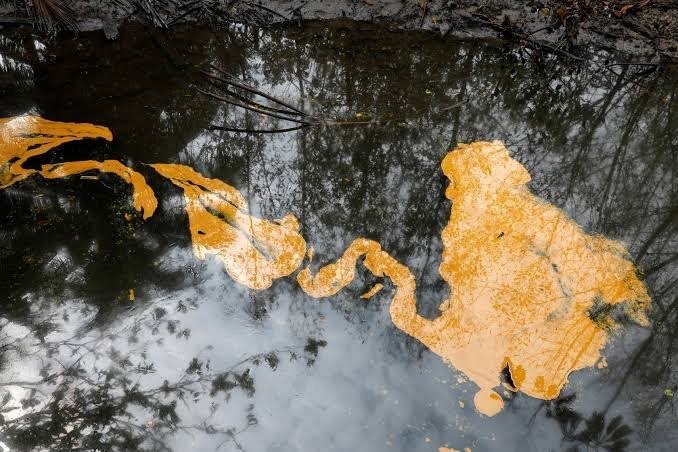
An environmental group, Environmental Conservation Agriculture and Rural Development (ECARD), has called on regulators to compel Oando to stop an alleged Oando underwater leak from a pipeline in Azuzuama, Southern Ijaw Local Government Area of Bayelsa State.
ECARD said the leak, which it alleged began on June 25, 2026, had continued as of September 24, polluting the surrounding aquatic environment.

Key Highlights
- ECARD alleges that an underwater hydrocarbon leak from an Oando pipeline has continued since June 25.
- The incident reportedly involves Oando’s six-inch Azuzuama-1 flowline.
- A Joint Investigation Visit report reportedly attributed the incident to equipment failure.
- ECARD alleges that divers identified an approximately 11mm tear on the submerged pipeline.
- The environmental group says the leak remained unrepaired as of September 24.
- ECARD has called for stronger regulatory monitoring and accurate incident reporting.
ECARD Calls for Regulatory Action
In a field report signed by Alagoa Morris on Monday, September 28, 2026, ECARD said the incident involved Oando’s six-inch Azuzuama-1 flowline.
The group urged the National Oil Spill Detection and Response Agency (NOSDRA), the Nigerian Upstream Petroleum Regulatory Commission (NUPRC) and the Bayelsa State Ministry of Environment to intervene and ensure that the alleged leak is stopped.
According to ECARD, a Joint Investigation Visit (JIV) report attributed the incident to equipment failure and identified a suspected 11mm tear on the submerged pipeline.
The environmental group said an underwater inspection by divers subsequently confirmed a rupture at the three o’clock position of the pipeline.
ECARD Disputes Leak Date in JIV Report
ECARD, however, alleged that the JIV report recorded August 29 as the date of the incident, instead of June 25.
The group said it had geotagged photographs and videos showing the bubbling spot on June 25, which it identified as the date the leak was first discovered.
ECARD also alleged that the pipeline had not been repaired despite repeated follow-ups in July, August and September.
The group quoted Azuzuama Community Development Council (CDC) Chairman, Perediseghebofa Angasei, as confirming on September 24 that the ruptured section remained unrepaired and that bubbling was still visible.
ECARD said videos received from the community on August 20 showed what it described as a hydrocarbon-related slick covering parts of the waterside.
Read also:
- Crude Supply to Nigerian Refineries Rises 17% as Petrol Imports Drop 26%
- NCDMB Launches LearnFest Academy to Boost Staff, Oil and Gas Industry Knowledge
- Sanusi’s $49.8bn NNPC Claim Resurfaces As CBN Reforms Renew Debate On Oil Revenue Transparency
- NNPCL Posts ₦7.2 Trillion Profit After Tax in 2025 Despite 24% Revenue Drop
- KEFFESO HCDT Partners PIND to Advance Sustainable Development in Niger Delta Communities
- Trans-Forcados Oil Spill: Oborevwori Orders Medical Intervention, Approves Odidi Jetty
Group Seeks Stronger Monitoring
ECARD also called for stronger logistical support for regulatory agencies to enable independent monitoring and follow-up visits to affected locations.
The environmental group urged regulators to address what it described as discrepancies in the dates contained in JIV reports, stressing that accurate incident records are important for assessing the extent of environmental impacts.
It further urged communities to ensure that individuals with the necessary technical expertise represent them during Joint Investigation Visits.
The allegations by ECARD concern an ongoing environmental incident and call for regulatory authorities and other relevant stakeholders to establish the current status of the reported leak and any remedial action taken at the site. For more Niger Delta and oil sector updates, follow us on X.