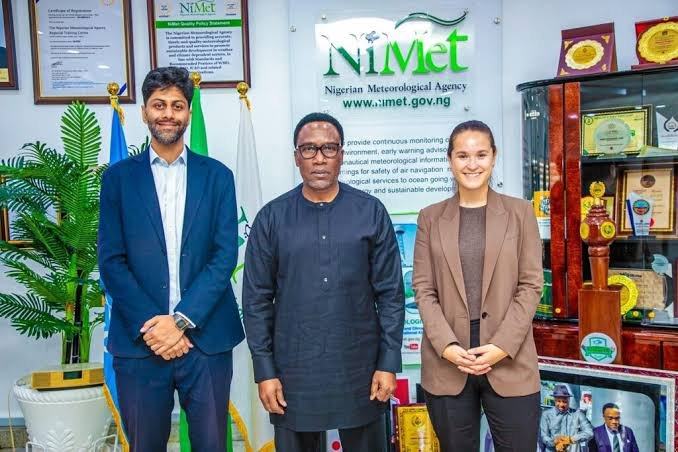
The Nigerian Meteorological Agency (NiMet) is stepping up efforts to make weather and climate information more accessible to farmers, livestock keepers and agricultural advisers through its developing NiMet data hub.
The digital platform, being developed in partnership with the International Livestock Research Institute and Crea2Solutions, has progressed from the design and mock-up stage to an advanced minimum viable product, with NiMet’s weather and climate services currently undergoing testing.

Key Highlights
- NiMet is developing a data hub to make climate information more accessible to farmers and advisers.
- The platform is being built with the International Livestock Research Institute and Crea2Solutions.
- The project began in February 2026 and reached a testable product stage by July.
- It aims to support seasonal planning, risk assessment and climate-informed farming decisions.
- NiMet and ILRI have mapped Nigeria’s agro-meteorological data and advisory landscape.
- The hub is expected to serve farmers, pastoralists, extension workers, researchers and government agencies.
The NiMet data hub project began in February 2026 under the Climate Services for Youth and AGRA programmes and has advanced to a testable product by July.
The initiative is designed to provide users with easier access to historical, monitored and forecast climate information while supporting seasonal planning, risk assessment and climate-informed decisions across Nigeria’s agricultural sector.
Addressing Fragmented Climate Data
The project addresses longstanding challenges affecting agricultural climate services, including fragmented data, weak coordination among information providers and difficulties in converting technical weather forecasts into practical information that farmers can use.
As part of efforts to address the gaps, NiMet and ILRI have jointly engaged stakeholders to map Nigeria’s agro-meteorological data and advisory landscape.
The engagement has focused on identifying gaps in information and service delivery, strengthening collaboration among institutions, improving communication with end users and promoting gender and social inclusion in climate services.
Read also:
- NiMet, AKADEMIYA2063 Partner to Deploy AI For Climate Forecasting, Food Security
- NiMet, NCCC To Partner On Climate Data Management, Early Warning Systems
- NiMet Boss Prof. Anosike Emerges President Of Africa’s Top Climate Body
Who the Data Hub Will Serve
The NiMet Data Hub is expected to serve a wide range of users, including farmers, pastoralists, extension workers, researchers, government agencies and private agricultural advisory providers.
NiMet’s existing resources, including online map rooms and agricultural climate products, are expected to contribute to the platform and support the development of more location-specific agro-weather advisories.
ILRI’s role is linked to its broader efforts to organise research data, develop digital tools and make scientific information more accessible and useful to partners, policymakers and decision-makers.
Aligning With National Priorities
The development of the NiMet Data Hub also aligns with Nigeria’s broader priorities around food security, climate-smart agriculture and digital services under President Bola Ahmed Tinubu’s Renewed Hope Agenda.
By bringing weather and climate information closer to agricultural producers and advisers, the platform is expected to improve preparedness, support better planning and help reduce losses associated with climate-related risks.
The initiative ultimately seeks to bridge the gap between climate data and practical agricultural decisions, giving farmers and other stakeholders information they can use to respond more effectively to changing weather and climate conditions. Follow us on X for more updates on Nigeria’s climate and agriculture sector.