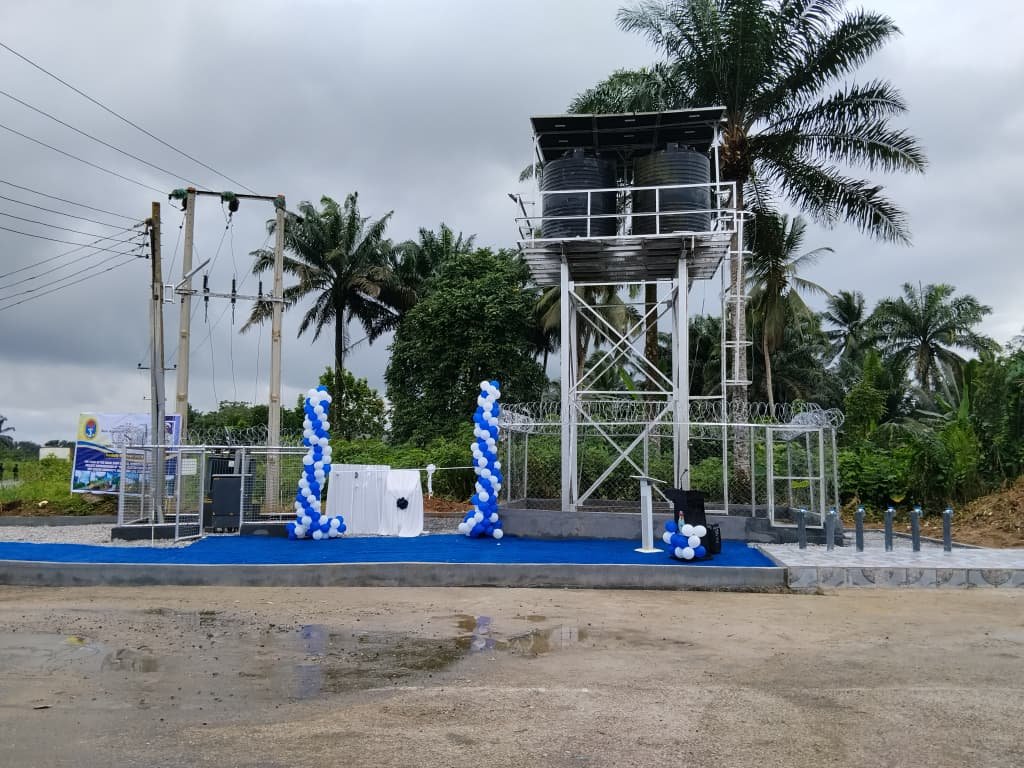
The Nigerian Navy has commissioned a rural electrification project in Ikot-Edeghe community, Mpat Enin Local Government Area of Akwa Ibom State, restoring electricity to the area after nearly a decade without power.
Key Highlights:
- Oando said the June 27 oil spill in Bayelsa was caused by suspected third-party sabotage.
- The company activated its emergency response team and contained the spill.
- A joint investigation with regulators linked the damage to third-party interference.
- Repairs to the affected flowline were completed on July 19, while cleanup continues.
- Oando pledged to complete remediation and maintain safe, responsible operations.
The project, executed under the Nigerian Navy’s Civil-Military Cooperation (CIMIC) programme, was approved by the Chief of the Naval Staff (CNS), Vice Admiral Idi Abbas, and funded through the CNS Special Intervention Quick Impact Project (SIQIP) scheme.

It was dedicated in honour of Rear Admiral Etop Ebe, Director of Maritime Research, Abuja, who hails from the community.
Speaking during the commissioning ceremony on Tuesday, the Chief of the Naval Staff, represented by the Chief of Naval Transformation and Innovation, Rear Admiral Chijioke Onyemaobi, said the intervention reflects the Navy’s commitment to strengthening civil-military relations while improving the welfare of host communities.
He explained that the project aligns with the Federal Government’s Renewed Hope Agenda, which focuses on improving the quality of life of Nigerians through critical infrastructure and sustainable community development.
“The Nigerian Navy recognises that the security and prosperity of our nation are strengthened when communities are empowered through meaningful development. This understanding has continued to guide the Nigerian Navy’s Civil-Military Cooperation efforts,” he said.
Vice Admiral Abbas described the electrification project as both timely and impactful, stressing that the Navy remains committed not only to protecting Nigeria’s maritime domain but also to contributing to national development through community-focused initiatives.
He urged residents to safeguard the electricity infrastructure against vandalism and theft to ensure its long-term sustainability.
The Naval Chief also commended Rear Admiral Ebe for identifying the community’s pressing developmental needs, noting that true leadership is measured by the positive impact it has on society.
Akwa Ibom State Governor, Pastor Umo Eno, represented by the Commissioner for Power, Hon. Iniobong Robson, praised the Nigerian Navy for supporting rural development through the intervention.
According to the governor, the CNS Special Intervention Quick Impact Project complements the state’s ARISE Agenda, which is designed to promote socio-economic development, peaceful coexistence and improved security across rural communities.
“Let me appreciate the Chief of the Naval Staff for these Special Intervention and Quick Impact Projects aimed at addressing the socio-economic development of our rural communities. This initiative aligns with the ARISE Agenda of our administration, which seeks to foster peaceful coexistence and enhance the security of our rural populace,” he said.
Earlier, the facilitator of the project, Rear Admiral Etop Ebe, expressed gratitude to the Chief of the Naval Staff for his visionary leadership and for giving him the opportunity to facilitate a project that would positively impact his community.
Read also:
- Navy Uncovers 17,000 Litres of Stolen Crude In Delta Hidden Inside Camouflaged Reservoir
- Navy destroys 4 illegal refineries, seizes 77,000 litres of suspected stolen crude in Rivers
- Nigerian Navy seizes ₦4bn stolen crude, arrests 26 crew in major Oil theft crackdown
He noted that the CNS Special Intervention Quick Impact Project was established to bridge the development gap in underserved rural communities that have continued to contribute to national development despite inadequate infrastructure.
Ebe recalled that Ikot-Edeghe had endured almost ten years without electricity, leaving residents in darkness, exposing them to insecurity and limiting economic and social activities.
He expressed confidence that the restoration of electricity would transform the community by providing reliable power to homes and streets, extending business hours for traders and artisans, improving living standards, supporting children’s education through better learning conditions and enhancing security.
“For almost ten years, Ikot-Edeghe community grappled with the absence of electricity. Nightfall meant darkness, insecurity and a complete halt to meaningful economic and social activities.
Today, with the commissioning of this electrification project, the story begins to change,” Ebe said.