
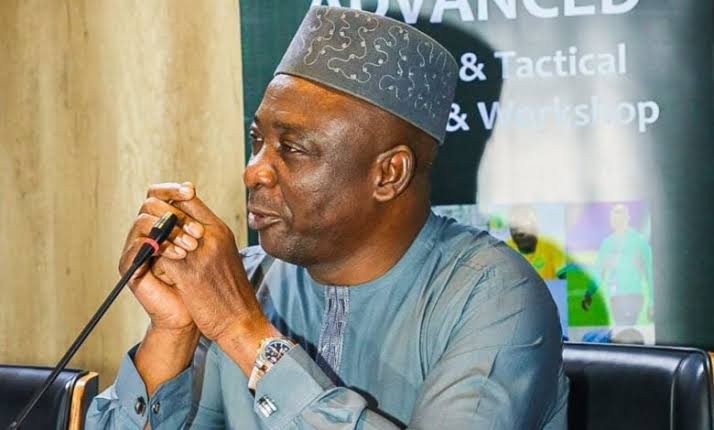
The Nigeria Football Federation (NFF) has been plunged into fresh uncertainty following the reported resignation of its President, Ibrahim Gusau, and seven other board members amid growing concerns over the management of Nigerian football.

Key Highlights:
- NFF President Ibrahim Gusau and seven board members have reportedly resigned.
- The development comes amid scrutiny of the federation’s management and finances.
- The DSS is reportedly investigating the utilisation of a ₦17 billion Federal Government intervention fund.
- The Super Falcons recently missed automatic qualification for the 2027 FIFA Women’s World Cup.
- The resignations could trigger fresh leadership changes within the NFF.
The development comes at a turbulent period for the NFF, with mounting criticism over the performance of Nigeria’s national teams and increased scrutiny of the federation’s financial activities.
One of the issues attracting attention is an investigation reportedly being conducted by the Department of State Services (DSS) into the utilisation of a ₦17 billion intervention fund released by the Federal Government to settle outstanding salaries, allowances and bonuses owed to members of Nigeria’s national teams.
Read Also:
- NFF Appoints Ladan Bosso As Super Falcons Interim Coach Ahead Olympic Qualifiers
- EFCC, ICPC Probe N12bn NFF Intervention Fund Utilisation
- NFF Sacks Super Falcons Technical Crew After World Cup Qualification Failure
The fund was approved by President Bola Ahmed Tinubu in 2024 to address financial obligations involving the various national teams.
A source familiar with the matter said the DSS had requested documents relating to the intervention fund as part of its investigation into the financial activities of the federation.
The latest development has heightened concerns about the administration of Nigerian football, particularly following a series of disappointing results involving the country’s national teams.
One of the major setbacks was the Super Falcons’ failure to secure automatic qualification for the 2027 FIFA Women’s World Cup.
Nigeria, one of Africa’s most successful women’s football nations, had featured in every edition of the Women’s World Cup since the competition began in 1991.
The Super Falcons also saw their title defence at the 2026 Women’s Africa Cup of Nations come to an end after suffering a 1-0 defeat to Cameroon in the quarter-finals. The result pushed Nigeria into a World Cup qualification playoff.
The Nigerian side subsequently suffered a 2-1 defeat to South Africa’s Banyana Banyana in the playoff, further increasing pressure on the leadership of the federation.
The resignation of Gusau and seven board members now leaves the NFF facing a major leadership challenge at a critical point for Nigerian football.
Stakeholders are expected to closely monitor developments within the federation, particularly the implications of the resignations and the ongoing investigation into the management of the ₦17 billion intervention fund.
The latest development could also raise questions about the future direction of the NFF and the leadership arrangements that will guide Nigerian football through upcoming international competitions.