The Independent National Electoral Commission (INEC) has published the final list of 18 governorship candidates and their running mates for the Delta State governorship election scheduled for February 6, 2027, setting the stage for a competitive race as political parties and supporters intensify campaigns and exchanges on social media.
Key Highlights
- INEC has published the final list of 18 candidates for the February 6, 2027 Delta governorship election.
- Incumbent Governor Sheriff Francis Orohwedor Oborevwori is contesting under the All Progressives Congress (APC).
- Former governorship candidate Great Ogboru is running under the African Democratic Congress (ADC).
- Peter Adogbejire Mrakpor is listed as the Peoples Democratic Party (PDP) candidate.
- Nigeria Democratic Congress (NDC) candidate Chris Iyovwaye has criticised the incumbent’s record on poverty, infrastructure and economic hardship.
- Supporters of Oborevwori have defended his administration’s investments in roads, healthcare, technical education and infrastructure.
- Political debates on X are increasingly focused on governance, party realignments and the conduct of the 2027 election.
INEC Publishes Final List of Delta Governorship Candidates
INEC’s final list, signed by the commission’s Secretary, Rose Oriaran-Anthony, contains 18 candidates and their running mates for the Delta State governorship election.

The publication formalises the field of contenders ahead of the February 6, 2027 poll, with candidates representing established political parties and smaller platforms.
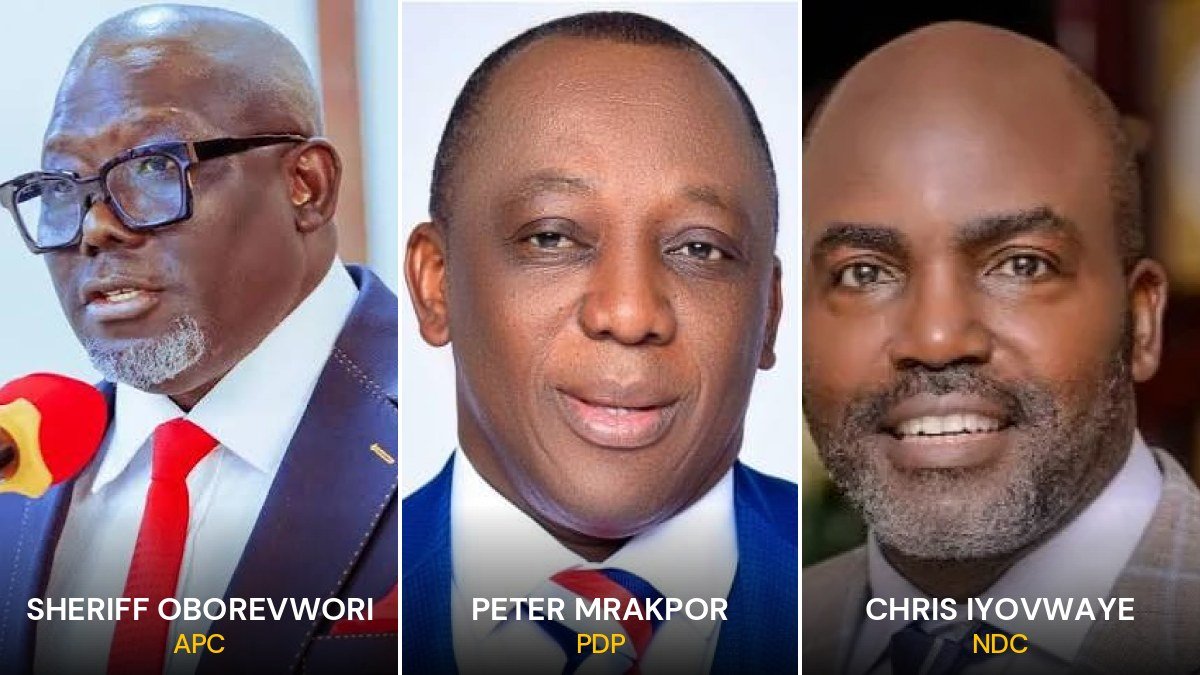
Prominent contenders include incumbent Governor Sheriff Francis Orohwedor Oborevwori of the APC, Great Ogboru of the ADC, Peter Adogbejire Mrakpor of the PDP and Chris Iyovwaye of the NDC.
Other candidates on the list include Obi Ijeomah Frederick of Accord, Itokwe Simon Ekaghogho of the Action Alliance, Eshor Omozojie Isaac of the African Action Congress and Ndidi Andrew Chukwudi of the Allied Peoples Movement.
The list has renewed attention on the race, with political discussions increasingly focused on the candidates’ records, campaign promises and the state’s political realignments.
Oborevwori, Ogboru and Mrakpor Among Major Contenders
Oborevwori, 63, is seeking another term under the APC alongside his deputy, Monday Onyeme, 61.
Great Ogboru, 68, is contesting under the ADC with Ejidoh Chinwe Regina as his running mate, while the PDP ticket features Peter Adogbejire Mrakpor and Agbabi Onyeka Fidelis.
Chris Iyovwaye is representing the NDC alongside Ossai Godwin Osumili.
The candidates enter the race against the backdrop of changes in Delta State’s political landscape since the 2023 governorship election, which Oborevwori won under the PDP before moving to the APC.
The political realignment has generated debate over the implications for the incumbent’s administration, opposition coordination and the direction of the state ahead of the next election.
NDC Candidate Chris Iyovwaye Criticises Oborevwori’s Government
NDC governorship candidate Deacon Chris Iyovwaye has used social media to highlight concerns raised by residents during visits to communities across Delta State.
In posts shared on X, Iyovwaye said residents had complained about bad roads, unreliable electricity and abandoned projects.
He also criticised the incumbent administration’s MORE Agenda, arguing that poverty, hunger and economic hardship remained major concerns for residents.
Iyovwaye has called for an enabling environment for businesses and greater opportunities for young people, promoting his campaign with the hashtag #ResetDelta.
His comments form part of the opposition’s broader effort to make governance, economic conditions and public infrastructure central issues in the 2027 campaign.
The claims represent the candidate’s assessment of the administration’s performance and are likely to be contested by supporters of the incumbent.
Fejiro Oliver Raises Questions Over Political Mobilisation
Political commentator Fejiro Oliver has also criticised the incumbent’s political mobilisation efforts in a widely circulated post on X.
Oliver questioned scenes he described as organised displays of support for Oborevwori following a church service, alleging that youths were given polo shirts and brooms to chant in support of the governor.
He characterised the display as artificial and made allegations about the government’s performance and preparations for the election.
Oliver also raised concerns about the possibility of electoral manipulation and referred to the influence of former deputy Senate president Ovie Omo-Agege and the NDC’s organising activities.
These statements reflect Oliver’s views and allegations; they do not independently establish electoral misconduct or prove that support for any candidate is genuine or manufactured.
The comments nevertheless illustrate how social media has become a platform for campaign messaging, criticism and competing claims ahead of the Delta governorship election.
Oborevwori’s Supporters Defend His Administration
Supporters of the incumbent governor have responded to criticism by highlighting projects and investments they say demonstrate progress under his administration.
In posts on X, some supporters pointed to road construction, technical education, healthcare and other infrastructure projects as evidence of efforts to improve living conditions and expand economic opportunities.
Others rejected arguments centred on ethnic identity and expressed confidence in the state’s political leadership.
The incumbent’s supporters have also cited the alignment of several prominent Delta political figures with the APC as a factor shaping the political environment ahead of 2027.
However, the significance of these alliances and the extent of public support for the candidates remain matters for voters to assess as the campaign develops.
Read also:
- APC vs NDC: War of Words Erupts on Delta Facebook Pages as 2027 Election Mobilisation Begins
- Omo-Agege’s Two Purported APC Resignation Letters Raise Questions Over Dates, Primary Participation
- Omo-Agege Insists 2027 Senate Bid Is Alive as INEC Ruling Sparks Membership Register Dispute
- Delta 2027: Delta North Mega Rally Notice Circulates as Egbema Community Reportedly Endorses Sheriff Mulade
t
Delta 2027 Governorship Race Generates Online Debate
The publication of INEC’s final candidate list has intensified discussions across social media platforms, particularly X, where supporters and critics are debating the state government’s record and the prospects of the opposition parties.
Key issues in the online exchanges include poverty, food prices, roads, electricity, youth employment, abandoned projects and party defections.
While supporters of the incumbent emphasise ongoing infrastructure and public-service projects, opposition voices have called for a reassessment of the government’s performance and greater attention to unresolved community needs.
The exchanges also highlight concerns about political rhetoric and the need for peaceful participation as campaigns gather momentum.
Social media posts can provide insight into the arguments being advanced by political actors and their supporters, but they do not necessarily represent the views of the wider electorate.
February 6, 2027 Election: What Happens Next?
With the final list published, attention is expected to shift towards campaign activities, party mobilisation and voters’ assessment of the candidates’ policies and records.
The February 6, 2027 election will provide an opportunity for Delta voters to decide who should lead the state for the next term.
For the candidates, the challenge will be to communicate their programmes, respond to criticism and convince voters through their policy proposals and public engagements.
As the election approaches, the interaction between official campaign activities, governance debates and social media discussions is likely to remain a prominent feature of the Delta governorship contest.
For more updates on the Delta 2027 race, follow us on X.