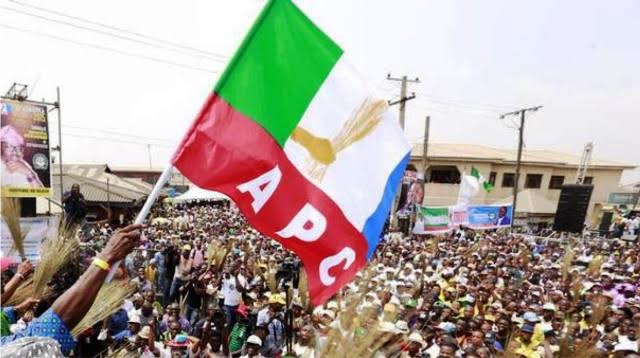
Supporters of the All Progressives Congress (APC) and the Nigeria Democratic Congress (NDC) have engaged in heated exchanges on Facebook pages linked to Delta State, as political mobilisation ahead of the 2027 general elections gathers momentum. The online dispute, particularly around Sapele, has centred on claims of grassroots support, the performance of President Bola Tinubu’s administration and the need for a new political direction in the state.
Key Highlights
- APC and NDC supporters exchange criticism on Delta-focused Facebook pages ahead of the 2027 elections.
- NDC supporters claim the party is gaining grassroots momentum in Sapele and other parts of Delta State.
- APC supporters defend Tinubu’s Renewed Hope Agenda and highlight federal projects.
- NDC promotes a free barbing and grooming outreach in Olympia, Sapele, as part of its grassroots engagement.
- APC supporters criticise the initiative, arguing that political performance should be judged by governance and projects.
- The online exchanges reflect growing competition over public opinion and political visibility ahead of 2027.
- No physical clashes were reported in connection with the exchanges described.
APC, NDC Supporters Trade Words on Delta Facebook Pages
A review of posts on Monday showed combative exchanges between APC-leaning and NDC-leaning groups on several Facebook pages associated with Sapele and Delta State.

The discussions featured competing claims about the parties’ popularity, their records and their plans for the state ahead of the 2027 general elections.
Pages mentioned in the exchanges included Sapele Gbwa Gbwa, APC Worldwide Platform and the Tinubu/Shettima Supporters’ Forum.
NDC supporters claimed their party was gaining traction at the grassroots and criticised what they described as APC-aligned media activity. In response, APC supporters defended the Federal Government’s Renewed Hope Agenda and pointed to infrastructure projects and other initiatives as evidence of progress.
Commenters on both sides accused their opponents of spreading misinformation and engaging in political grandstanding. The posts reportedly attracted hundreds of comments, reactions and shares within hours.
However, activity on partisan social media pages does not, by itself, establish the level of support either party enjoys across Delta State.
NDC Takes 2027 Mobilisation Beyond Social Media
Beyond the online exchanges, NDC supporters promoted a free barbing and grooming outreach scheduled for Olympia in Sapele.
The initiative was presented as part of the party’s efforts to engage residents directly and demonstrate what its supporters described as a people-first approach to politics ahead of 2027.
Flyers and photographs advertising the outreach circulated on NDC-aligned Facebook pages, with supporters encouraging young people to participate and discuss the future of Delta State.
The activity reflects a grassroots mobilisation approach that combines community engagement with social media visibility.
APC supporters, however, dismissed the initiative as “stomach infrastructure politics”, arguing that political parties should be assessed primarily on governance, development projects and their ability to improve living conditions.
The competing reactions show how even small community initiatives can become part of a wider political contest over credibility and public perception.
APC Defends Tinubu’s Renewed Hope Agenda
APC supporters used the Facebook discussions to defend President Tinubu’s economic policies and highlight federal projects they said could benefit Delta State and other parts of Nigeria.
Their arguments focused on the administration’s Renewed Hope Agenda, infrastructure investments and claims that ongoing reforms would deliver long-term economic benefits.
NDC supporters countered that many Nigerians continued to face high living costs and other economic challenges, arguing that the country needed a different political direction.
The disagreement mirrors a wider national debate over the impact of Tinubu’s economic reforms, with supporters emphasising structural changes and infrastructure spending while critics focus on hardship and the pace of improvements in everyday life.
Read also:
- Omo-Agege Insists 2027 Senate Bid Is Alive as INEC Ruling Sparks Membership Register Dispute
- Chris Iyovwaye Dangote Refinery Claim: NDC Candidate Highlights Wellmann Group’s Role
- Warri Independence Day Run Disrupted As Youths Burn Tinubu-Branded Shirts, Chant ‘Obi’
Delta Politics: Grassroots Competition Intensifies
Delta State has historically been a stronghold of the Peoples Democratic Party (PDP), although the APC has expanded its political presence in recent years. The emergence and mobilisation of other political platforms, including the NDC, which has cleared former APC figures such as Ovie Omo-Agege to contest 2027 Senate seats, adds another dimension to the competition ahead of the 2027 elections.
In Sapele and other communities, parties and their supporters are using social media to promote their messages, challenge opponents and seek visibility among voters.
The online exchanges suggest that political communication is becoming an increasingly important part of grassroots engagement. However, the scale of activity on Facebook should not be mistaken for a reliable measure of electoral support without broader evidence from communities and voters.
No Physical Clashes Reported as Online Exchanges Continue
Although the discussions were described as heated, no physical clashes were reported in the account of the exchanges.
The focus remained on political arguments, mockery and competing claims about the parties’ popularity and performance.
One commenter on Sapele Gbwa Gbwa reportedly summed up the early start to the political rivalry by saying: “This one don start early.”
Both sides expect political activity to increase in the coming months as parties strengthen their structures, engage residents and prepare for the 2027 general elections.
What the Online Exchanges Mean for the 2027 Elections
The exchanges in Delta State highlight how political parties are competing not only for votes but also for influence over the narratives shaping public opinion.
For the NDC, the reported strategy combines social media engagement with direct community outreach. APC supporters, meanwhile, continue to defend the Tinubu administration’s record and promote its projects and policies.
Whether these efforts translate into wider public support will depend on factors beyond Facebook engagement, including party organisation, candidates, campaign activities and voters’ assessment of governance.
As the 2027 elections approach, Sapele’s online political debates may offer a glimpse of the messaging strategies parties and their supporters intend to use. For now, the exchanges underline the growing importance of digital platforms in Nigeria’s political mobilisation.
For more updates on Delta politics and the 2027 elections, follow us on X.