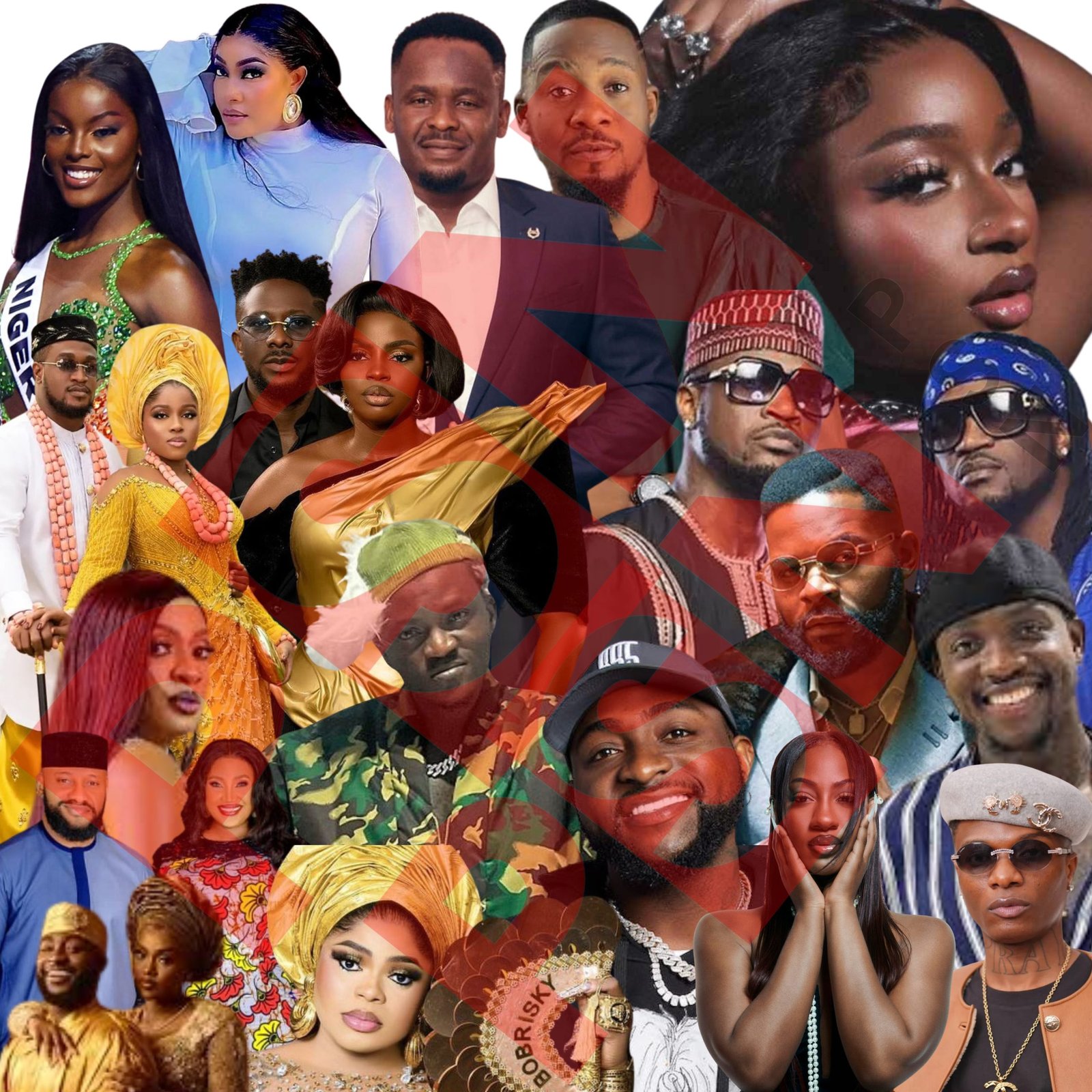
The success of acting often depends on a performer’s ability to become someone entirely different from who they are in real life. In Nigeria’s vibrant film industry, this contrast is frequently on display as celebrities known for one public image take on roles that portray completely different personalities, social classes, and lifestyles.
From affluent stars portraying struggling villagers to celebrities known for their calm, cheerful or philanthropic lifestyles playing ruthless antagonists, Nollywood continues to demonstrate that acting is as much about transformation as it is about talent.
Many Nigerian actors carefully cultivate public images through social media, interviews, business ventures, and charitable work.

Yet on screen, those same personalities are often seen embodying criminals, corrupt politicians, abusive spouses, or ruthless business executives roles that sharply contrast with how they are perceived in real life.
Among the most prominent examples are actors such as Ramsey Nouah, Genevieve Nnaji, Pete Edochie, Omotola Jalade Ekeinde, and Funke Akindele, who have all at various points portrayed intense, controversial, or morally complex characters despite being widely regarded for professionalism, discipline, and longevity in the industry.
At the same time, Nollywood also features performers whose off-screen reputations are defined by humility, warmth, and accessibility traits that often surprise audiences who only know them through more dramatic or mischievous roles.
Actors such as Somadina Adinma are widely described by fans as cheerful, humble, and down-to-earth in real life.
Uzor Arukwe is similarly admired for his calm and approachable personality, despite his growing reputation in emotionally demanding and sometimes intense film roles. Williams Uchemba is equally recognised not only for his screen presence but also for his philanthropy and humorous, relatable public image.
Veteran actor Richard Mofe-Damijo continues to be praised for his graciousness and mentorship of younger talents, while Chinedu Ikedieze remains one of Nollywood’s most beloved figures, celebrated for his jovial and humble nature that contrasts with the mischievous characters he often portrays on screen.
In contrast, some actors have become so closely associated with villainous or “wicked” roles that audiences struggle to separate character from reality.
Actress Patience Ozokwor, popularly known as “Mama G,” is frequently cast as the feared mother-in-law or antagonist in classic Nollywood films. Yet she has repeatedly emphasized that her real personality is gentle, spiritual, and deeply empathetic.
Similarly, Kanayo O. Kanayo, widely known for portraying ritualists and occult-themed roles that earned him the nickname “Nna Anyi Sacrifice,” is in reality a lawyer, respected industry elder, and family-oriented professional. Actor Chiwetalu Agu is also frequently cast as a tyrannical or comedic antagonist, yet off-screen he is known for his humour, philanthropy, and warm personality.
Doris Ogala and the Blurred Line Between Screen Image and Public Controversy
The discussion becomes more complex when examining cases where an actor’s public controversies intersect with their on-screen image.
Actress Doris Ogala, known for roles in romance and emotionally driven storylines, has at different points found herself at the centre of public attention beyond the screen.
She was involved in a widely reported personal dispute involving allegations against a religious figure, in which she claimed there was a broken promise of marriage, emotional distress, and financial inducement to retract statements.
The matter, which circulated heavily in the media space, further intensified public scrutiny of her personal life.
While such incidents often dominate online conversations, industry analysts caution against conflating an actor’s personal experiences with their professional identity.
Like many entertainers, Ogala’s on-screen work remains separate from her private disputes, reflecting the broader challenge celebrities face in maintaining boundaries between public perception and personal reality.
The debate becomes even more complex when critics turn their attention to perceived performance gaps.
Actor Jim Iyke, known for his “bad boy” roles, has at times been criticised for limited range, even as fans praise his confident screen presence. Actress Tonto Dikeh has also faced mixed reviews, with some critics questioning her acting depth despite her strong fanbase and cultural influence.
Veteran actor Emeka Ike has similarly been subject to debate over consistency in his later career, even as he retains loyal supporters.
Meanwhile, Pete Edochie despite being celebrated as one of Nollywood’s most iconic figures has faced online criticism from some viewers who argue that his characters often feel repetitive, underscoring how audience expectations have evolved alongside the industry itself.
The rise of social media has intensified these contradictions. Nigerian celebrities frequently showcase luxury lifestyles, international travel, designer fashion, and high-profile events online. Yet in films, they seamlessly transform into market traders, farmers, unemployed graduates, or residents of rural communities.
This duality reinforces the core strength of acting: the ability to separate personal reality from fictional experience.
Industry observers argue that this distinction is essential. A performer’s personal lifestyle whether modest or extravagant should not limit the range of characters they can portray.
Instead, casting decisions are increasingly driven by versatility, emotional depth, and storytelling needs rather than public perception.
Entertainment experts also note that social media has blurred the boundary between celebrity and character. Fans now feel closer than ever to entertainers, often assuming that online personalities reflect real-life behaviour.
This can create tension when actors take on roles that sharply contrast with their public image, whether heroic, comedic, or villainous.
Read also:
- “Men say they become dwarfs beside me” — beautiful Nigerian woman opens up on struggles finding love
- Cubana Chief Priest blames community leaders for losing APC ticket in Imo
- City Boy Movement Coordinator Cubana Chief Priest loses APC Reps ticket in Imo
As Nollywood continues to expand its global reach, casting directors are increasingly encouraging performers to break stereotypes and explore wider emotional and social ranges. The most respected actors, analysts argue, are those capable of convincingly inhabiting roles far removed from their own identities.
Ultimately, the contrast between Nigerian celebrities’ lifestyles and their on-screen appearances reflects the very essence of acting. The craft is not about mirroring reality but about creating believable worlds and characters that serve the story.
Whether portraying wealth or poverty, kindness or cruelty, humility or corruption, Nigeria’s leading actors continue to demonstrate that the strongest performances often come from stepping far outside their real lives.
For audiences, the lesson remains clear: what is seen on screen is a performance—not a reflection of the person behind it.