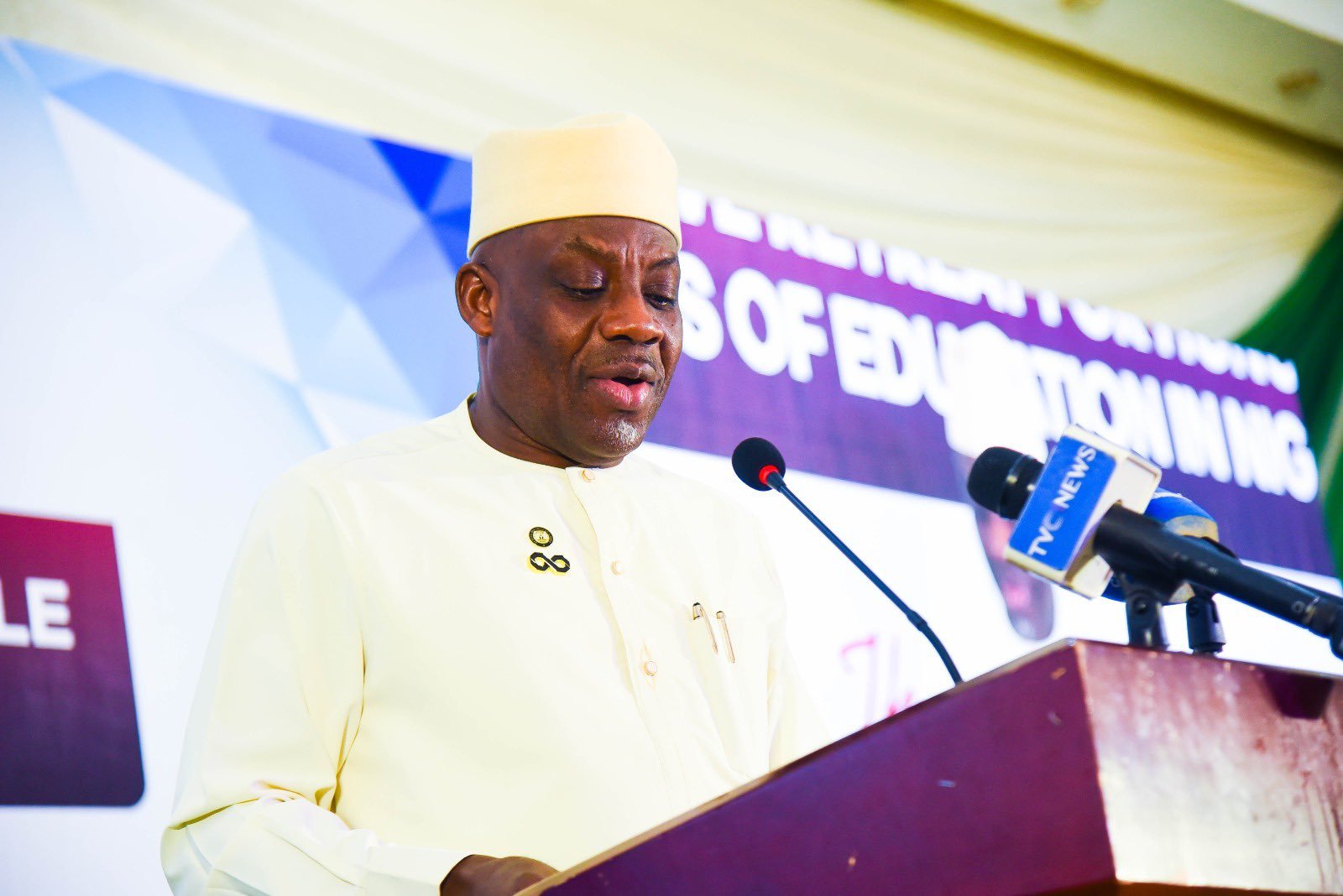
The Minister of Education, Maruf Alausa has reaffirmed its commitment to transforming Nigeria’s education sector through stronger collaboration with state governments, data-driven planning and sustainable reforms aimed at improving learning outcomes across the country.
This was contained in a statement issued by the Director of Press and Public Relations in the Federal Ministry of Education, Boriowo Folasade, following the retreat for states commissioners for education.
Speaking at the retreat, the Minister of Education, Alausa, said meaningful education transformation can only be achieved through effective federal-state partnership, reliable education data and bold leadership.

According to the minister, the deployment of the National Education Data Infrastructure (NEDI) and the Digitalised Nigeria Education Management Information System (DNEMIS) will strengthen planning, accountability, resource allocation and evidence-based decision-making across the education sector.
Alausa noted that the federal government is committed to leveraging technology and data to drive reforms that will improve access to quality education and ensure that resources are deployed where they are needed most.
He also urged states to take advantage of the World Bank-supported HOPE Education Programme, which provides US$552 million in performance-based financing to support improvements in education governance, teacher quality and learning outcomes.
The minister encouraged participating states to complete all necessary implementation processes to access the available funding, stressing that the programme presents a significant opportunity to strengthen education delivery nationwide.
Read also:
- 100 Teachers In Bayelsa Begin Training On Reading Skills, Phonics
- UBEC Strengthens Basic Education In Kano With 4,000 Classrooms, Massive Teacher Recruitment
- NERDC Reduces Textbook Assessment, Ranking Fees, Orders Refunds To Publishers
Alausa further reaffirmed that the Nigeria Education Sector Renewal Initiative (NESRI) remains focused on expanding foundational learning, Technical and Vocational Education and Training (TVET), STEM education, digital learning and sustainable education financing.
 He emphasized that the Federal Ministry of Education remains committed to working closely with state governments, development partners and other stakeholders to build an inclusive, resilient and globally competitive education system.
According to him, the ultimate goal is to equip every Nigerian learner with the knowledge, skills and opportunities required to contribute meaningfully to national development.
The minister reiterated that sustainable reforms in the education sector will depend on strong partnerships, accountability and a shared commitment to delivering measurable results for Nigerian children and young people.
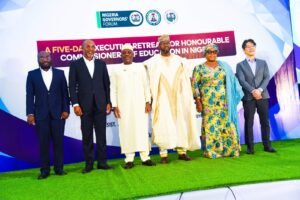
The retreat brought together commissioners for education from across the country to discuss strategies for strengthening education governance, enhancing collaboration and advancing the federal government’s education reform agenda.