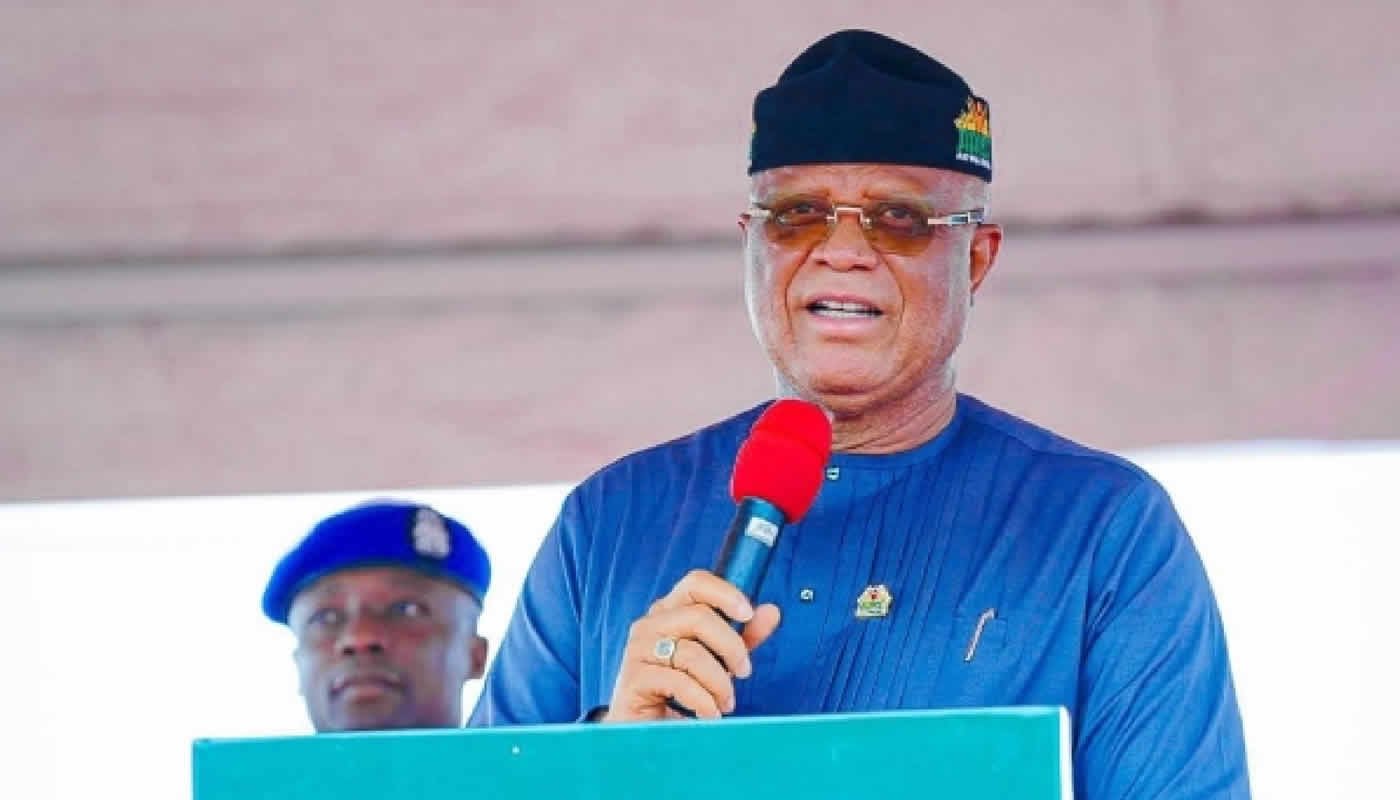
Akwa Ibom State Governor, Umo Eno, has sparked renewed debate over entrepreneurship and economic hardship after revealing that he once made not less than ₦10 million monthly from selling akara and bread.
Eno, while recounting his entrepreneurial experience, said he ventured into the sale of akara, bread and akara burgers, while also operating a coffee shop.

He explained that workers heading to their offices, including employees of ExxonMobil, were among his regular customers, buying akara and bread in the morning alongside coffee.
“That akara business and that bread used to give me not less than ten million naira, not less than that,” Eno said.
The governor’s revelation has now given fresh relevance to comments made earlier this year by First Lady, Oluremi Tinubu, when she encouraged Nigerians to consider small businesses such as akara, roasted corn and kuli-kuli.
Mrs. Tinubu had said the businesses could be started with relatively little capital while speaking about grants being provided to vulnerable Nigerians through the Renewed Hope Initiative.
Her remarks subsequently attracted criticism from Nigerians who felt that the advice did not adequately reflect the economic pressures facing households.
Eno’s account, however, presents a strikingly different angle to the debate.
While some Nigerians criticised the First Lady for mentioning akara as an option for people struggling economically, the governor’s personal experience suggests that a seemingly modest food business can, under certain circumstances, become a substantial commercial venture.
But the revelation also raises another question: what exactly did Eno mean by ₦10 million?
If the amount represented profit, it would translate to roughly ₦333,000 per day over a 30-day month. If it represented turnover, however, the business would still have had to cover the cost of beans, oil, bread, coffee, labour, rent, transportation and other expenses.
The distinction is important because ₦10 million in sales is considerably different from ₦10 million in take-home profit.
The timing of Eno’s revelation is also likely to fuel the argument over whether Nigerians should simply be encouraged to embrace petty trading or whether government should focus more heavily on creating an environment in which small businesses can scale.
Critics of Mrs. Tinubu’s earlier remarks argued that Nigerians need more than advice to start informal businesses, pointing instead to the cost of living, unemployment, inflation, infrastructure and access to affordable financing.
Supporters, on the other hand, have argued that there is nothing inherently demeaning about akara, roasted corn or other informal businesses and that many successful Nigerian entrepreneurs started from humble ventures.
Eno’s story appears to strengthen that latter argument, although his reported earnings also raise a difficult question about scale.
Related Stories:
- Governor Fintiri Approves N5.72bn Projects In Adamawa
- Boko Haram Terrorist Surrenders To ‘Operation HADIN KAI’ Troops In Borno
- Police Arrest 16-Year-Old Armed Robbery Suspect In Anambra
- EFCC Arraigns Man Over Alleged N1.09bn Fraud In Abuja
- Former Benue Councillor Remanded Over Alleged Torture, Assault, Attempted Murder of Woman