Nigeria’s rising debt profile is once again under intense scrutiny as fresh borrowing under the administration of President Bola Tinubu fuels concerns that Africa’s largest economy may be drifting deeper into a cycle of dependency on loans from the World Bank, the International Monetary Fund (IMF) and foreign creditors.
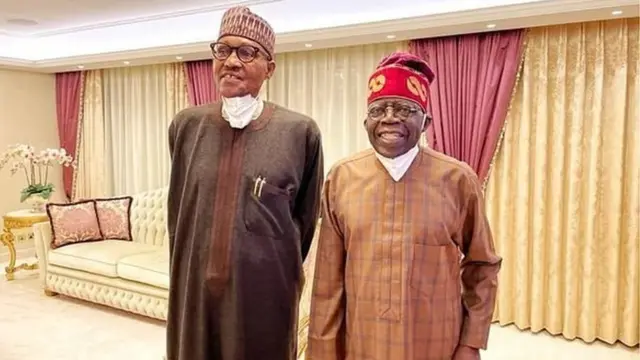
Findings by The Trumpet show that Nigeria’s public debt has grown significantly over the past decade, moving from about ₦12 trillion when former President Muhammadu Buhari assumed office in 2015 to well above ₦120 trillion under Tinubu’s administration.

Key Highlights:
- Nigeria’s public debt has reportedly risen sharply, from about ₦12 trillion under Muhammadu Buhari (2015–2023) to over ₦120 trillion under Bola Tinubu.
- The article links the increase to heavy borrowing from institutions like the World Bank, International Monetary Fund, and other foreign creditors.
- Under Buhari, loans were largely justified by infrastructure needs, recession recovery, and COVID-19 economic shocks, but critics say debt servicing became unsustainable.
- Under Tinubu, reforms such as fuel subsidy removal and forex unification have not stopped new borrowing requests, raising fresh concerns about debt sustainability.
- Analysts and citizens worry that rising debt servicing costs and limited economic relief suggest Nigeria may be caught in a long-term borrowing cycle with unclear end in sight.
While both administrations defended the loans as necessary for infrastructure development, economic stabilisation and budget support, economists and financial analysts are increasingly questioning whether the country is borrowing for growth or merely borrowing to survive. Under Buhari, Nigeria witnessed one of its most aggressive borrowing periods in recent history, following the 2016 recession, falling oil prices and the economic disruptions triggered by the COVID-19 pandemic.
The administration secured multiple loans from the World Bank, IMF, China Exim Bank and international capital markets through Eurobonds. Government officials at the time argued that the loans were tied to critical infrastructure projects, including the Lagos-Ibadan railway, Abuja-Kaduna rail line, airport rehabilitation, road construction and power projects.
However, critics maintained that despite the heavy borrowing, the economy struggled with rising unemployment, inflation, naira depreciation and mounting debt servicing obligations.
Read Also:
- Buhari’s son Yusuf wins APC ticket for Daura Federal Constituency
- Yusuf Buhari declares House of Representatives bid in Katsina
- APC crisis deepens in Katsina as stakeholders clash over Yusuf Buhari endorsement for 2027
By the end of Buhari’s tenure in 2023, debt servicing had reportedly consumed a significant portion of government revenue, raising concerns about fiscal sustainability. Upon assuming office in May 2023, Tinubu inherited a fragile economy burdened by subsidy payments, foreign exchange instability and declining investor confidence.
The Tinubu administration quickly introduced major reforms, including the removal of petrol subsidy and the unification of the foreign exchange market, measures government officials described as necessary to rescue the economy from collapse. Despite the reforms, Nigeria has continued to seek fresh loans and credit facilities from multilateral institutions and foreign lenders. Recent World Bank approvals and fresh external borrowing requests submitted to the National Assembly have further intensified debates over the country’s debt trajectory.
Economic analysts say one of the biggest concerns is that Nigerians are yet to feel significant relief despite the painful reforms and continued borrowing. Food inflation, transportation costs and the general cost of living have risen sharply in the last two years, pushing millions of Nigerians deeper into hardship.
Speaking on the development, economic analyst Chukwuemeka Nnaji said the country’s debt challenge goes beyond the volume of borrowing. “The major issue is whether the loans are productive and whether they are generating enough economic returns to offset repayment obligations. Borrowing itself is not entirely bad if it is tied to measurable economic growth,” he said.
Another financial expert, Aisha Balarebe, warned that Nigeria’s rising debt servicing costs could continue to weaken government spending on critical sectors such as health, education and agriculture. “When a large percentage of revenue goes into servicing debt, government is left with very little to invest in social development. That is where the danger lies,” she stated.
However, following reports of a proposed $1.25 billion loan linked to the Tinubu administration, the request triggered heated debate online, which trended across X, formerly known as Twitter, saw many users storming the comment sections with differing opinions on Nigeria’s borrowing culture, economic management and government spending priorities.
One user, @yengoblog9ja, wrote that “don’t borrow Tinubu money again, they want to finish Nigerians.” Another user, @captbobyi01, stated: “Please, do not borrow @officialasiwajubat any loan. I repeat, do not borrow Tinubu and his son any money.” Similarly, @realkingdavid posted: “Please, don’t borrow Tinubu loan again, he is using the money to kill us in the country.” User @pr_eci0us2291 also appealed to the global lender, saying, “please, stop borrowing our president.”
Another commenter, @NigIsland, said: “A man who refuses to mend his roof in the rain will not decide the weather by shouting at the clouds.” User @BIG_Mayana7 alleged that public loans were being mismanaged, claiming, “they should not borrow him any loans again, they are using the money to buy expensive vehicles for themselves.”
Data from the Debt Management Office (DMO) shows that Nigeria’s external debt profile continues to rise, amid exchange rate volatility, a situation analysts say has further worsened repayment burdens due to the depreciation of the naira. There are also growing concerns over the conditions attached to some international loans, particularly those linked to fiscal reforms, subsidy removal and tax adjustments.
While supporters of the Tinubu administration argue that current reforms will eventually stabilise the economy and attract investment, critics insist that the government must demonstrate greater transparency regarding how borrowed funds are utilised.
For many Nigerians battling economic hardship, the debate is no longer just about figures and debt statistics, but about whether continuous borrowing is translating into visible improvements in living conditions. With fresh loan requests still emerging and debt servicing costs climbing, concerns are mounting that future generations may ultimately bear the burden of Nigeria’s expanding appetite for borrowing.