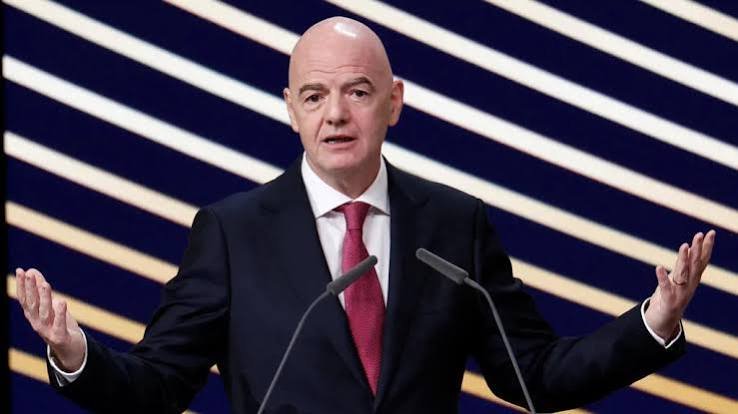
FIFA President Gianni Infantino‘s controversial proposal to open the governing body’s flagship competitions to private investment has suffered another major setback after one of his senior advisers resigned and the Asian Football Confederation (AFC) formally joined growing opposition to the plan.
The twin developments significantly weaken the proposal’s chances of securing approval from FIFA’s 211 member associations, with three major continental confederations now publicly rejecting the initiative.

Carlos Cordeiro, a senior adviser to Infantino on global strategy and governance, announced his resignation, describing the proposal as “a bad deal for football” that could mortgage the future of the sport.
In a statement explaining his decision, Cordeiro said FIFA’s primary responsibility was to safeguard football rather than maximise commercial returns.
“FIFA’s responsibility is not to maximise commercial returns at any cost. It is to protect and strengthen football for future generations. When those principles come into conflict, football must come first,” he said.
A former president of U.S. Soccer and investment banker, Cordeiro stressed that he had no involvement in developing the proposal and questioned the lack of transparency surrounding the plan.
“Why this deal? Why now? What oversight exists? Who benefits? These questions remain largely unanswered, and yet member associations are being asked to make a decision of enormous consequence in barely 50 days,” he added.
His resignation came hours after the Asian Football Confederation declared its support for UEFA and CONCACAF, both of which have already rejected the proposal.
In a strongly worded statement, the AFC said FIFA had failed to adequately consult member associations before advancing such a significant initiative.
“The FIFA World Cup is the pinnacle of global football and derives its strength from the participation of all confederations and the world’s leading football nations. Any proposal that risks undermining the unity and universal character of the competition must be reconsidered,” the confederation said.
The AFC also criticised FIFA’s governance process, arguing that confederations, member associations and even FIFA’s own governing bodies had been sidelined during discussions on the proposal.
With UEFA’s 55 member associations, CONCACAF’s 35 and the AFC’s 46 nations opposing the plan, at least 136 votes could potentially be cast against the proposal if members follow their respective confederations’ positions. Since FIFA requires a simple majority of 106 votes for approval, the proposal now faces a difficult path.
Infantino’s proposal seeks to establish a new commercial subsidiary, FIFA Forward Enterprise (FFE), to manage the organisation’s flagship competitions, including the FIFA World Cup. The plan would allow private investors to acquire minority, non-controlling stakes in the new entity.
Read also:
- FIFA Football ‘Not for Sale’ Infantino Insists On Investment Plan Amid Growing Opposition
- WAFCON 2026 Shocker: Malawi Stun Super Falcons 3-2 in Five-Goal Thriller, Nigeria’s Title Defence in Trouble
- Arsenal Close In On Newcastle Captain Bruno Guimaraes
According to documents prepared by investment bank JP Morgan, the initiative is intended to generate additional commercial revenue that would increase financial distributions to FIFA’s member associations over future funding cycles.
The proposed investor group is expected to be led by Thrive Eternal, an American venture capital firm founded by Joshua Kushner, brother of Jared Kushner, the son-in-law of U.S. President Donald Trump.
Despite mounting criticism, FIFA has defended the proposal, insisting that “nobody is selling football” and arguing that inaccurate media reports have distorted the consultation process.
However, UEFA has remained firmly opposed, warning that the World Cup should never become an investment product or be handed over to private investors. CONCACAF and the AFC have also expressed concerns over the lack of consultation and governance surrounding the proposal.
Meanwhile, South America’s governing body, CONMEBOL, has yet to announce its official position, while the Confederation of African Football (CAF) and the Oceania Football Confederation (OFC) are expected to deliberate on the proposal during meetings scheduled for August.
Although opposition continues to grow among football’s major governing bodies, some smaller football associations, particularly in Africa and other developing regions, have suggested they may still support the proposal if it leads to increased funding for football development and infrastructure.