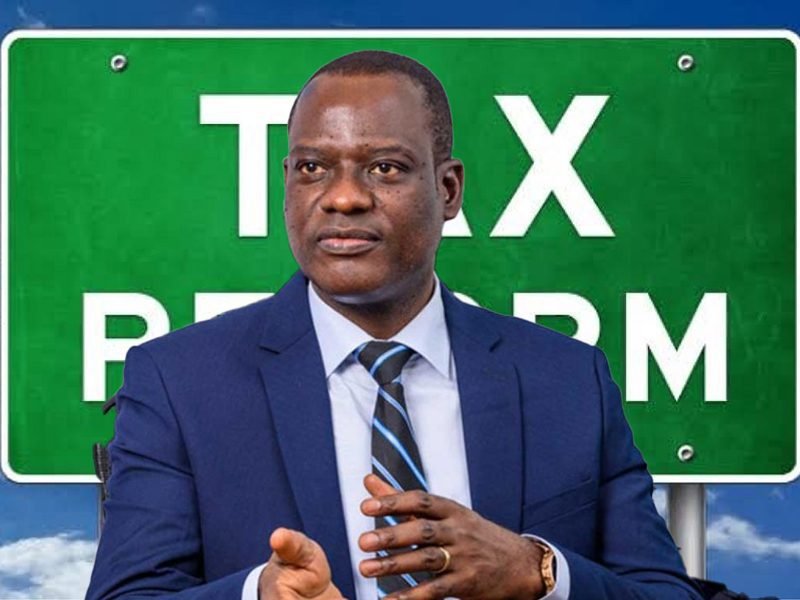
The federal government has welcomed Fitch Ratings’ decision to revise Nigeria’s long-term issuer default ratings outlook to positive from stable, while affirming the country’s rating at ‘B’, citing the development as evidence of growing confidence in its economic reform programme.
Key Highlights
- Fitch revised Nigeria’s outlook to positive from stable and affirmed its ‘B’ rating on October 9, 2026.
- Gross foreign reserves stood at $54.9 billion as of September 25, 2026.
- Fitch projects 4.3 per cent GDP growth and average inflation of 15.4 per cent in 2026.
- All three major rating agencies have now taken positive actions on Nigeria in 2026.
- Finance Minister Taiwo Oyedele says the goal is to put Nigeria on the path to investment grade.
In a statement signed by Taiwo Oyedele, Minister of Finance and Coordinating Minister of the Economy, the government said Fitch’s decision reflects progress in Nigeria’s policy framework, stronger external buffers, sustained reform momentum and declining inflation.

Fitch announced the outlook revision on October 9, 2026, noting that a positive outlook indicates the possibility of a rating upgrade if current economic trends and reforms are sustained.
Reserves, Growth And Inflation
According to Oyedele, Nigeria’s gross foreign exchange reserves stood at $54.9 billion as of September 25, 2026, up significantly from about $32 billion in mid-April 2024.
He said the increase has been supported by greater formalisation of foreign exchange transactions, stronger portfolio inflows, higher export receipts and increased remittances.
Fitch also noted that the improvement in the quality of Nigeria’s reserves had strengthened the country’s ability to withstand external shocks, while projecting a current account surplus equivalent to 6.4 per cent of GDP in 2026.
The ratings agency expects Nigeria’s real GDP growth to rise to 4.3 per cent in 2026 from four per cent in 2025, with growth projected to remain above four per cent in 2027 and 2028, driven largely by non-oil activities.
The government also highlighted improvements in crude oil production and domestic refining.
According to Fitch, Nigeria has met its OPEC production target of 1.5 million barrels per day since May 2026, while increased domestic refining is reducing refined petroleum imports and demand for foreign exchange.
Average inflation is projected to fall to 15.4 per cent in 2026, less than half the level recorded in 2024.
Public Finances And Banking
On public finances, Fitch expects Nigeria’s tax reforms to increase non-oil revenue relative to GDP. The agency projects general government debt to average 32 per cent of GDP between 2026 and 2028, significantly below the ‘B’ median of 56 per cent.
Fitch also recognised the depth of Nigeria’s domestic debt market and the progress made through the bank recapitalisation exercise, noting that many banks now have capital adequacy ratios above 20 per cent, well above regulatory minimums.
Oyedele said Fitch’s latest action meant that all three major international credit rating agencies had taken positive rating actions on Nigeria in 2026.
S&P Global Ratings upgraded Nigeria to ‘B’ from ‘B-’ in May, while Moody’s Ratings revised the country’s outlook to positive in August. FTSE Russell also returned Nigeria to frontier market status with effect from September 21, 2026.
The minister said the decisions collectively reflected growing confidence in the direction of Nigeria’s economic reforms.
Read also:
- Moody’s Upgrades Nigeria’s Outlook to Positive, Affirms B3 Rating
- Nigeria’s Foreign Reserves Surpass Annual Target, Climb Above $52.5 Billion: What 17-Year High Means for Economy
- Africa Launches 1st Continental Credit Rating Agency As 23 Countries Lack Global Ratings
‘Path To Investment Grade’
He said Fitch’s positive outlook further validated what he described as difficult but necessary reforms undertaken by the administration of President Bola Tinubu, including the removal of fuel subsidy, unification of the foreign exchange market and implementation of tax reforms.
“Our medium-term ambition is to place Nigeria firmly on the path to investment grade. We are committed to this work, not for the rating itself, but because these reforms will lower Nigeria’s cost of capital, crowd in private investment and create decent jobs at scale,” Oyedele said.
However, the government acknowledged that significant challenges remain, including inflation that is still above levels recorded in peer countries, low government revenue relative to the size of the economy and high interest costs.
Oyedele said these areas remained central to the government’s reform programme.
The government reaffirmed its commitment to maintaining a disciplined and transparent foreign exchange regime, improving revenue mobilisation through the new tax laws, strengthening fiscal governance and debt management, and advancing structural reforms to support non-oil growth and economic diversification.
It also pledged to focus on converting macroeconomic stability into improved living standards through food security, job creation, human development and support for small businesses.
The government said Fitch’s guidance that further positive rating action could follow sustained disinflation, stronger foreign exchange reserves, continued reform implementation and improved non-oil revenue mobilisation would remain important priorities of its economic strategy.
For more business news, follow us on X.