
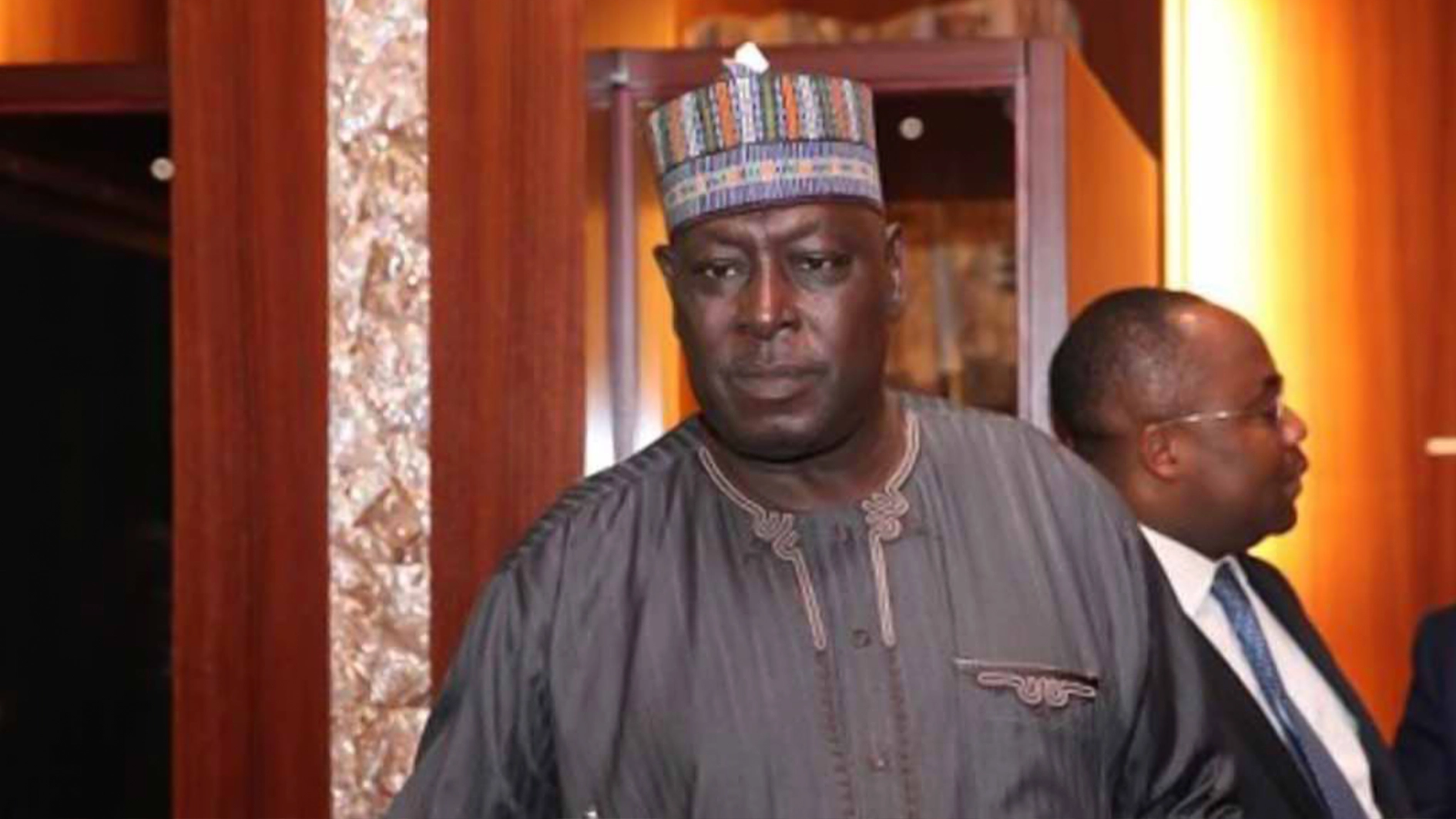
Former Secretary to the Government of the Federation (SGF), Babachir Lawal, has announced his retirement from active politics, barely 24 hours after accusing the presidential candidate of the African Democratic Congress (ADC), Atiku Abubakar, of manipulating the party’s presidential primary election.
Lawal disclosed his decision in an interview on Wednesday, bringing to an end a political career that has spanned decades and seen him play prominent roles in Nigeria’s ruling and opposition parties.

His announcement comes amid growing controversy within the ADC, following its presidential primary, which produced Atiku as the party’s flagbearer for the 2027 general election.
The former SGF, who served under the administration of former President Muhammadu Buhari, had been a vocal figure in opposition politics in recent years.
Despite being a member of the All Progressives Congress (APC) during the 2023 election, he publicly backed Peter Obi for the presidency.
Following the movement of several prominent politicians, including Atiku and Obi, into the ADC ahead of the 2027 polls, Lawal joined the party and later emerged as a leading figure in the North-East political structure of the party.
However, tensions erupted after the party’s presidential primary, where Atiku secured victory with 1,846,370 votes.
Former Rivers State Governor, Rotimi Amaechi finished second with 504,117 votes, while businessman Mohammed Hayatu-Deen came third with 177,120 votes.
Reacting to the outcome, Lawal alleged that the exercise was marred by widespread irregularities and manipulation in favour of Atiku.
According to him, results were allegedly altered at multiple levels of the process, describing the primary as a “disgraceful charade” that failed to reflect democratic principles.
He further announced his resignation from the ADC, insisting that the conduct of the election made it impossible for him to remain in the party.
Atiku’s camp, however, dismissed the allegations and challenged Lawal’s claims.
The former vice president questioned why Lawal was willing to accept outcomes in areas where candidates close to him emerged victorious while condemning the overall process as fraudulent.
Read also:
- Atiku warns Presidency, INEC, Judiciary against interference in ADC affairs
- ADC rejects Tinubu’s 10.99m delegate votes, alleges electoral manipulation plan
- ADC picks Akpanudoedehe as Akwa Ibom governorship candidate for 2027
Atiku specifically referenced the emergence of Lawal’s cousin, Omar Suleiman, as the ADC governorship candidate in Adamawa State, arguing that the former SGF had failed to explain the contradiction.
While Lawal had earlier indicated that he would consult political associates before deciding his next move, he confirmed on Wednesday that he had chosen to leave politics entirely.
His exit marks a significant development in Nigeria’s evolving political landscape ahead of the 2027 elections, particularly within the ADC, where internal disagreements over the conduct of the primary continue to generate debate.
Political observers say Lawal’s retirement could reshape political alignments in the North-East, where he has remained an influential figure for years, even as the fallout from the ADC primary contest continues to reverberate across the opposition camp.