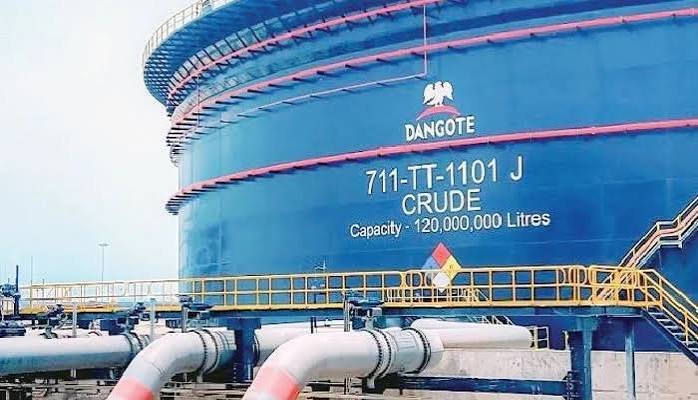
The Dangote Petroleum Refinery accounted for about 71 per cent of petrol supplied to the Nigerian market in August, according to the latest data from the Nigerian Midstream and Downstream Petroleum Regulatory Authority.
Key Highlights
- Dangote Refinery supplied about 71 per cent of Nigeria’s petrol market in August, NMDPRA says.
- Domestic PMS receipts rose 39 per cent, from 25.8 million litres per day in July to 35.9 million litres per day in August.
- Daily petrol imports fell 26 per cent, from 19.7 million litres in July to 14.6 million litres in August.
- Dangote refinery produced an average of 41.94 million litres of PMS daily, supplying 35.87 million litres to the local market.
- PMS consumption fell 14 per cent, from 48.3 million litres per day in July to 41.5 million litres per day in August.
- Domestic crude feedstock accounted for 79.64 per cent of refinery supply between January and August 2026.
The NMDPRA’s August 2026 State of the Midstream and Downstream Sector factsheet on Thursday, 24 September 2026, showed that domestic Premium Motor Spirit receipts increased significantly during the month, while reliance on imported petrol declined.

According to the report, domestic PMS receipts climbed by 39 per cent, from 25.8 million litres per day in July to 35.9 million litres per day in August.
In contrast, daily petrol imports dropped by 26 per cent, falling from 19.7 million litres in July to 14.6 million litres in August.
The figures show that locally sourced petrol receipts exceeded imports by 21.3 million litres per day during the month.
Overall PMS receipts also increased by 11 per cent, rising from 45.5 million litres per day in July to 50.5 million litres per day in August.
The regulator stated, “PMS daily receipts increased by 11 per cent, rising from 45.5 million litres per day in July to 50.5 million litres per day in August.
“Domestic PMS receipts rose by 39 per cent, from 25.8 million litres per day to 35.9 million litres per day.
“Over the same period, PMS imports declined by 26 per cent, from 19.7 million litres per day to 14.6 million litres per day.”
Dangote Refinery Leads Domestic Supply
The Dangote refinery emerged as the major contributor to the increase in domestic petrol supply during the period under review.
NMDPRA data showed that the 700,000-barrel-per-day refinery produced an average of 41.94 million litres of PMS daily in August.
Of that volume, 35.87 million litres per day were supplied to the Nigerian market, while 9.73 million litres were exported.
The refinery ended the month with 360.4 million litres of PMS in stock, while its average capacity utilisation stood at 105.21 per cent.
The domestic supply from the refinery alone was significantly higher than the country’s total average petrol imports of 14.6 million litres per day during August.
Read also:
- IPMAN Urges FG To Stop Petrol Imports, Says Dangote Refinery Can Fully Meet Nigeria’s PMS Demand
- Crude Oil Imports Through Lagos Ports Fall 38.6% To 1.47m Tonnes In September
- IPMAN Opposes Rising Petrol Imports, Warns Of Higher Pump Prices Amid Fresh Fuel Hikes
- Dangote Unveils $660m Ethiopia-Djibouti Petroleum Pipeline Project
- Crude Supply to Nigerian Refineries Rises 17% as Petrol Imports Drop 26%
- Dangote Lamu Refinery: Kenyan Court Orders Status Quo On Disputed Land Ahead Of Groundbreaking
\t
Consumption Falls Despite Higher Supply
The increase in petrol receipts did not translate into higher recorded domestic consumption.
The NMDPRA said PMS consumption fell by 14 per cent, from 48.3 million litres per day in July to 41.5 million litres per day in August.
The regulator explained that its consumption figures were based on the volume of petroleum products trucked out into the domestic market.
It added that petrol stock sufficiency improved slightly during the period, increasing from 22.4 days in July to 22.9 days in August.
The figures reflect a changing pattern in Nigeria’s petroleum supply as domestic refining capacity expands and the country seeks to reduce its dependence on imported refined products.
Crude Deliveries To Refineries Rise
The NMDPRA report also recorded an increase in crude oil deliveries to domestic refineries.
Crude receipts rose by 17 per cent, from 585,000 barrels per day in July to 683,000 barrels per day in August.
Between January and August 2026, domestic refineries received 137.98 million barrels of crude feedstock.
Of the total, 109.88 million barrels came from domestic crude sources, while 28.10 million barrels were imported by sea.
Domestic crude therefore accounted for 79.64 per cent of refinery feedstock during the eight-month period, compared with 20.36 per cent from imported crude.
Mixed Trends For Diesel And Aviation Fuel
Beyond petrol, the August data showed mixed movements across other refined petroleum products.
Automotive Gas Oil, commonly known as diesel, recorded an 84 per cent decline in imports. Daily AGO imports fell from 7.9 million litres in July to 1.3 million litres in August.
Domestic AGO supply also decreased by 16 per cent to 13.2 million litres per day.
Aviation fuel recorded the opposite trend, with daily receipts increasing by 63 per cent from 1.9 million litres in July to 3.1 million litres in August.
The latest figures point to a continuing shift in Nigeria’s petroleum supply structure, with locally refined products accounting for a growing share of domestic availability.
In the case of petrol, the August data showed a particularly wide gap between domestic supply and imports, with the Dangote refinery alone supplying 35.87 million litres per day to the local market compared with total petrol imports of 14.6 million litres per day. The full sector factsheet is published by the NMDPRA. Follow us on X for more updates on Nigeria’s oil and gas sector.
Related Stories: