
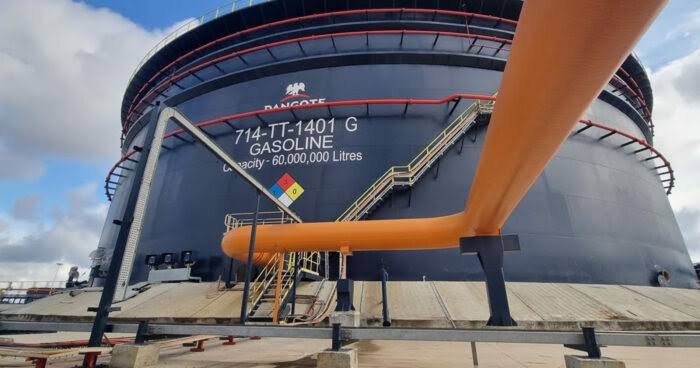
Dangote Petroleum Refinery has resumed the sale of Premium Motor Spirit (PMS), commonly known as petrol, in naira, reversing its earlier decision to transact in United States dollars. However, the refinery has increased its ex-depot (gantry) price from ₦1,175 to ₦1,215 per litre.
The company announced the policy reversal on Wednesday, saying the return to naira transactions is expected to bring stability to the downstream petroleum market after concerns triggered by the temporary dollar-based sales arrangement.
According to the refinery, marketers can now purchase petrol in the local currency, while the revised ex-gantry price has been fixed at ₦1,215 per litre.

The company stated that the decision is intended to support smoother product distribution and ease pressures experienced by operators in the downstream sector.
“Dangote Petroleum Refinery has resumed the sale of Premium Motor Spirit (PMS) in naira, providing a measure of relief to marketers and consumers. The gantry price is fixed at ₦1,215 per litre,” the statement read.
The development marks a reversal of the refinery’s July 14 announcement directing marketers to pay for petroleum products in US dollars, a policy that drew criticism from stakeholders and heightened uncertainty within the fuel distribution chain.
Read also:
- NUF Urges FG To Direct NNPCL To Supply Dangote Refinery Adequate Crude
- Why Dangote Switched Sales Of Petrol To Dollars
- Dangote Offers ₦500,000 Reward To Tackle Illegal Use Of Trucks Nationwide
Following the introduction of the dollar payment system, members of the Independent Petroleum Marketers Association of Nigeria (IPMAN) suspended the loading of petrol from the refinery, citing operational challenges.
The Chairman of IPMAN’s Western Zone, Oyewole Akanni, had explained that marketers were compelled to source products from private depots at higher prices, a situation that contributed to supply constraints and increased retail fuel prices in several parts of the country.
Industry operators believe the return to naira transactions will improve access to products and restore confidence among marketers, although the upward adjustment in the refinery’s wholesale price is expected to influence pump prices across the country.
The refinery’s latest decision is expected to improve fuel distribution while offering greater predictability for marketers operating within Nigeria’s downstream petroleum sector.