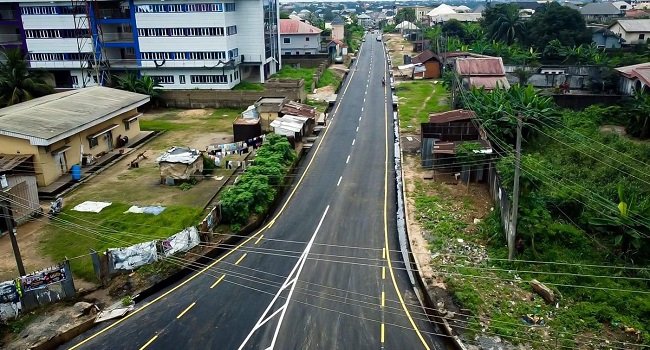
The Benin-Asaba Expressway has become the centre of growing public anger after prolonged gridlock, deteriorating road conditions and criticism of the concessionaire’s handling of reconstruction works. The 125-kilometre corridor is operated under a 25-year concession awarded through the Federal Government’s Highway Development and Management Initiative (HDMI), with Benin-Asaba Expressway Concession Company Limited (BAECC) serving as the special-purpose vehicle responsible for the project.
Key Highlightse
- BAECC holds a 25-year concession for the Benin-Asaba Expressway.
- The project is backed primarily by Africa Plus Partners Nigeria Limited Consortium.
- Other key institutions linked to the financing structure include Triple A Infrastructure and InfraCorp.
- The concession is designed to be funded through private capital and future toll revenues rather than direct government construction funding.
- Works began in earnest in 2025, with completion originally targeted within about 30 months.
- The project has faced criticism over poor drainage, asphalt removal, flooding and prolonged traffic gridlock.
- Works Minister David Umahi has accused the concessionaire of lacking sufficient technical capacity.
- The Federal Government is reviewing the situation while legal and contractual issues surrounding the concession remain.
Who owns the Benin-Asaba Expressway concession?
The special-purpose vehicle responsible for the project is Benin-Asaba Expressway Concession Company Limited (BAECC).

BAECC is responsible for the rehabilitation, reconstruction, operation and maintenance of the approximately 125-kilometre road linking the AIF Roundabout and King’s Square area in Benin City, Edo State, with Summit Junction in Asaba, Delta State.
The project forms part of the Federal Government’s Highway Development and Management Initiative, introduced to attract private capital into the development and long-term management of major highways through public-private partnerships.
The Federal Executive Council approved the concession in 2023, while further agreements and handover arrangements followed in subsequent years. Site works and the formal flag-off of the project took place in March 2025.
Under the arrangement, the concessionaire is expected to finance the project, operate the road and recover its investment through tolling over the 25-year concession period.
How much will the Benin-Asaba Expressway project cost?
Various estimates have placed the cost of the project between N200 billion and N228 billion, although some figures cited publicly have been higher.
The proposed reconstruction is expected to transform the existing corridor into a wider and safer dual carriageway, with sections reportedly designed to accommodate as many as 10 lanes, alongside service lanes in urban areas.
The plans also include solar-powered street lighting, improved drainage, enhanced road safety infrastructure and other facilities.
The concessionaire had previously indicated a construction period of about 30 months, with completion expected around September 2027. The project has since been divided into phases, with an earlier target of completing the first approximately 65 kilometres by April 2027.
Who is behind BAECC?
The principal consortium behind the concession is Africa Plus Partners Nigeria Limited (APPNL) and associated infrastructure investment entities.
Africa Plus Partners
Africa Plus Partners is an infrastructure fund and asset management company focused on investment in infrastructure projects in Nigeria and sub-Saharan Africa.
The company has been associated with infrastructure funds including Africa Infrastructure Partners Fund I and II.
Read also:
- Delta State Government Converts Model Technical College, Omadino, into Campus of Federal Polytechnic Orogun
- Oborevwori Appoints Sakpra As GM Delta Social Investment Programme
- Governor Oborevwori Describes Olu Of Warri 5-Year Reign As Period Of Glory, Peace, Progress
Its leadership includes Anhad Narula, who has an engineering background and experience in infrastructure investment, and Niran Ajakaiye, who serves in a senior investment management role.
The company’s focus is primarily on investment, project development, governance and infrastructure financing.
Triple A Infrastructure
Triple A Infrastructure Nigeria Limited is another important part of the investment structure.
The company is associated with Afrinvest West Africa, Africa Plus Partners and ARC Asset Management.
Afrinvest Group Managing Director Ike Chioke has a civil engineering background and extensive experience in investment banking, corporate finance, mergers and acquisitions and project finance.
The distinction is important because the consortium’s principal strength is in infrastructure finance and investment, rather than conventional road construction contracting.
InfraCorp
The project is also linked to Infrastructure Corporation of Nigeria (InfraCorp), a major infrastructure investment vehicle promoted by the Central Bank of Nigeria, the Nigeria Sovereign Investment Authority and the Africa Finance Corporation.
InfraCorp was established to mobilise large-scale private capital for infrastructure development across Nigeria.
Edo State Government
The Edo State Government also became an equity partner in the project under an agreement reached during the administration of former Governor Godwin Obaseki.
The state has a significant interest in the project because roughly 60 kilometres of the corridor falls within Edo State.
Are the concessionaires road contractors?
This is one of the central issues raised by the controversy.
The principal organisations behind the concession are primarily infrastructure financiers, investment managers and project developers rather than traditional engineering, procurement and construction companies with long-established records of constructing major Nigerian highways.
Their role under the HDMI arrangement is largely to mobilise capital, structure the concession, manage the investment and oversee project delivery.
Construction and engineering capacity can therefore be sourced through technical partners and contractors.
However, the arrangement has come under scrutiny because of questions about the technical capacity available on the project.
What did David Umahi say about the project?
The Minister of Works, David Umahi, has strongly criticised the handling of the Benin-Asaba Expressway project.
During assessments of the road on 25th of August 2026, Umahi accused the concessionaire of lacking sufficient technical knowledge, competent technical personnel and the construction expertise required to manage a project of such importance.
He also criticised the removal of existing asphalt without adequate drainage works being completed first.
Project consultants reportedly raised similar concerns, particularly over the failure to prioritise drainage before removing sections of the existing road pavement.
The minister described the situation as a serious failure in project execution and warned that the government would review the concession arrangements.
Why has the Benin-Asaba Expressway become a major crisis?
The controversy intensified after sections of the road deteriorated badly during reconstruction.
According to government officials and reports from the corridor, existing asphalt was removed in some areas before adequate drainage infrastructure had been completed.
Heavy rainfall, high traffic volumes and incomplete drainage subsequently contributed to flooding, muddy road surfaces, failed sections and severe traffic congestion.
Motorists have reportedly spent extended periods trapped in traffic along parts of the Benin-Agbor corridor.
The deterioration has generated protests by residents and motorists demanding urgent intervention.
Communities and businesses affected by road works have also raised concerns over demolitions, access restrictions and disruptions to commercial activity.
Government faces difficult decision over concession
Despite the criticism, terminating the concession immediately is not necessarily straightforward.
The project is governed by contractual arrangements between the government and private investors. Abrupt termination could expose the government to litigation and compensation claims.
The Federal Government has therefore been reviewing its options while engaging the concessionaire.
Temporary interventions involving other contractors have also been considered to restore motorability on badly affected sections while the larger reconstruction continues.
The government has also indicated that other institutions, including the Niger Delta Development Commission, could play a role in emergency interventions where necessary.
What has BAECC said?
BAECC has maintained that it remains committed to the Benin-Asaba Expressway project.
The concessionaire has pointed to its private investment in the corridor, the challenges posed by heavy rainfall and traffic volumes, as well as ongoing palliative works.
The company has also outlined a phased approach to the project and appealed for cooperation from motorists, communities and other stakeholders.
The dispute, however, has raised wider questions about how Nigeria selects private companies to manage major public infrastructure projects.
The bigger question over Nigeria’s highway concessions
The Benin-Asaba Expressway has become an important test of Nigeria’s attempt to use private capital to develop and maintain major highways.
The HDMI model was designed to reduce the pressure on government budgets by allowing private investors to finance infrastructure and recover their investment over time.
The arrangement also places responsibility for long-term maintenance on concessionaires.
The current controversy raises questions about whether financial capacity should be matched by clearly demonstrated technical and construction capacity before major highway concessions are awarded.
For motorists and communities along the Benin-Asaba corridor, however, the immediate concern is simpler: when will the road become reliably motorable again?
As of August 2026, the financing structure behind the concession remains in place, but the project faces intense government scrutiny over technical execution, drainage, traffic management and the pace of construction.
The outcome could influence not only the future of the Benin-Asaba Expressway but also how Nigeria structures and awards future private-sector highway concessions.