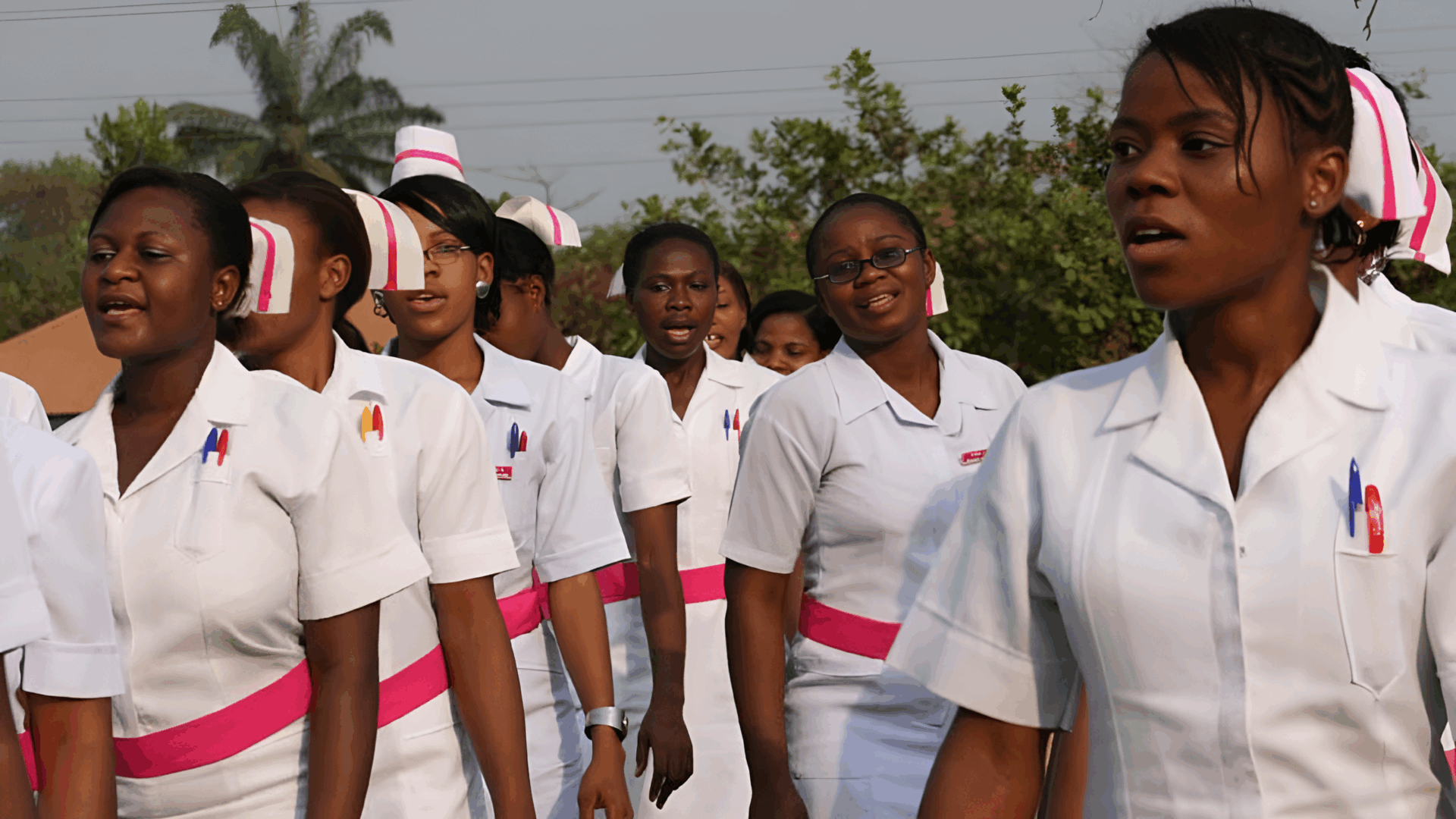
The Niger Delta University (NDU), Wilberforce Island, Bayelsa State, has inducted 106 newly qualified nurses into the nursing profession, with a call on them to embrace emerging opportunities and play an active role in transforming healthcare delivery.
The call was made by the keynote speaker at the induction ceremony, Prof. Khadijat Toyin Musah, Dean of the Faculty of Nursing Sciences, Federal University Otuoke.

Speaking on the theme, “Empowering Nurses: Exploring New Horizons and Transforming Healthcare,” Musah described the induction as a transition from student life to professional responsibility.
Musah, who is also the Founder and Executive Director of the Global Institute of Nurses, Midwives and Allied Health Professionals, reminded the inductees that nursing involves responsibility for human vulnerability, dignity and, at critical moments, human life.
She urged them to treat the professional oath they had taken as a lifelong commitment rather than merely a ceremonial requirement.
According to her, empowerment in nursing could be understood as “capacity plus opportunity plus responsibility,” stressing that professional knowledge and clinical skills must be accompanied by ethical conduct.
Musah encouraged the newly inducted nurses to explore opportunities beyond conventional clinical practice, including specialised nursing, digital health, data and informatics, research, health policy and advocacy.
She also identified health-system leadership, entrepreneurship, consultancy, global health and humanitarian work as areas where nurses could contribute meaningfully.
While encouraging the inductees to develop digital competence and data literacy, she cautioned against allowing technology to overshadow the human side of nursing.
She said technology should support nursing practice rather than redefine the profession, urging the nurses to remain conscious of issues including patient privacy, safety, equity, bias and human needs.
Read also:
- Tinubu-Shettima Support Group Begins Nationwide Mobilisation Campaign For 2027 Elections
- FCT Minister Urges APC Women To Mobilise Support For Tinubu In 2027
- 2027: Oborevwori Tasks Stakeholders On MORE Agenda, Grassroots Mobilisation
- Amnesty International Calls for Reversal of Madonna University Students’ Expulsion
- Kebbi Nursing College Admits 172 Students, Eyes 1st Graduates in 2028
t
The professor stressed that technological advancement must not replace compassion, dignity, respect, communication, trust, integrity and accountability in healthcare delivery.
Musah challenged the new nurses to pursue excellence through continuous learning, self-reflection, feedback and a willingness to learn from professional mistakes.
She urged them to become change agents by identifying challenges within the healthcare system, developing evidence-based solutions and documenting the outcomes of their interventions.
She also described interprofessional collaboration as an essential professional competency, rather than a mere courtesy, urging the nurses to respect other healthcare professionals and communicate effectively.
On research, Musah encouraged the inductees to become consumers, users and producers of evidence by asking relevant questions and applying research findings to clinical practice.
She said research becomes valuable when it translates into improved healthcare decisions and better patient outcomes.
According to her, leadership begins long before an individual receives a formal leadership appointment, urging the nurses to demonstrate responsibility, reliability, initiative and integrity in their workplaces.
She also advised them to protect the integrity of the nursing profession through confidentiality, accurate documentation, appropriate professional boundaries and responsible use of social media.
The keynote speaker further reminded them to practise within their competence and professional scope while accepting responsibility for their decisions, actions and omissions.
Musah said communities remain central to nursing practice, particularly in disease prevention, health promotion, primary healthcare and community resilience.
She encouraged the nurses to understand the social factors that influence health and contribute to strengthening families, schools, workplaces and communities.
She noted that healthcare transformation could begin from different points within the system, including the bedside, classroom, research environment, community, organisation, leadership and policy spaces.
The professor urged the inductees to remain clinically competent, compassionate, curious and evidence-informed while developing digital skills without becoming dependent on technology.
She also challenged them to advocate courageously, remain open to learning and support the development of younger professionals through mentorship.
Musah reminded the nurses that their professional oath would be tested by heavy workloads, limited resources and difficult decisions throughout their careers.
She urged them to allow the principles of the oath to guide their relationships with patients, colleagues, students and communities.
“Today, you become nurses. Tomorrow, become the nurses your patients, your communities and your country need,” she told the inductees.
The Nursing and Midwifery Council of Nigeria (NMCN) was represented at the ceremony by Dr Gbonjubola Owolabi, Provost of the College of Nursing Sciences, Eleyele, Ibadan, who is also a member of the NMCN Council.
The Vice-Chancellor of NDU, Prof. Allen Aziba-Odumosi Agih, was represented by the Deputy Vice-Chancellor, Academics, Prof. Jonah Akerere.
Also speaking, the Provost of the NDU College of Health Sciences, Prof. Jeremiah Israel, urged the newly qualified nurses to make compassion a defining feature of their professional practice.
He reminded them of the responsibility involved in caring for people at vulnerable moments of their lives.
The Acting Dean of the Faculty of Nursing Sciences, Dr Helen I. Wankasi, expressed appreciation for the successful induction and described the ceremony as an important milestone for the faculty.
The event ended with the formal induction and oath-taking of the 106 nurses, marking their transition into professional nursing practice.
Related: Diri Inaugurates 18-Member Committee for Bayelsa Cancer Treatment Centre