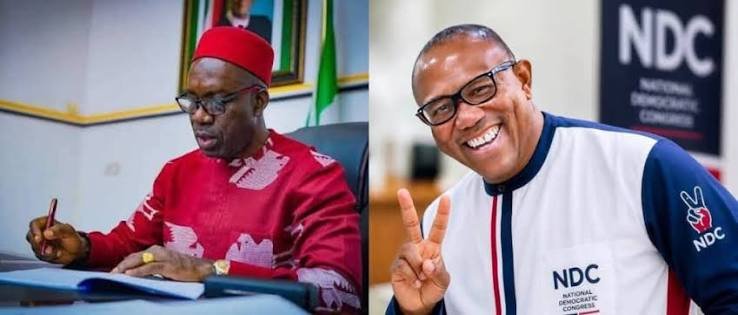
The Anambra State government has released details of debts and other financial obligations it said were incurred during the administration of former Governor Peter Obi, maintaining that some of the liabilities remain under repayment.
Key Highlights
- The Anambra State Government has released details of debts and other financial obligations it says were incurred during former Governor Peter Obi’s administration.
- The government said the Obi administration contracted $123.77 million in external loans, with part of the debt still outstanding as of June 30, 2026.
- It valued the outstanding loan balance at about ₦127.4 billion based on the official exchange rate in June 2026.
- According to the state government, the loans funded projects in areas including erosion management, malaria control, education and healthcare.
- The government alleged that some salaries, pensions and gratuities involving retired teachers and state water corporation workers remained unpaid when Obi left office.
The government disclosed this in a statement signed by the Commissioner for Information and Value Reorientation, Law Mefor, titled: “Gov Peter Obi and Record of Public Debt in Anambra: Facts Beyond Propaganda and Lies.”

The statement was issued in response to claims by Obi rejecting allegations that his administration left behind outstanding debts and other financial liabilities, including an alleged ecological fund obligation as well as unpaid salaries, pensions and gratuities.
According to the state government, the Obi administration contracted $123.77 million in external loans, with part of the debt still outstanding as of June 30, 2026.
It put the outstanding balance of the loans at about ₦127.4 billion at the official exchange rate as of June 2026.
The government said the loans were obtained for projects and programmes covering areas such as malaria control, erosion management, education and healthcare, adding that the current administration was servicing the obligations.
It also stated that the Obi administration recorded expenditure of about $4.05 billion during its eight years in office, equivalent to approximately ₦5.4 trillion at the current official exchange rate.
The state government stressed that borrowing was not inherently wrong, particularly when funds were used for bankable projects and human-capital development.
However, it alleged that Obi left behind outstanding salaries, gratuities and pensions involving retired teachers and workers of the state water corporation.
The government also rejected Obi’s claim that all inherited arrears had been cleared before he left office, although it said it would not engage in the separate argument over which arrears were inherited from previous administrations and which were settled during his tenure.
On infrastructure, the government alleged that several sectors required attention when Obi left office in March 2014, including public water schemes, schools, hospitals, security, poverty reduction and urban infrastructure.
It claimed that about 78 out of the state’s 179 communities, representing 44 percent, did not have public primary schools.
The government also said only about 27 percent of Anambra State residents patronised public health institutions, attributing this to what it described as poor quality and inadequate functionality.
Despite its criticism, the state government acknowledged that borrowing could be justified when used for productive projects and human-capital development.
Read also:
- Group Challenges Soludo To Make Public Obi, Obiano’s Loans
- Unbelievable As It Seems, Abuja Residents Board Ambulance As Transport Crisis Worsens
The latest exchange forms part of an ongoing disagreement over Anambra State’s financial position at the end of Obi’s tenure and the obligations inherited by subsequent administrations.
Obi has rejected the allegations, maintaining that his administration cleared more than ₦35 billion in historical gratuities and arrears and left no outstanding salaries, pensions, gratuities or certified contractor obligations at the time of handover.
He also disputed the allegation concerning the ecological fund, saying the money was released for the Oko/Umuchiana erosion crisis and remained untouched because it was earmarked for the specific project.
The conflicting accounts have renewed debate over state’s debt profile, financial obligations and the records handed over at the end of the 2014 administration.
Related Stories: