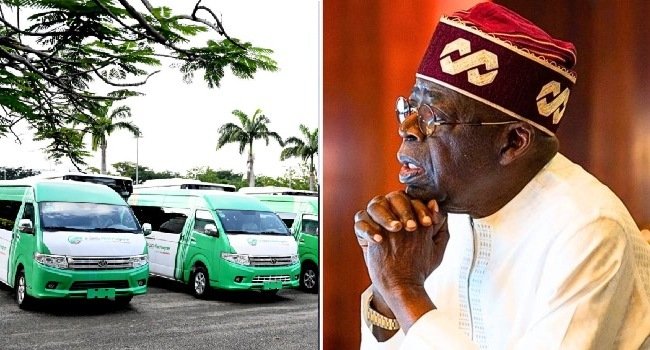
Nigeria’s push to reduce transport costs through Compressed Natural Gas (CNG) enters a crucial phase as the government’s October 1 target takes effect, with more than 120,000 vehicles converted and over 90 CNG refuelling stations reported nationwide, although access to cheaper CNG-powered transport remains uneven across the country.
President Bola Tinubu had directed the 36 states to accelerate the National Affordable CNG Transit Programme and ensure that more Nigerians begin to see measurable reductions in transportation costs from October 1.

Key Highlights
- More than 120,000 vehicles have reportedly been converted to CNG.
- Nigeria has more than 400 certified CNG conversion centres.
- Over 90 CNG refuelling stations are currently operational, according to the Federal Government.
- The Federal Government says private-sector commitments of about $2.5 billion have been secured for CNG and electric vehicle infrastructure.
- Federal spending on CNG and EV infrastructure, buses and subsidised conversion kits is estimated at ₦300 billion to ₦400 billion.
- Tinubu directed states to deliver measurable reductions in transport fares from October 1, 2026.
- Government has reported fare reductions on CNG and electric transport routes in several states.
- The expansion of refuelling infrastructure and vehicle conversions remains critical to wider adoption.
Government Bets on CNG to Reduce Transport Costs
The Federal Government is promoting CNG as a major alternative to petrol-powered transportation following the removal of the petrol subsidy.
Speaking on Channels Television’s Politics Today, Executive Chairman of the Presidential Initiative on Compressed Natural Gas and Electric Vehicles, Ismaeel Ahmed, said more than 120,000 vehicles had already been converted.
Ahmed said the government was continuing to collect data on additional conversions while encouraging private companies to import and install conversion kits.
He also said some vehicle owners were seeking larger CNG tanks to improve driving range, highlighting the need for infrastructure and equipment capable of meeting different transport requirements.
Tinubu Sets October 1 Transport Cost Target
The CNG push follows President Tinubu’s August 27 meeting with governors, after which the Federal Government and states agreed to work toward reducing transportation costs.
An implementation committee under the Nigeria Governors’ Forum, chaired by Kwara State Governor AbdulRahman AbdulRazaq, was established to coordinate the National Affordable CNG Transit Programme.
Tinubu subsequently said more Nigerians should begin to experience measurable reductions in transportation costs from October 1.
The President has ruled out returning to the petrol subsidy regime and has instead directed government agencies and states to accelerate the development of CNG and electric transport alternatives.
Over 120,000 Vehicles Converted to CNG
According to the Federal Government, more than 120,000 vehicles have been converted to CNG, while the country has more than 400 certified conversion centres and over 90 operational CNG refuelling stations.
The government says additional stations are under development as it attempts to expand the network required to support a larger CNG-powered vehicle fleet.
Ahmed disclosed that the Federal Government had also secured about $2.5 billion in private-sector commitments for CNG and electric vehicle infrastructure.
He said the Federal Government had committed between ₦300 billion and ₦400 billion to infrastructure, vehicle deployment and subsidised conversion kits.
Read also:
- Repair State Refineries to Cut Petrol Prices to ₦435–₦687, Agbon Tells Government
- Nigeria Urges Private Sector Investment to Drive Oil Refining, Gas Development
- NNPCL Posts ₦7.2 Trillion Profit After Tax in 2025 Despite 24% Revenue Drop
States Report Cheaper CNG Transport Fares
The Presidency has pointed to several states where CNG and electric transport services have already reduced fares.
In Borno, the government says CNG-powered and electric public transport services charge between ₦50 and ₦100 on routes where commercial operators charge between ₦300 and ₦600.
In Kaduna, 100 CNG buses have reportedly provided free transportation on major routes. The Presidency says the buses carried about 3.2 million passengers during their first year and saved commuters more than ₦3.5 billion.
In Oyo, the deployment of CNG buses by Pacesetter Transport reportedly reduced the Lagos-Ibadan fare from about ₦8,000 to ₦3,200 during the initial deployment.
The government also cited fare reductions on routes in Adamawa, Enugu, Plateau, Niger and the Federal Capital Territory. On selected Abuja routes operated in partnership with the National Union of Road Transport Workers, fares were reportedly reduced by 40 per cent.
CNG Access Remains Uneven
Despite the reported reductions on selected routes, the wider transition to CNG-powered transportation depends on the availability of conversion centres, refuelling stations and vehicles capable of using the fuel.
For commuters who rely on conventional petrol-powered commercial vehicles, the availability of cheaper CNG transport can vary significantly depending on their location and route.
The Federal Government’s figure of more than 120,000 converted vehicles represents significant progress in the CNG rollout, but the expansion of the conversion and refuelling network remains important if the benefits are to extend beyond selected routes and state-supported fleets.
Larger CNG Tanks Highlight Infrastructure Challenges
Ahmed has also acknowledged growing demand for larger CNG tanks among vehicle owners.
The demand reflects one of the practical issues facing motorists making the transition from petrol to CNG. Vehicle owners need sufficient refuelling infrastructure and adequate tank capacity to operate efficiently, particularly on longer routes.
The expansion of CNG stations is therefore central to the government’s strategy.
The Presidency currently reports more than 90 operational CNG refuelling stations, while additional stations are being developed.
Private Investment Expected to Expand CNG Network
The Federal Government is seeking greater private-sector participation in the CNG and electric vehicle ecosystem.
Ahmed said the government had secured approximately $2.5 billion in private-sector commitments for infrastructure development.
The objective is to encourage investment in conversion facilities, refuelling stations, vehicle deployment and other components of the alternative-energy transport market.
The government has also introduced financing initiatives aimed at helping motorists and transport operators cover the cost of converting vehicles to CNG.
October 1 Target Tests Reach of CNG Programme
The October 1 deadline marks an important stage in the government’s effort to translate investment in CNG infrastructure into lower transportation costs.
The Presidency says Nigerians are already benefiting from cheaper fares on several CNG and electric transport routes, including services in Borno, Kaduna, Oyo, Adamawa, Enugu, Plateau, Niger, Abuja and other locations.
However, the broader impact will depend on how quickly more commercial vehicles are converted, how rapidly refuelling infrastructure expands and whether savings from cheaper fuel are consistently reflected in fares.
For millions of Nigerians who continue to depend on conventional commercial transport, the central test of the CNG programme will be whether cheaper energy translates into sustained and widely accessible lower transport fares.
For more updates, follow us on X.